 English
 Dutch
Dutch Japanese
 Hindi
Hindi Italian
 Spanish
 French
 German
 Chinese
 Korean
 Arabic
 Hebrew
 Russian
 Portuguese
 Danish
 Czech
Czech Polish
 Swedish



Need Help? Let's Talk
+977 9841965533
Trip Facts
|
Trip Duration
10 Days |
|
|
Region
Annapurna Treks |
|
|
Country
Nepal |
|
|
Group Size
1 To 15 Person |
|
|
Best Season
Spring And Autumn |
|
|
Max Altitude
3310M |
|
 Moderate level treks usually above 7 days. Altitude can reach 5000 meters with 5-6 hrs of hike per day. Moderate refers to neither easy walk nor tough. High altitude may matter on walking speed and distance. Acclimatization may be required.
| Trip Grade Moderate |
|
Activities
Nepal Trekking
|
Mohare Danda Trek Overview
The Mohare Danda Trek is a beautiful and peaceful trekking experience in the Annapurna region of Nepal. It is an excellent option where the traveler would prefer to see the mountain, the local culture, and nature without having to hike on busy trails with large groups. This trek provides a journey through the green hills, forests, and traditional villages, where it is possible to observe the everyday life of local people.
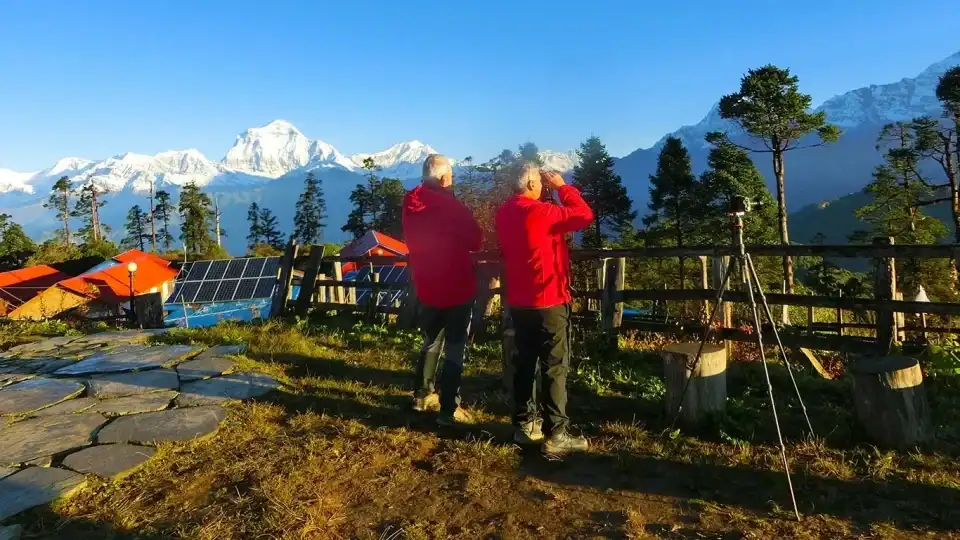
As you go, you pass by a combination of stone steps, forest walks, and low ridges. The highest point of the trek is Mohare Danda (3,310 m / 10,860 ft), which provides expansive panoramic vistas of the Himalayas with Dhauligiri and Annapurna ranges.
The community-based approach is one of the major attractions of the Mohare Danda Trek. The trek is in support of the local villages with community lodges, as you stay in the course of the trek. These lodges are not fancy and are comfortable enough, and allow you the opportunity to enjoy the warm local hospitality.
You get to have the privilege of fresh, locally prepared meals, which also contributes to the cultural experience. The route goes through Magar and Gurung villages, where one can see ancient ways of life, agriculture, and special cultural traditions during the Mohare Danda Trek.
The Mohare Danda Trek is rated as medium level, and thus it can be performed by beginner trekkers with just basic fitness, as well as experienced trekkers. The average duration of walking is between 5 and 7 hours a day, and the increase in elevation is gradual. The trail is structured in such a manner that it allows your organism to get accustomed to an elevated level gradually. This renders the journey very comfortable and entertaining to the majority of people. There are also beautiful forests with rhododendron flowers during spring and clear mountain views during autumn, which are the best seasons to visit during the journey.
Overall, the Mohare Danda Trek offers a great mix of nature, culture, and adventure. The crowd is also not huge, as most of the trekking trails provide a more intimate and natural experience. You can have an amazing, safe, and significant experience in the core of the Himalayas with proper planning and guidance from seasoned teams such as the Mission Himalaya Treks.
Why Mohare Danda Trek Popular?
Mohare Danda Trek is a popular trek because there are no big crowds on the routes, and the mountains are beautiful. You are able to get big panoramic views of the Himalayas at Mohare Danda (3,310 m / 10,860 ft). The trek has been characterized by its environmentally friendly nature and the community lodges, which help individuals in the community.
Others that make it worth visiting include natural beauty, particularly in spring when the rhododendron flowers are in bloom. It has a moderate level of difficulty and therefore can fit many travelers.
This blend of peaceful routes, culture and picturesque sightseeing makes Mohare Danda Trek an excellent option among people who want to go on a meaningful and not as crowded adventure.

5.0
317 reviews
Trip Highlights:
- See Dhauligiri, Annapurna and Nilgiri mountains from Mohare Danda (3,310 m / 10,860 ft).
- Walk through quieter trails that provide a serene trekking experience.
- Stays in community lodges that serve and relate to the local villages.
- See forests of rhododendron are in blossom in the spring.
- Experience authentic village life and the possibility to learn about Magar and Gurung culture.
- Witness amazingsunsets and sunrises along the Himalayan range.
- The moderate level of difficulty is appropriate forboth beginners and experiencedtrekkers.
- Eat local, fresh and organic dishes made in village lodges.
- Walk through the forests, hills, rivers and suspension bridges.
Mohre Danda Trek itinerary:
Day 1. Arrive in Kathmandu and transfer to the hotel.
Day 2. Drive/Flight to Pokhara. Afternoon at leisure.
Day 3. Drive to Galeshwor and trek to Bans Kharka, 1,526m/5,007ft – 3 hours.
Day 4: Trek to Nagi, 2,320m/7,612ft – 6 to 7 hours.
Day 5. Trek to Mohare Danda, 3,310m/10,860ft – 6 to 7 hours.
Day 6. Trek to Deorali 3,090m/10,138ft, via Poon Hill, 2,860m/9,383ft – 5 hours.
Day 7. Trek to Ghandruk village 1,940m /6,365ft – 5 hours.
Day 8. Trek to Nayapul, 1,070m/3,510ft – 4 to 5 hours. Drive to Pokhara(1 and Half Hours).
Day 9. Drive/Flight to Kathmandu. Afternoon leisure.
Day 10. Departure your trip.
Mohare Danda Trek Itinerary
Day 1: Arrive in Kathmandu and transfer to the hotel
Walking Hours: 30min Drive
Meals Included: Welcome Dinner
Accommodation: 3 Star Category Hotel
Max. Altitude: 1,355 m (4,446 ft)
Distance: 5–15 km
You land in Kathmandu (1,355 m / 4,446 ft), and your Mohare Danda Trek begins. Our team from Mission Himalaya Trek will pick you up at the airport and take you to the hotel. Once you have checked in, you can take a rest and relax after the journey.
If you are not too tired, you can do a small tour of local streets to have an initial impression of the city. During the evening, you have a warm welcome dinner and get acquainted with your trekking crew.
It is also a day to ensure that you have checked your gear, and it is also a time to remain hydrated and adapt to the local time. It is an easy introduction, a way of getting your body and mind ready to have an adventure.
Day 2: Travel to Pokhara, afternoon at leisure
Walking Hours: 6–8 hrs drive or 30 min flight
Meals Included: Breakfast
Accommodation: 3 Star Category Hotel
Max. Altitude: 1,355 m (4,446 ft)
Distance: 200 km
After breakfast in Kathmandu (1,355 m / 4,446 ft), you take a drive towards Pokhara (822 m / 2,697 ft). You can either take a relaxing drive or a brief scenic flight. Hills, rivers, and little towns are observed during the trip.
Once you have arrived in Pokhara, you check into your hotel and rest. During the evening, you may take a walk along the Phewa Lake, spend your time in the calm lakeside, and get your trekking preparations ready.
This day gives your body time to adjust slowly before you fully begin the trek. It also allows you to change the city life into the mountains to make you feel prepared and calm.
Day 3: Drive to Galeshwor and trek to Bans Kharka (1,526 m)
Walking Hours: 7–8 Hours Trek
Meals Included: Breakfast, Lunch And Dinner
Accommodation: Community Lodges
Max. Altitude: 1,526 m (5,007 ft)
Distance: 8–12 km
Info
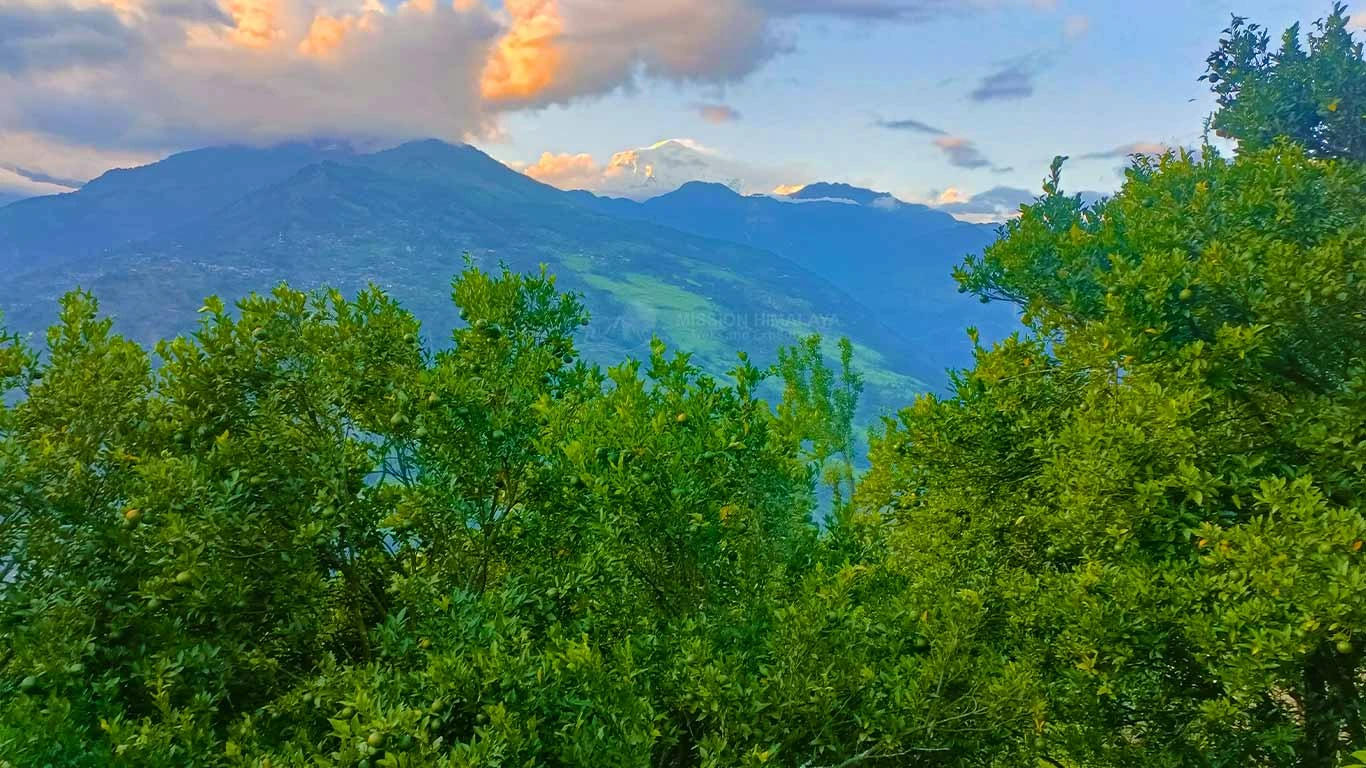
Orange Farm and Dhaulagiri View from Banskharka

Info
Turmeric Flowering Plant in Front of Nilgiri Himalayas
You drive from Pokhara (822 m / 2,697 ft) in the early morning to Galeshwor (1,100 m / 3,608 ft). You go by beautiful river valleys and hills. You can pay a visit to a nearby temple of Shiva when you reach Galeshwor before the trek.
From Galeshwor, you cross a suspension bridge over the Kali Gandaki River and start on a walk uphill. The path passes through villages, farms, and forests. On a clear day, you could see mountain scenery in the distance.
You reach Bans Kharka (1,526 m / 5,007 ft) after a gradual ascent. You will be staying in a local village lodge and have a serene evening as you learn more about the life of this village.
Day 4: Trek to Nagi (2,320 m)
Walking Hours: 6 To 7 Hours Trek
Meals Included: Breakfast, Lunch And Dinner
Accommodation: Lodge
Max. Altitude: 2,320m/7,612ft
Distance: 12–16 km


You are walking from Bans Kharka (1,526 m / 5,007 ft) to Nagi (2,320 m / 7,612 ft) on this day. The path is gradually ascending through woods and terraced farmlands. You go through small villages, and you see the everyday life of the village.
The walk takes time, and periodical pauses make you feel comfortable. The higher you go, the cooler the air becomes, and the scenery opens up to you.
On arriving at Nagi, you get into a lodge and rest. You will be able to walk through the immediate surroundings and have a relaxing time. It is a more personal experience of the local culture and nature, and this day is a lasting memory of your trip.
Day 5: Trek to Mohare Danda (3,310 m)
Walking Hours: 6 To 7 Hours Trek
Meals Included: Breakfast, Lunch And Dinner
Accommodation: Hotel
Max. Altitude: 3,310 m (10,860 ft)
Distance: 10–14 km
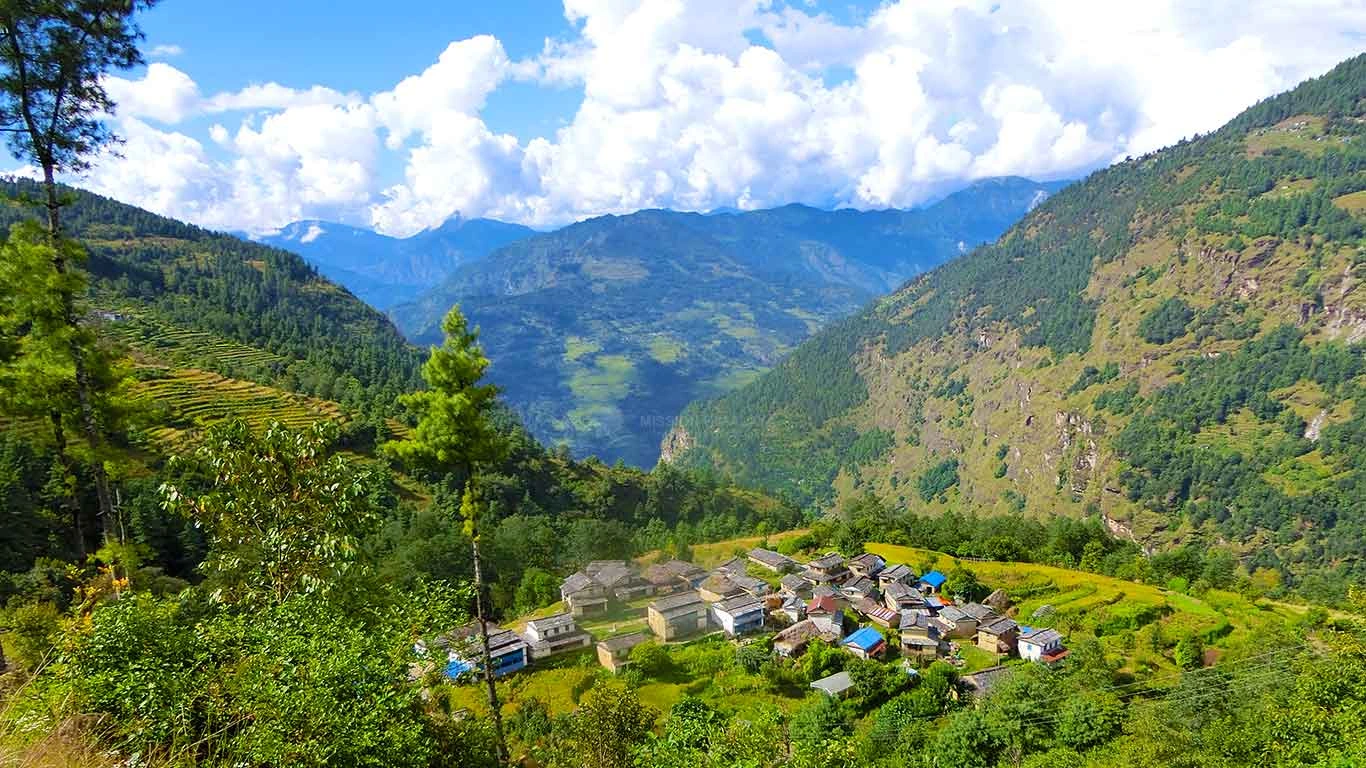
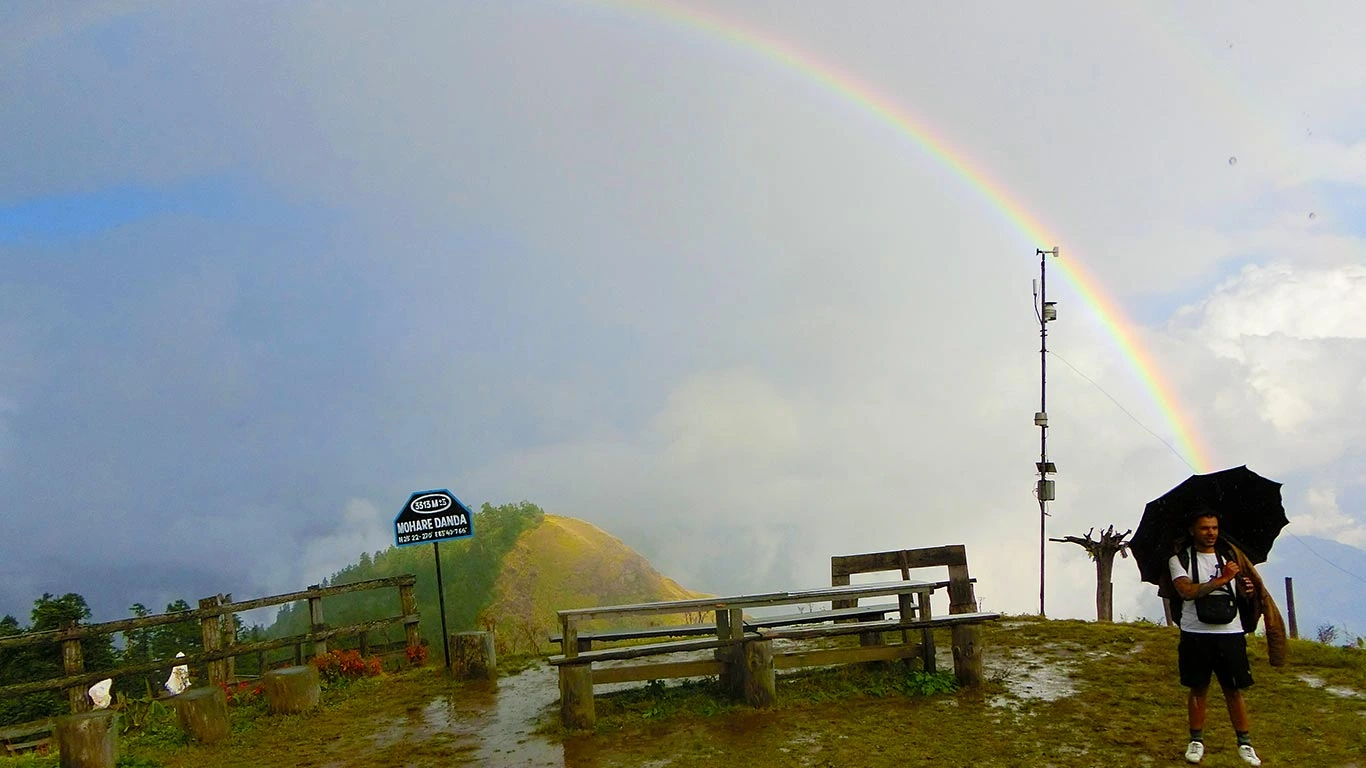
You walk from Nagi to Mohare Danda (3,310 m / 10,860 ft) on this day. The trail goes through forests and open hills. The higher you come, the fresher and the cooler the air. The impression of the mountains around is even more grandiose. The last part is a gradual ascent of the hill to the ridge.
When you arrive at Mohare Danda, you have one of the finest panoramas in the Annapurna country. On a clear day, you are able to see a beautiful sunset. The evening is calm and in the stars. As this is the highest point of the trek, one should stay warm and hydrated.
Day 6: Trek to Deurali (3,090 m) via Poon Hill area
Walking Hours: 5 Hours Trek
Meals Included: Breakfast, Lunch And Dinner
Accommodation: Tea Houses/ Lodge
Max. Altitude: 3,210 m (10,531 ft)
Distance: 9–12 km


You leave Mohare Danda (3,310 m / 10,860 ft) and follow some beautiful woodland paths to Deurali (3,090 m / 10,138 ft) on this day. The trail links to the beautiful Poon Hill region (3, 210 m / 10,531 ft). You can have magnificent mountain sceneries in this renowned vantage point on favorable weather. The road is light with few hills and valleys, and thus the walk is pleasurable.
You arrive after some hours at Deurali and check into a lodge. Hot beverages and warm meals will make you unwind after the walk of the day. It is worth having a good rest at this altitude to maintain high energy levels.
Day 7: Trek to Ghandruk village (1,940 m)
Walking Hours: 5 Hours Trek
Meals Included: Breakfast, Lunch And Dinner
Accommodation: Tea Houses/ Lodge
Max. Altitude: 3,090 m (10,138 ft)
Distance: 10–13 km

Info
Amazing scenery from Poonhill During Mohare danda and poonhill trek

Info
common Myna or Salik pakhi Bird in Mohare Trek
On this day, you will be moving down from Deurali (3,090 m / 10,138 ft) to Ghandruk (1,940 m / 6,364 ft). The trail passes through wooded hills and greenery. Descending the hill, the air grows more comfortable and warmer. You come through rhododendron trees and have a serene environment.
Once you arrive at Ghandruk, you are greeted with ancient stone houses and terraced fields. You will be staying in a lodge and have an opportunity to explore the village in the evening. Ghandruk is a very rich culture, and you can see the local culture, clothing, and day-to-day life. It is a relaxing day when you have trekked at a higher altitude to the lower level.
Day 8: Trek to Nayapul and drive to Pokhara
Walking Hours: 4 To 5 Hours Trek And 2 Hours Drive
Meals Included: Breakfast And Lunch
Accommodation: 3 Star Category Hotel
Max. Altitude: 1,940 m (6,364 ft)
Distance: 12–16 km

Info
Night view of Annapurna South and Barashikhar in Mohare trekking
Info
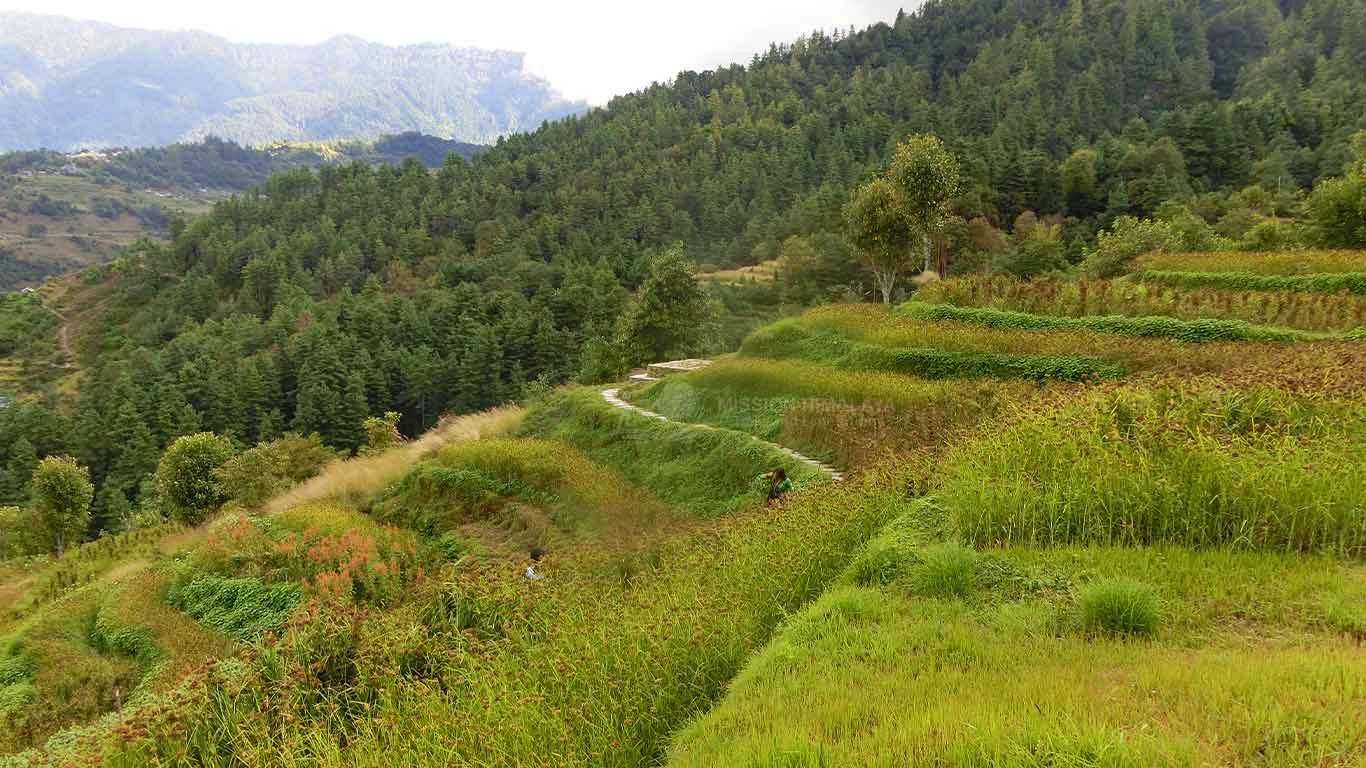
Millet Farming During the Mohare Treks
You begin your trek from Ghandruk (1,940 m / 6,364 ft) and descend to Nayapul (1,070 m / 3,510 ft). The trail goes by forests, rivers, and small settlements. It is predominantly downward, hence walking cautiously is taken to safeguard your knees.
On arriving at Nayapul, you drive back to Pokhara (822 m / 2,697 ft). When you arrive in Pokhara, you get into your hotel and rest. You may take a hot shower, have a nice bed, and have a serene evening at the lake. This is the last day of your actual trekking days, and you have time to celebrate your accomplishment.
Day 9: Return to Kathmandu
Walking Hours: 6–7 hrs drive or 30 min flight
Meals Included: Breakfast
Accommodation: 3 Star Category Hotel
Max. Altitude: 1,355 m (4,446 ft)
Distance: 200 km
After breakfast in Pokhara (822 m / 2,697 ft), you drive back to Kathmandu (1,355 m / 4,446 ft). You can choose to drive back in a tourist bus,or you can take a short flight. The journey offers scenic views of hills and rivers.
Once you reach Kathmandu, you get to your hotel and rest after days of trekking. You can go shopping, visit cafes or explore nearby places if you have energy. This day also acts as a buffer in case of travel delays.
In the evening, you can pack your bags and prepare for departure.
Day 10: International departure
Walking Hours: 30Min Drive
Meals Included: Breakfast
Accommodation: None
Max. Altitude: 1,355 m (4,446 ft)
Distance: 5–15 km
It is your last day in Nepal today. You get ready to leave Kathmandu (1,355 m / 4,446 ft) after breakfast. You can walk around your hotel or have a rest depending on your flight time.
Our representative from Mission Himalaya Trek will take you to the airport. At the end of your trip, you are taking with you some good memories about the mountains, the villages, and the people you encountered on the trek.
Such an experience can come along with a feeling of accomplishment and renewed vision. Your adventure with Mohare Danda comes to a farewell that is smooth and well-organized.
Mohare Danda Trek Cost
Quotation Can be Different According to Number of Days in Trekking, Your Country of Residence, Number of days in City, Guide quality, Equipments, Flights Company, Hotels quality in City, Transportation Type, Number of Trekkers in your Groups, Teahouses quality of Trekking, Meals what include in Trekking, Other Numerous included Items. For exaxt Cost Please Message us in whatsapp. +977-9841965533
-
All transfers in a private vehicle
-
3-star Hotel accommodation in Kathmandu and Pokhara with breakfast.
-
Kathmandu to Pokhara and back to Kathmandu in a tourist bus.
-
Every necessary trekking permit and governmental tax.
-
Accommodation in a tea house/ lodge on the trek.
-
Three meals per day on trekking with hot drinks.
-
Skilled English-speaking guide and porter service (1 porter to 2 trekkers).
-
Trekking equipment support (down jacket, sleeping bag, duffle bag – returnable after trek).
-
First aid kit with the guide.
-
Welcome/ farewell dinner with cultural program.
-
Trek completion certificate.
-
Nepal visa cost and international airfare.
-
Medical expenses, emergency evacuation, and travel insurance.
-
The Kathmandu and Pokhara sightseeing entrance fees.
-
Lunch and dinner in Kathmandu and Pokhara.
-
Personal costs (W-Fi, charging, hot shower, laundry, phone calls).
-
Additional services not mentioned in the itinerary
-
Flight upgrade from Kathmandu to Pokhara (up to the choice).
-
Delay expenses (weather, change of flights, early turnaround cost).
-
Tips for the guide and porter.
-
Any services that have not been listed in the provided section.
Trip Gear


Mohare Danda Trek Related Information
Mohare Danda Trek Difficulty & Daily Physical Demands
The Mohare Danda Trek is a moderate trek, which can be done with a minimal amount of preparation and a basic level of fitness. The highest point of the trek is Mohare Danda (3310 m / 10860 ft), which has thinner air and is more difficult to walk.
The typical time taken in most trekking days is approximately 5-7 hours, and the trails are made of a combination of stone steps, forest trails, and constant climbing and descending parts. The most effort is felt on the climb from Bans KharkatoNagi and further. Nevertheless, the progressive rise in altitude makes your body adapt easily.
This journey should be comfortable, but you need to take your time, take water breaks, and have light snacks to enjoy the tranquil scenic views of the mountain.
Weather and Best Season for the Trip
The best seasons to plan the Mohare Danda Trek are spring (March -May) and autumn (September-November). The woods are bursting in spring with colorful rhododendrons, and the trails are also lively and fresh.
During autumn, the skies are clear, and the mountain views are very good at Mohare Danda (3,310 m /10,860 ft).
The monsoon period (June–September) may cause trails to be muddy and slippery due to the heavy rainfall, as well as clouds to obscure the view. During winter, it is colder at high altitudes; however, days can be clear.
The spring and autumn seasons offer the most favorable combination of favourable weather, good temperatures, and visibility to most travellers intending to carry out the Mohare Danda trek in 10 days.
Altitude, Acclimatization Strategy & AMS Prevention
The highest point of the trek is Mohare Danda (3,310 m / 10,860 ft), at which some of the trekkers might experience some mild altitude symptoms. In order to be safe, it is better to have a slow progression and allow the body time to adapt.
By drinking water adequately, eating well, and having a good rest at least once a day, you improve your body to fit. You must not hurry, but maintain a slow pace of walking.
In case of such symptoms as headache or dizziness, rest or descent is preferable. The trekking itinerary is developed at a slow increase in altitude, and it aids in healthy acclimatization. This strategy ensures that most tourists make the Mohare Danda community trek experience more comfortable and safer.
Training, Fitness Level, and Mental Preparation
The Mohare Danda Trek does not require you to be an athlete, but basic fitness is a must. Frequent walking, hiking, or stair climbing prior to the trip helps in strength and stamina building. A light backpack during practice can train you for the everyday situation of trekking.
It is also important to prepare mentally. You must be prepared for flexible schedules, mornings and fluctuating climate. Being positive and adaptable enables you to have a better time in the journey. The journey slowly takes you to elevated heights such as Mohare Danda (3,310 m / 10,860 ft), and therefore, patience is important.
When you are relaxed, you get to experience nature, meet the local people and get full participation in the trek.
Meals on the Trail: Food Quality, Menu Variety & Dietary Options
In the Mohare Danda Trek, you get three meals a day: breakfast, lunch, and dinner. The food is locally prepared, simple, and fresh. Foods eaten daily are dal bhat (rice and lentils), noodles, soups, vegetables, eggs, and bread. These foods give sufficient energy to do daily hiking.
Higher locations, such as Mohare Danda (3,310 m / 10,860 ft), can have fewer menu choices because getting there can be difficult. Hot beverages like tea and coffee are also sold and will keep you warm.
In case you have food requirements such as vegetarian or low-spice food, you need to notify Mission Himalaya Trek well before. The flexible style will assist you in having meals on the trek.
Accommodation on the Mohare Danda trek
On the Mohare Danda Trek, accommodation is provided in the form of comfortable hotels in cities and simple lodges during the days spent on the trek. In Kathmandu and Pokhara, you will be staying in standard hotels, which have modern facilities.
On the way, you will be staying in tea houses and community lodges. These lodges have basic but clean rooms, and in most cases, the rooms have shared bathrooms. When in elevated areas such as Mohare Danda (3,310 m / 10,860 ft), the nights are chilly, warm clothing or a sleeping bag liner would come in handy.
The community lodge system is an extra feature since the locals offer a touch of warmth. This form of accommodation enables you to experience local culture and, at the same time, have a tranquil mountain setting.
Visa, Trekking Permits, and Local Entry Requirements.
In order to participate in the Mohare Danda Trek, the majority of travelers require a tourist visa for Nepal that is provided at the airport. It is an easy procedure and requires a passport and money.
For the trek, you will require a permit for the Annapurna Conservation Area. This permit will allow you to enter the area, all the way to Mohare Danda (3,310 m / 10,860 ft). Children who are below 10 years are not likely to require a permit.
When you come with Mission Himalaya Trek, we do all the permits, and you can solely focus on your trek.
It is advisable to have copies of your documents. These procedures make the trekking in Nepal smooth and organized.
Health, Hygiene, and Safety Protocols
The Mohare Danda Trek is very serious in terms of health and safety. Wash your hands and put on the hand sanitizer prior to eating. Consuming the food that is prepared freshly prevents stomach issues. Bring first aid supplies such as bandages, medicine, and blister care supplies.
On higher elevations such as Mohare Danda (3,310 m / 10,860 ft), being warm and well-slept is healthy. One should consider the environmental laws by minimizing waste and protecting the environment.
Guides carry a first aid kit as a precaution; however, you must bring your own personal medicines. Simple precautions are taken daily in order to share a safe and pleasant experience of trekking.
Hydration Tips & Avoiding Dehydration at High Altitude
Drinking plenty of water is a crucial part of the Mohare Danda Trek, particularly in altitudes such as Mohare Danda (3,310 m / 10,860 ft). The air is not humid, and you can lose fluids very fast, even when you do not feel hot.
Water should be drunk throughout the day and not only when you feel thirsty. Hot beverages such as tea are also effective at keeping you warm and dry. Always drink boiled, purified, or bottled water only.
The easiest method of determining hydration is by viewing the color of the urine; that is, the urine should be light yellowish.
Although hydration helps maintain energy and comfort, it should be combined with slow walking and proper rest. Such habits will make you stronger and enjoy the journey.
Risk Factors on 10 days Mohare Danda trek
The Mohare Danda Trek is not risky, but there are certain factors you have to stay aware of. At elevations such as Mohare Danda (3,310 m / 10,860 ft), slight cases of altitude sickness may be experienced when you climb too fast. The trail is also not always easy, and there are stone steps and steep places that can cause slips.
The weather is unpredictable, and more so when it is monsoon season, and the rain can cause muddy tracks or landslides. There is also a delay that can be caused by road or flight conditions.
These risks can be taken care of by being prepared, taking the advice of your guide, and having travel insurance. With knowledge and planning, you will be able to finish the trek without any problems.
Transportation
The Mohare Danda Trek is arranged well in transportation by Mission Himalaya Trek to facilitate your trip. You start with airport transfers in Kathmandu, then you move to Pokhara either on a short flight or tourist bus.
You start your journey from Pokhara (822 m / 2,697 ft) and head to Galeshwor (1,100 m / 3,608 ft), which is the initial point of the trek. The trek ends at Nayapul (1,070 m, 3,510 ft ), and from here you go by vehicle back to Pokhara.
Winding mountain roads make road travel in Nepal a slow process, and therefore, it is good to carry snacks and water. These transport facilities render the Mohare Danda Trek easy and carefully controlled.
Travel Insurance
The Mohare Danda Trek highly needs travel insurance since the trek is undertaken in the mountainous regions. You should choose an itinerary that includes trekking up to Mohare Danda (3,310 m / 10,860 ft).
Emergency evacuation, particularly helicopter rescue, should also be part of the package in the case of severe illness or injury. It should also cover travel delays, trip cancellation, and medical expenses. In the 10-day Mohare Danda trek, there may be some unforeseen events such as weather, flight delays, etc.
Proper insurance will provide one with peace of mind and coverage. It is always good to read your policy before traveling so that you are fully covered.
Mobile Network, Internet & Charging Facilities
The mobile network coverage is available within certain areas during the Mohare Danda Trek, but it might be bad or no longer available in remote parts.
You will find basic signals in villages along the route, including in places near Mohare Danda (3,310 m / 10,860 ft). There are lodges that have Wi-Fi and charging facilities, although they commonly charge modest fees. It would be prudent to carry a power bank to ensure that your gadgets are charged.
Lower temperatures may decrease the battery life, and therefore, keeping the devices warm will help. Limited connectivity helps you enjoy nature more while still allowing you to stay connected when needed.
Your Extra Expenses
The Mohare Danda Trek package by Mission Himalaya Trek covers a wide range of services, although you will need to expect additional spending of your own.
This can be Wi-Fi, charge, hot shower, laundry, and beverages. In such cities as Kathmandu (1,355 m / 4,446 ft) and Pokhara (822 m / 2,697 ft), you might have to pay extra for meals not included in the package. You are also supposed to tip the guides and porters, and this is a normal thing. Upgrades and snacks, as well as souvenirs, can add to your budget.
Scheduling a minor additional budget will allow you to make the trip more fun and enable you to have an improved experience on the trekking side.
Language & Communication
The communication on the Mohare Danda Trek is easy-going. The primary language is Nepali, and ethnic languages can also be used by the local communities. Your guide speaks English and will facilitate communication and make your trip convenient.
Simple greetings such as the use of Namaste are welcomed in villages located along the Mohare Danda community trek route. Addressing the locals in a polite manner and respecting them assists in getting along with the locals.
Little attempts at communication bring positive experiences. Your guide explains culture and practices, and day-to-day living, which will make your trek much more worthwhile and fun.
Photography, Drone Use & Filming Rules
The Mohare Danda Trek has great photo opportunities, particularly from such points of view as Mohare Danda (3,310 m / 10,860 ft). Moments to be taken are the sunrise and the mountain views.
Incidentally, one should always seek permission before taking a photo of people or in temples. This is an expression of respect for the local culture.
In Nepal, drones are very restricted, and one has to be granted special permission prior to flying. In a number of places, drones are not authorized without proper government permits. In case you want to film professionally, it is a good idea to get permits.
By observing these few tips, you can make the experience of photography responsible throughout your trek.
Festivals, Monasteries & Cultural Encounters
The Mohare Danda Trek is very rich in cultural experiences with life in the village. You pass through areas where the Magar and Gurung communities live, and their traditional culture is still well preserved.
Just before the trek, it is worth visiting a local temple near Galeshwor (1,100 m / 3,608 ft). In case your visit coincides with such big festivals as Dashain or Tihar, you can observe festivals and family events. Such cultural experiences make your experience worth living through.
The Mohare Danda community trek experience enables you to witness the local lifestyles, traditions, and hospitality naturally and respectfully.
Practical Advice for First-Time Visitors
In case this is the first time you are taking the Mohare Danda Trek, you can easily prepare and make the experience safe. Always keep your passport, permits and documents with you. Walk slowly and do not hurry when traveling to higher altitudes such as Mohare Danda (3,310 m / 10,860 ft).
Drink enough water and listen to your body. Respect the local culture by dressing in modest clothes and removing shoes in places of worship. Always seek permission to take pictures.
The attitude and flexibility positively influence the experience and make it enjoyable. These little measures make your journey secure, comfortable and pleasant.
Trip Extensions After the Trek
You can continue your trip in a variety of ways after the completion of the Mohare Danda Trek. Pokhara (822 m / 2,697 ft) is a major attraction where one can have a good rest or sightseeing along the lakeside or do short hikes. There are also additional trekking paths in the Annapurna region that you can visit in case of additional time. Kathmandu (1,355 m / 4,446 ft) is a place where you can see heritage sites, temples, and markets.
Your stay could be extended by a couple of days to get to know more about the culture and the nature of Nepal. These extensions will assist you in enjoying the best of your trip and leave behind some great memories.
Mohare Danda Trek FAQ'S
A
Reservation of 1-2 months ahead is necessary, particularly during spring and autumn seasons, to be able to get the permits, accommodation, and the availability of guides.
A
Yes, it is highly advised that a licensed guide be hired due to safety, navigational, cultural, and assistance when unforeseen circumstances arise along the path.
A
A small daypack with basic things should be carried, and a main duffel bag with a weight of approximately 10-12 kg will be carried by porters.
A
No, there are no ATMs on the trail. Before the trek, you must take enough cash from Kathmandu or Pokhara, and then begin the trek.
A
Toilet facilities in most lodges are not very elaborate, and they are usually shared. Western-type toilets are usually present at the lower parts but rarely at high levels.
A
Yes, most lodges will charge you an additional fee; however, higher-ups may be short of power.
A
Yes, lodges have boiled water or filtered water. It is necessary to bring purification pills or a filtration bottle as a precaution.
A
If needed, you can descend with your guide’s support. Depending on your condition and location, alternative transport or route changes can be arranged.
A
No rigid age restriction is provided, though the participants must be in good physical condition and possess fundamental fitness to cope with the daily walking and elevation environment.
A
Sleeping bags are normally included; however, carrying your own or a liner is an added comfort and hygiene on colder nights.
A
It is not compulsory, but a sign of gratitude which is usually offered to the guides and porters who will help you in your trek.
A
In certain villages, there might be basic health posts, though the more serious cases will have to be brought back to Pokhara or Kathmandu.
A
Yes, the planned itinerary can be tailored according to your time, fitness level, and preferences with due planning beforehand.
A
Trekking shoes are very comfortable, well-worn, and have a good grip so that they can be used to work safely with stone steps, uneven tracks, and descents.
A
One can go on solo trekking; however, it is safer to go trekking with a guide, and it is also more supportive in areas that are remote and less populated.
A
Yes, usually one porter carries luggage for two trekkers, and the maximum weight is about 20-25 kg.
A
Yes, before you go trekking, Kathmandu has numerous stores where you can get or rent trekking equipment at affordable rates.
A
In certain lodges, hot showers can be taken at an additional fee.
A
Yes, you can lengthen your stay where necessary, provided that there is a lodge available and you coordinate with your guide.
Tripadvisor Reviews
Google Reviews
5.0
317 reviews