 English
 Dutch
Dutch Japanese
 Hindi
Hindi Italian
 Spanish
 French
 German
 Chinese
 Korean
 Arabic
 Hebrew
 Russian
 Portuguese
 Danish
 Czech
Czech Polish
 Swedish


Need Help? Let's Talk
+977 9841965533
Trip Facts
|
Trip Duration
16 Days |
|
|
Region
Langtang Treks |
|
|
Country
Nepal |
|
|
Group Size
1 To 15 Person |
|
|
Arrival On
Kathmandu |
|
|
Departure From
Kathmandu |
|
|
Best Season
March-may and Sept-Nov |
|
|
Max Altitude
3900m |
|
 Difficult Trekking is both moderate and difficult. Altitude you reach is around 4000-5500 meters. Hike about 6 hours per day and requires to be physically fit and acclimatization is required.
| Trip Grade Difficult |
|
Activities
Nepal Trekking
|
Langtang Gosaikunda Helambu Trek Overview
The Langtang Gosaikunda Helambu Trek offers a complete Himalayan journey that combines mountain scenery, sacred lakes, and rich cultural experiences. This is a journey that goes through three very different areas, the Langtang Valley, Gosaikunda, and Helambu, which are characterized by their landscapes and nature. It is an excellent option for tourists who do not want to make domestic flights but have a variety of them in one trip.
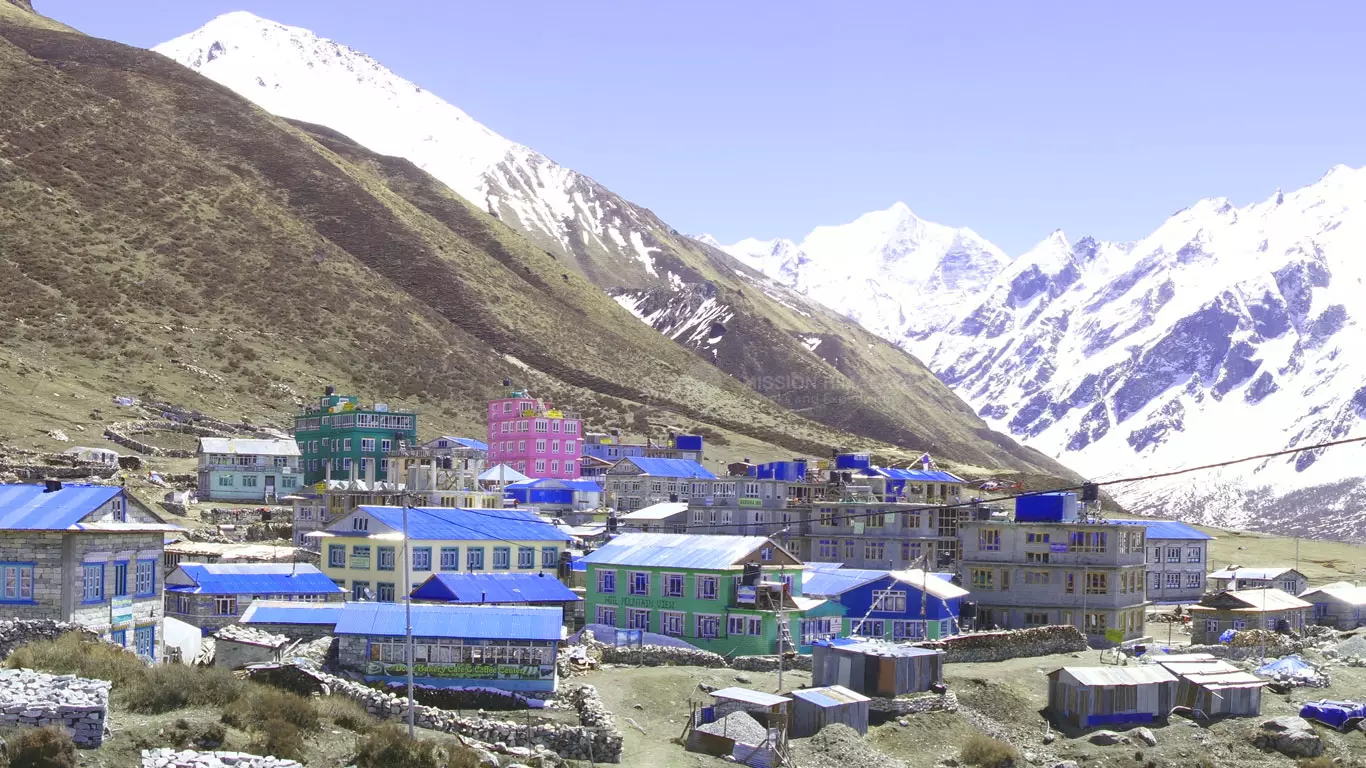
The Langtang Gosaikunda and Helambu Trek starts with a trip by road from Kathmandu to Syabrubesi, followed by arrival in Nepal. From here, you proceed along the Langtang River through woodland trails along rhododendron and oak trees. The higher you climb, the valley becomes open, and you arrive at Langtang Village and Kyanjin Gompa (3,870 m / 12,697 ft). This is a beautiful mountainous area, and one can have some time to get acquainted. Visiting peaks such as Tserko Ri (4,985 m / 16,355 ft) to see a panoramic view is also possible.
The pilgrimage then changes to Gosaikunda (4,380 m / 14,370 ft), an alpine lake which is sacred and is circled by mountains. It is a highly spiritual place, particularly for Hindu pilgrims. This place is calm and isolated, with clean water and expansive scenery.
The Langtang Gosaikunda and Helambu Trek has one of the most crucial highlights in the form of going over Lauribina Pass (4,610 m / 15,125 ft), the highest point of the trip. This part involves a steady pace and good preparation, but a great sense of achievement is felt.
Following the pass, the Langtang Gosaikunda and Helambu Trek leads to the Helambu area, where the landscape becomes different. The walk will take you across green hills, forests, and traditional villages like Tarkeghyang and Sermathang. Life in this place is slow, and you are able to enjoy local culture, monasteries, and routine in the villages.
During the Langtang Gosaikunda and Helambu Trek, you will be accommodated in teahouse lodges, eat simple meals, and meet the local communities. The itinerary at Mission Himalaya Treks will be designed to provide sufficient acclimatization and equal walking days, which will enable you to have a safe and comfortable travel.
All in all, the Langtang Gosaikunda and Helambu Trek is a balanced trekking adventure with all the elements of nature, culture, and adventure in a single adventure of its own.

5.0
317 reviews
Trip Highlights:
- Travel to three different areas in a single trip: Langtang, Gosainkunda, and Helambu.
- See the holy Gosainkunda Lake (4,380 m / 14,370 ft).
- Cross the stunning Lauribina Pass (4,610 m / 15,125 ft).
- Have a spectacular view of sunrise from Tserko Ri (4,985 m / 16,355 ft).
- Trek in the gorgeous Langtang National Park.
- Experience the cultures of Tamang, Sherpa, and Helambu villages.
- Explore old monasteries, mani walls, and prayer wheels.
- Hike in forests, rivers, alpine lakes, and ridge villages.
- Stay in cozy teahouses and warm local meals.
Langtang Gosaikunda Helambu Trek Itinerary
Day 1: Arrive in Kathmandu and meet your trek team
Walking Hours: 30 Minutes Driving
Meals Included: Welcome Dinner
Accommodation: 3 Star Category Hotel
Max. Altitude: 1300m/4264ft
Distance: Short city transfers

Info
Guide Introduction for Langtang circuit Trek

Info
Welcome for Langtang Gosaikunda Circuit Treks
You land at Tribhuvan International Airport andare met by the crew from Mission Himalaya Treks and then taken to your Kathmandu hotel (1,300 m / 4,265 ft). The ride to the city provides you with a preview of the busy streets and culture of the city. Once you have checked in, you relax and unwind after your travel. The afternoon is free to allow your body to relax after travelling.
Your trekking guide and team meet with you in the evening. You check your equipment and go through the entire trek itinerary collectively, which makes you feel ready and confident.
Afterwards, you get a warm welcome dinner in traditional Nepali food and culture. It is an easy beginning with the comfort before the Langtang Gosaikunda and Helambu Trek.
Day 2: Drive from Kathmandu to Syabrubesi
Walking Hours: 7 Hours Driving
Meals Included: Breakfast, Lunch And Dinner
Accommodation: Tea House/ Lodge
Max. Altitude: 1550m/5101ft
Distance: 122 km


You start your picturesque drive after breakfast out of Kathmandu (1,300 m / 4,265 ft) into a scenic one, to Syabrubesi (1,550 m / 5,085 ft). The path is through mountainous winding roads with rivers and terraced hills. You can have a glimpse of Ganesh Himal and the nearby mountains as you travel on a clear day.
The trip lasts approximately 7 hours and provides varying scenery, from the urban city roads to the calmer countryside. You drive along little villages, farms, and wooded hills, which provide you with a slow initiation into the beauty of the area.
As soon as you get to Syabrubesi, you get into a lodge and have a rest. As no trekking is done today, your body is given time to adjust slowly. This pleasant evening will set you in a good mood before the first day of walking in your journey.
Day 3: Trek from Syabrubesi to Lama Hotel
Walking Hours: 5 To 6 Hour Trekking
Meals Included: Breakfast, Lunch And Dinner
Accommodation: Tea House/ Lodge
Max. Altitude: 2380m/7830ft
Distance: 1–12 km


This is the first walking day of your Langtang Gosaikunda and Helambu Trek. You start walking out of Syabrubesi (1,550 m / 5,085 ft) to Lama Hotel (2,380 m / 7,808 ft). The route goes along the Langtang Khola river and through green rhododendron and oak forests.
You pass several suspension bridges, and they are exciting and offer beautiful scenery of the river. As one goes further into the valley, the environment gets much quieter and more natural. The road meanders at a slow pace, and then you begin to sense the change of village life into the wilderness of the mountain.
The hike will take approximately 5 to 6 hours, and the pace will be slow to enable you to appreciate the view. By the time you get to Lama Hotel, the forest is thick and calm. You have a teahouse to rest after the walk in the day, and establish a firm foundation for the days above.
Day 4: Trek from Lama Hotel to Mundu via Langtang Village
Walking Hours: 6 To 7 Hour Trekking
Meals Included: Breakfast, Lunch And Dinner
Accommodation: Tea House/ Lodge
Max. Altitude: 3543m/11621ft
Distance: 14–15 km


Following breakfast, you leave Lama Hotel (2,380 m / 7,808 ft) and proceed with your gradual ascent into the Langtang Valley. The path cuts across woody areas, cascades, and the open plains like GhodaTabela, where the landscape starts expanding. The higher you climb, the more you see of the mountains, and the valley opens up before you.
You get to Langtang Village, where you will find evidence of post-quake reconstruction. The region portrays the power and the robustness of the community. You proceed on hiking after a short rest to Mundu (3,543 m / 11,624 ft), where you can enjoy a much quieter place to stay the night.
Day is a slow, gradual ascending climb, which makes your body adapt to an elevated altitude. You get into a lodge and sleep, and you are ready to take the next step into the valley.
Day 5: Trek from Mundu to Kyanjin Gompa
Walking Hours: 4 To 5 Hour Trekking
Meals Included: Breakfast, Lunch And Dinner
Accommodation: Tea House/ Lodge
Max. Altitude: 3870m/12697ft
Distance: 5–6 km


It is a shorter trekking day today, and you can walk at a leisurely pace fromMundu (3,543 m / 11,624 ft) to Kyanjin Gompa (3,870 m / 12,697 ft). The trail is in an open valley landscape with panoramic mountainous views. There are prayer wheels, mani walls, chortens, and carved stones, all of which demonstrate a strong Buddhist tradition on the way.
The walk lasts 4 to 5 hours and provides you with time to relax and take in the environment. You are even closer to Kyanjin Gompa as the valley opens and the mountains soar up around you.
Once in the village, you check into a lodge and go sightseeing. You may visit the monastery area and find a peaceful place. This is a necessary stay overnight to ensure that it gets acclimatized to the higher altitudes that lie ahead in the next few days.
Day 6: Acclimatization day with a hike to Tserko Ri
Walking Hours: 4 Hours Hiking
Meals Included: Breakfast, Lunch And Dinner
Accommodation: Tea House/ Lodge
Max. Altitude: 4985m/16355ft
Distance: 15 km round trip


Today will be spent on acclimatization at Kyanjin Gompa (3,870 m / 12,697 ft) during the Langtang Gosaikunda and Helambu Trek. Following breakfast, you go on a hike to Tserko Ri (4,985 m / 16,355 ft), and this will ensure your body gets used to the higher altitude. The route runs across the open hilly parts and yak grazing fields, where people can have a calm atmosphere in the mountains.
The climb is approximately 4 hours, depending on speed. The higher you get, the better you are rewarded with sweeping sceneries of the Langtang range, particularly during the early morning sunlight. The landscape is dramatic, and it features snow-capped mountains and clear skies.
Once you have reached the peak, you go back to Kyanjin and have a rest. During the afternoon, you may visit the village and the monastery, or just have a rest. This day of active rest is significant in the preparation of you towards the elevated parts that lie ahead.
Day 7: Trek from Kyanjin Gompa back to Lama Hotel
Walking Hours: 6 To 7 Hour Trekking
Meals Included: Breakfast, Lunch And Dinner
Accommodation: Tea House/ Lodge
Max. Altitude: 3870m/12697ft
Distance: 19–20 km


Once you have eaten breakfast, you then start heading down Kyanjin Gompa (3,870 m / 12,697 ft) to Lama Hotel (2,380 m / 7,808 ft). The trail leads through the same path in the valley; however, the descent provides new impressions and another look at the landscape.
You go through Langtang Village and forest regions, where you see details that could not have been seen on your way up. It is a long walk, taking around 6 to 7 hours, hence pacing is important. Trekking poles are useful to decrease the load on the knees on descent.
The air becomes more comfortable and richer as you come down the mountain. By the time you get to Lama Hotel, you will be in a peaceful forest environment lodge. This will be a preparation stage for your body for the next phase of the trek to the Gosaikunda route.
Day 8: Trek from Lama Hotel to ThuloSyabru
Walking Hours: 5 To 6 Hours Trekking
Meals Included: Breakfast, Lunch And Dinner
Accommodation: Tea House/ Lodge
Max. Altitude: 2230m/7316ft
Distance: 10–11 km


You move out of Lama Hotel (2,380 m / 7,808 ft) and start walking to ThuloSyabru (2,230 m / 7,316 ft). The path runs along the river through places such as Bamboo and Rimche and is a combination of easy and short ascents. Certain sections of the road are very rough, especially around landslides.
The trail soon starts to change direction and does not lead to the main Langtang Valley. You set off to climb ThuloSyabru, a small village that is situated in the hills. The scenery opens up as you rise in height, and you have a different scenery in comparison with the previous valley parts.
The walk is approximately 5 to 6 hours, which allows one to appreciate the landscape. When you come there, you get into a lodge and rest. This resting-place is a good preparation before the next ascent leading to Gosaikunda.
Day 9: Trek from ThuloSyabru to Shin Gompa
Walking Hours: 4 To 5 Hours Trekking
Meals Included: Breakfast, Lunch And Dinner
Accommodation: Tea House/ Lodge
Max. Altitude: 3330m/10925ft
Distance: 6–7 km


You start climbing steadily after breakfast, starting at ThuloSyabru (2,230 m / 7,316 ft) towards Shin Gompa (3,330 m / 10,925 ft). The route runs through woods with rhododendron trees and chortens, and little monastery locations are found on the road.
It is a less arduous trek and only requires 4 or 5 hours, yet the ascent is gradual and significant towards appropriate altitude acquisition. The higher temperature and shifting scenery indicate that you are progressing to elevated land.
The closer you get to Shin Gompa, the calmer and more peaceful it is. The village is not very busy, and thus it is an easy place to sleep. You get into a lodge and unwind. This day assists in the minimization of the altitude sickness risk prior to proceeding to the higher Gosaikunda lakes.
Day 10: Trek from Shin Gompa to Gosaikunda
Walking Hours: 5 To 6 Hours Trekking
Meals Included: Breakfast, Lunch And Dinner
Accommodation: Tea House/ Lodge
Max. Altitude: 4460m/14632ft
Distance: 9–11 km


It is today, you walk from Shin Gompa (3,330 m / 10,925 ft) to the holy lakes of Gosaikunda (4,380 m / 14,370 ft) on this day. The path rises gradually through the alpine landscape, where there are no villages, but open rocky ridges.
The higher up you go, the more you can see, and there are clear mountain panoramas on a fine day. The hike has approximately 5 to 6 hours and is to be walked steadily since the elevation is on the rise.
You finally arrive at the Gosaikunda lakes, which are considered a holy place to the Hindu pilgrims. The place is calm and religious, with mountains that are high. Upon arrival, you get yourself into a lodge close to the lake. This may be a cold altitude, so one should wear warm clothes. The rest will be a training for the difficult pass crossing on the next day.
Day 11: Trek from Gosaikunda to Ghopte via Lauribina Pass
Walking Hours: 6 To 7 Hour Trekking
Meals Included: Breakfast, Lunch And Dinner
Accommodation: Tea House/ Lodge
Max. Altitude: 3440m/11286ft
Distance: 10–11 km


You begin fromGosaikunda (4,380 m / 14,370 ft) in the early morning to traverse the highest point of the trek, Lauribina Pass (4,610 m / 15,125 ft). The morning is significant as it has good weather and safe walking conditions. The path goes past a number of alpine lakes and ascends to the pass.
It is difficult to climb, and you do it gradually, breathing steadily. You take a brief break at the top to view and take pictures. Once you cross the pass, you start a long ride down to the Helambu region.
You go past Surya Kunda and proceed down the hill till you arrive at Ghopte (3,440 m / 11,286 ft). The fall is a way of making your body acclimatize to high altitude. After a hard yet satisfying day, you get into a lodge and sleep.
Day 12: Trek from Ghopte to Melamchi Gaun
Walking Hours: 6 To 7 Hour Trekking
Meals Included: Breakfast, Lunch And Dinner
Accommodation: Tea House/ Lodge
Max. Altitude: 2560m/8399ft
Distance: 14–16 km

Info
Basic Teahouse Accommodation in Phedi after gosaikunda trek

Info
Orchid Flowers in Langtang gosaikunda Circuit Trekking
You have your breakfast, and then leave Ghopte (3,440 m / 11,286 ft) and proceed along wooded paths. The course will have both ascending and descending sections that will provide a combination of hard work and rest. When you are walking, the forest is getting thicker, and the air is becoming richer on your way down.
You cross ridge points at Tharepati, where you can have panoramic views of the hills and the landscapes. The road next proceeds down into woodland and over suspension bridges.
6 or 7 hours of walking, and you are in MelamchiGaun (2,560 m / 8,399 ft). The village has a cultural experience and monastery sites, as well as local traditional life. You get into a lodge and spend an easy night in this serene place.
Day 13: Trek from Melamchi Gaun to Tarkeghyang
Walking Hours: 5 To 6 Hour Trekking
Meals Included: Breakfast, Lunch And Dinner
Accommodation: Tea House/ Lodge
Max. Altitude: 2590m/8497ft
Distance: : 8–10 km


You start your day at MelamchiGaun (2,560 m / 8,399 ft) and go through forest and village trails. On your way, you pass by stupas, streams, and peaceful settlements. The road provides both a nature and culture mix.
The trail has some ascents, and still, it is not hard with the constant speed. You can hear birds in the forest as well as see yaks grazing, which adds to the calmness. Close by, there is the AmaYangripeak (3,800 m / 12,467 ft), which is one of the highlights in the area.
After walking for 4 to 6 hours,you will reachTarkeghyang (2,590 m / 8,497 ft). It is the village of monasteries and a conservative way of life. You stay in a lodge and make the best of the Helambu cultural diversity.
Day 14: Trek from Tarkeghyang to Sermathang
Walking Hours: 4 To 5 Hour Trekking
Meals Included: Breakfast, Lunch And Dinner
Accommodation: Tea House/ Lodge
Max. Altitude: 2610m/8563ft
Distance: 8 km

Info
Tarkeghyang Teahouse on Langtang Gosaikunda Circuit Trek

Info
Homestay in langtang Circuit Trekking
It is a fairly light day of trekking today. You walk along forest trails and villages (2,590 m / 8,497 ft) of Tarkeghyang. It is a walking trail, which is not very tough, and you can enjoy the surrounding areas without having to use a lot of physical effort.
On the road, you find many walls, chortens, and monasteries that are representative of the local culture. The landscape grows more visible, and the weather seems colder than in the elevated areas.
Walking for a few hours will get you to Sermathang (2,610 m / 8,563 ft). The village has a broad scenery of the Jugal Himal. You take a rest at a lodge and have a tranquil evening in the prelude to the last trekking day.
Day 15: Trek to Melamchi Bazaar and drive back to Kathmandu
Walking Hours: 4 Hours Trekking And 2 Hours Driving
Meals Included: Breakfast And Lunch
Accommodation: 3 Star Category Hotel
Max. Altitude: 1355M
Distance: 11 km trekking and road transfer


You start your last day of Langtang Gosaikunda and Helambu Trek fromSermathang (2,610 m / 8,563 ft). The path winds down through fields, terraces, and villages. It is not as strenuous as it used to be in the past, but walking cautiously is still needed when approaching the downhill.
A few hours of walking lead you to Melamchi Bazaar. From here, you drive back to Kathmandu (1,300 m / 4,265 ft), which takes approximately two hours.
On reaching the city, you get back to your hotel and rest. The team can exchange post-trip reflections and give a certificate of completion. During the evening, you will have a pleasant dinner, and the successful Langtang Gosaikunda and Helambu Trek will be celebrated.
Day 16: Shopping and departure
Walking Hours: 30 Minutes Driving
Meals Included: Breakfast
Accommodation: None
Max. Altitude: 1300m/4265ft
Distance: Short city transfers

Info
Certificate Distribution after Langtang Gosaikunda Helambu Trek

Info
TIA International departure Gate
You find yourself in Kathmandu (1,300 m / 4,265 ft) on your last day of your Langtang Gosaikunda and Helambu Trek and have breakfast in your hotel. There is some free time to do last-minute shopping or sightseeing in the city. You may purchase local crafts, tea, or souvenirs in order to keep the memory of your trip.
It is a lazy day, and you have time to pack your things and get ready to leave. Your airport transfer is scheduled some 3 hours before your flight.
When you are going to Tribhuvan International Airport, you part with your team and think about your experience in the trek. That is the end of your Langtang Gosaikunda and Helambu Trek, and you have left behind you some unforgettable memories of the mountains and the culture.
Langtang Gosaikunda Helambu Trek Cost
Quotation Can be Different According to Number of Days in Trekking, Your Country of Residence, Number of days in City, Guide quality, Equipments, Flights Company, Hotels quality in City, Transportation Type, Number of Trekkers in your Groups, Teahouses quality of Trekking, Meals what include in Trekking, Other Numerous included Items. For exaxt Cost Please Message us in whatsapp. +977-9841965533
-
Pickups and drop-offs from airports and hotels
-
3-star hotel in Kathmandu and teahouses during the trek on a twin-shared basis.
-
Breakfast in Kathmandu and all meals during the trek.
-
Transportation in a comfortable private vehicle.
-
English-speaking trained and experienced guide with salary food accommodation and insurance.
-
Additional assistant trekking guide if your group size is 6 or more than 6 persons.
-
One strong porter with salary, meals, accommodation, transportation, and insurance.
-
Potter service charges during the trek.
-
All fees for sightseeing including entry fees for visiting the temple(s), monument(s), trekking and national parks.
-
Welcome and farewell dinners.
-
Down jacket, four-seasonal sleeping bag, and trekking map (down jacket and sleeping bag are to be returned after trip completion).
-
A comprehensive medical kit.
-
All necessary paper work(s) and permit(s).
-
All applicable taxes and service charges.
-
Nepal Entry Visa Fees.
-
International airfare to and from Kathmandu.
-
Excess baggage charges.
-
Lunch and evening meals in Kathmandu.
-
Other meals and drinks rather than mentioned in itinerary.
-
Extra night accommodation(s).
-
Travel and rescue insurance.
-
Personal expenses (phone calls, laundry, bar bills, battery recharge, extra porters, bottle or boiled water, hot shower, heater charge, etc.).
-
Tips for guides and porters.
-
The services which are not included in our ‘Cost Included’ section.
Trip Gear


Langtang Gosaikunda Helambu Trek Map
 Download Map
Langtang Gosaikunda Helambu Trek Related Information
Difficulty and Physical Demands
Langtang Gosaikunda and Helambu Trek is said to be a hard trek which needs good stamina and constant effort. The average day will be 5to7 hours on rough trails with sharp ascents and rocky descents. The path has frequent elevation rises, which may render walking more exhausting.
The most difficult of all is often the crossing of Lauribina Pass (4,610 m / 15,125 ft), where you face altitude, wind, and long hours converge. There is no technical climbing experience required; only good physical fitness and concentration of mind is enough. When properly paced and prepared, you can make the Langtang Gosaikunda and Helambu Trek safely and have fun.
Best Season and Weather Conditions
The ideal period for Langtang Gosaikunda and Helambu Trek is in spring (March-May) and autumn (September-November). During these seasons, the weather is often clear with stable weather patterns, and the mountains are seen more clearly. The spring provides rhododendron woods, and autumn provides cool scenery after the monsoon rains.
The trail may be more challenging in winter since heavy snowfall may occur at higher elevations such as Gosaikunda (4,380 m / 14,370 ft). The rainy season is accompanied by rain and wet roads.
At high altitudes, even during the most favorable seasons, nights might be quite chilly, and fierce winds are not uncommon along the pass; therefore, it should be kept in mind that such a plan as Langtang Gosaikunda and Helambu Trek should be flexible.
Altitude, Acclimatization, and AMS Prevention
The Langtang Gosaikunda and Helambu Trek are sensitive to altitude. You are sleeping in Langtang Valley (3,500 m / 11,483 ft), Gosaikunda (4,380 m / 14,370 ft), and over Lauribina Pass (4,610 m / 15,125 ft).
Correct acclimatization helps your body to adapt to the low oxygen levels. The itinerary will have an additional day at Kyanjin Gompa (3,870 m / 12,697 ft) and a hike to Tserko Ri (4,985 m / 16,355 ft).
Slowly walking, taking enough water, and eating well are measures to avoid altitude sickness. Be aware of such symptoms as headache or dizziness. The best way is to go downwards in case the symptoms become severe during the Langtang GosaikundaHelambu Trek.
Training, Fitness, and Mental Preparation
Regular physical training is a requirement in preparation of Langtang Gosaikunda and Helambu Trek. You must work on stamina by engaging in such exercises as hiking, running, cycling, or using stairs. Leg strength activities make you find the long downhill and steep uphill climbs easier to manage.
The Langtang Gosaikunda and Helambu Trek is a long process, and therefore, training should be done continuously as opposed to a few sporadic exercises.
Preparation of the mind is also vital during the Langtang GosaikundaHelambu Trek. You might endure cold weather, basic conditions of living, and altered arrangements. Patience, working with your guide, and having a positive attitude will enable you to enjoy the Langtang Gosaikunda and Helambu Trek and cope with the hardships more conveniently.
Meals and Food Options on the Trail
In the Langtang Gosaikunda and Helambu Trek, it is possible to have meals in teahouses on the way. Porridge, eggs, bread, pancakes, tea, or coffee are common breakfast foods. Dal bhat, noodles, pasta, and soups, as well as simple Western dishes, are all part of lunch and dinner.
The supply is low in the higher elevations, and this reduces the variety. Vegetarian choices are quite numerous, and vegan food can be ordered with requests during the HelambuGosaikunda Trek.
On higher altitudes such as Gosaikunda (4,380 m / 14,370 ft), it is necessary to take good food and keep hydrated. Dal bhat is a favorite as it gives energy, and usually it is served with refills.
Accommodation and Lodging
The Langtang Gosaikunda and Helambu Trek includes accommodation in a hotel in Kathmandu and teahouse lodges during the trek. Rooms are basic with twin beds, blankets, and shared washrooms.
Lower villages usually have more facilities, whereas the high regions near Gosaikunda (4,380 m / 14,370 ft) have inferior conditions because of the cold weather and low resources. Dining halls are inviting and are used as socializing places where trekkers assemble.
Mission Himalaya Treks will include such important equipment as a sleeping bag and a down jacket, which will keep you warm in the higher altitudes. In general, the room is plain but comfortable enough during the HelambuGosaikunda Trek.
Visa and Trekking Permits
According to Nepal’s Department of Immigration, tourists arriving by air at Tribhuvan International Airport and selected entry points can obtain a visa on arrival, and the process is generally quick and simple.
In the case of the Langtang Gosaikunda and Helambu Trek, you require access documents for the protected areas. The entry permit to the Langtang National Park and the TIMS card are the main permits required on this route.
Mission Himalaya Treks does permit paperwork with a copy of passports and details. This service helps to eliminate stress and makes your Langtang GosaikundaHelambu trek perfectly compliant.
Health, Hygiene, and Safety
Your experience on the Langtang Gosaikunda and Helambu Trek is guarded against by health and hygiene. Washing hands frequently, keeping a sanitizer, drinking, and brushing your teeth with purified water should be a part of your routine.
Exposure to cold and sun should also be controlled. The sun can be very strong at higher altitudes, and cold winds can rise quickly, making the conditions feel much colder during the GosaikundaHelambu Trek. Lip balm, sunscreen, and warm layers are supportive of comfort.
Some of the safety measures involve walking slowly, taking care in the areas where landslides are likely to occur, and starting early in pass days. Mission Himalaya Treks is aware of these risks and helps during the trek.
Hydration and Avoiding Dehydration
On the Langtang Gosaikunda and Helambu Trek, hydration helps in energy and acclimatization. You are supposed to drink water regularly during the day. Hot drinks such as tea and hot lemon are also useful since they prompt people to drink regularly during cold weather.
High altitude can reduce your feeling of thirst, while cold air can increase fluid loss through breathing. Such a mixture may cause dehydration. Alcohol should be avoided in the initial stages of acclimatization, and pay attention to constant fluid replacement during GosaikundaHelambu Trek.
Measure hydration by monitoring the urine color and observing headaches. Bring a reusable water bottle and a set of purification equipment so that you have clean drinking water during the Langtang Gosaikunda and Helambu Trek.
Risk Factors and Safety Considerations
Altitude is the major issue of the Langtang Gosaikunda and Helambu Trek because the path rises above 4,300 m (14,108 ft) and passes through Lauribina Pass (4,610 m / 15,125 ft). It requires adequate acclimatization.
Another important factor is the weather during the HelambuGosaikunda Trek. High winds, frosty weather and cloudy skies can influence visibility and comfort, particularly around elevated passes and lakes.
The trail conditions should be taken care of, too. You will be walking on rocky routes, forest trails and narrow tracks, even those that are likely to be hit by landslides.
The distance also contributes to the problem during the HelambuGosaikunda Trek, with medical assistance being scarce in the upper regions. These risks can be managed with the aid of careful planning, guidance, support and awareness.
Transportation and Access
There is easy and dependable transportation on the Langtang Gosaikunda and Helambu Trek. It is a road journey, Kathmandu to Syabrubesi in the beginning and the Melamchi region to Kathmandu in the end.
This trek does not use domestic flights and thus logistics are not complexand delays are minimized. It enables carrying your gear in a much easier manner.
The weather can change the road conditions, and hence, the time taken on the road can change. You should also remain adaptable and follow what your guide tells you to do.
Since the trek begins and ends close to Kathmandu, the transportation is efficient and yet provides a complete high-altitude trek experience.
Travel Insurance Requirements
The Langtang Gosaikunda and Helambu Trek requires travel insurance. A policy covering high-altitude trekking and emergency evacuation is to be chosen.
The trek reaches around 4,610 m (15,125 ft), so your insurance should cover this altitude.Helicopter rescue should also be included.
Severe elevation illnesses can necessitate immediate descent and health care, and accordingly, it is a significant concern to ensure security through suitable covering.
Printed insurance papers and contact information are to be carried on the trek. This is a preparation that will guarantee a prompt response in case of any emergency.
Mobile Network, Internet, and Charging
The Langtang Gosaikunda and Helambu Trek has varying connectivity based on the location. Smaller villages tend to be covered in terms of mobile signal, whereas the higher points may have a limited or none at all.
Wi-Fi is available in some teahouses at a charge, although the speed and reliability may be compromised. There are facilities for charging your gadgets, which are offered at a low fee.
One can be prepared by keeping a power bank, extra batteries, and travel adapters.
Access to the internet should not be regarded as a prerogative. Being open-minded with communication will make you concentrate on the trekking process.
Personal Expenses and Extra Costs
Although you have the majority of the key expenditures covered in the package, additional costs are to be planned when you carry out the Langtang Gosaikunda and Helambu Trek. These involve Kathmandu meals not in the itinerary, drinks, hot showers, charges, laundry, and snacks.
You must also plan on tips to give guides and porters, and this is regarded as a part of the trekking culture.
Hot beverages are also favored at higher elevations such as Gosaikunda (4,380 m / 14,370 ft), and several trekkers actually pay more money for tea or coffee to keep warm.
Bring some amount of cash in Nepalese rupees because there are no ATMs in the outskirts of the trekking locations.
Language and Communication
Nepali is the national language, and most guides also speak English.During the Langtang Gosaikunda and Helambu Trek, one can also hear the Tamang language in Langtang villages, and the Hyolmo cultural language in Helambu communities. Tamang is one of the cultures that the Nepal Tourism Board focuses on when visiting Langtang National Park.
A few polite phrases can help you to establish strong bonds. With ease, warmer interactions in lodges and villages are usually started by simple greetings and polite thanks. Mission Himalaya Treks suggests that one should learn basic Nepali greetings and seek permission to take photos, which will also enhance the quality of communication.
Other things you should do well are to communicate clearly with your guide concerning pacing, symptoms, and food requirements. Local hospitality makes the experience more valuable even in spite of the language differences.
Photography and Drone Regulations
There is a significant amount of photography done during the Langtang Gosaikunda and Helambu Trek, with forests, monasteries, lakes and mountain passes providing excellent scenery. To avoid offending local culture, you should never take pictures of individuals or places of worship without permission.
The application of drones is to be planned. The Civil Aviation Authority of Nepal (CAAN) provides regulations that encompass registration, permission and restrictions, such as flying within the range of the visual line-of-sight and a distance of 100 m above the ground level.
There are special approvals to be obtained in some locations, particularly in the safeguarded areas. Limitations can be explained with the assistance of your guide. To have an easy time, a number of trekkers use handheld photography rather than the use of drones.
Cultural Experiences and Local Traditions
The Langtang Gosaikunda and Helambu Trek has a good cultural and spiritual experience. Gosaikunda (4,380 m / 14,370 ft) is a significant Hindu pilgrimage place, particularly in Janai Purnima when there is a large number of visitors.
Buddhist characteristics that you will come across along the trail include prayer wheels, mani walls, chortens, and monasteries. One of the major cultural attractions is Kyanjin Gompa.
In such Helambu villages as Tarkeghyang and Sermathang, it is possible to watch the everyday life that is related to the traditions of this area and monasteries.
When you travel during festivals, honor the local culture, be aware of the number of people, and be adaptable to the time.
Tips for First-Time Travelers
The preparation and flexibility should be emphasized to first-time visitors to the Langtang Gosaikunda and Helambu Trek. Clothing, especially warm gear, is packed in layers because the temperatures vary rapidly with the altitude. Bring a waterproof jacket, gloves, and good trekking shoes.
Carry sufficient cash in Nepali rupees because there are no ATMs or card systems on the trail. Mission Himalaya Treks recommends bringing water purification equipment in order to drink safe water.
Cherish the local culture by seeking permission to take photos, and abide by conventions in sacred places.
Be flexible, as weather and trail conditions may change. By following your guide’s advice, you stay safe and prepared throughout the journey.
Trip Extensions and Additional Experiences
Most of the travelers decide to stay longer in Nepal after the Langtang Gosaikunda and Helambu Trek. Cultural sites, local food, and heritage activities are some of the activities that Kathmandu Valley can provide to supplement the trek.
You can include one shorter walk to restore your health or discover some other area as a new challenge. Some tourists would want to take shorter walks following a high-altitude hike.
Alternatively, rafting, wellness retreats, or guided cultural tours can be offered. These exercises aid your body in calming down and also in introspection of your path.
Mission Himalaya Treks will help to make extensions, such as accommodation, guides, and transport, to have a comfortable post-trek experience.
Tripadvisor Reviews
Google Reviews
5.0
317 reviews