English
 Dutch
Dutch Japanese
 Hindi
Hindi Italian
 Spanish
 French
 German
 Chinese
 Korean
 Arabic
 Hebrew
 Russian
 Portuguese
 Danish
 Czech
Czech Polish
 Swedish



Need Help? Let's Talk
+977 9841965533

Trip Facts
|
Trip Duration
17 Days |
|
|
Region
Annapurna Treks |
|
|
Country
Nepal |
|
|
Group Size
1 To 15 Person |
|
|
Arrival On
Kathmandu |
|
|
Departure From
Kathmandu |
|
|
Best Season
Spring and Autumn |
|
|
Max Altitude
5416M |
|
 Difficult Trekking is both moderate and difficult. Altitude you reach is around 4000-5500 meters. Hike about 6 hours per day and requires to be physically fit and acclimatization is required.
| Trip Grade Difficult |
|
Activities
Nepal Trekking
|
Annapurna Circuit Trek Overview
The Annapurna Circuit Trek is a 17-day journey that takes you through one of the most diverse trekking routes in Nepal. The trip starts when you arrive in Kathmandu and prepare for the trek before heading towards the starting point. From there, we will slowly travel through different landscapes from green river valleys to dry high-altitude terrain as we go higher into the mountains.
During this trek, we will travel through the traditional villages, cross suspension bridges and follow the Marsyangdi River along the trail. The route takes us slowly through places like Dharapani, Chame, Pisang and Manang to higher elevated places. One of the highlights of this trek is crossing the Thorong La Pass that is at an elevation of 5,416 meters and provides wide views of the surrounding Himalayan peaks.
Under Mission Himalaya Treks, this trip is designed in a progressive manner, so that the body can adjust to the altitude and move slowly. The itinerary is planned in a way that there is a balance between walking days, rest and altitude gain so that you can complete the trek with ease and in a comfortable way while enjoying the experience.
The trail is suitable for physically prepared people who are able to walk several hours a day. As the altitude increases, we will be walking at a controlled pace, and taking regular breaks to allow your body to adjust. The path has ascending as well as descending sections and the terrain evolves as we go along the path.
This journey is also known to be accompanied by a cultural experience, where we will pass through villages influenced by the Tibetan culture and observe their traditional lifestyle and cultural practices. The Annapurna Circuit Trek gives a complete trekking experience with a mix of nature, culture, and high mountain views over a well-planned schedule.

5.0
317 reviews
Trip Highlights:
- Scenic drive from Kathmandu to the starting point of the trek
- Gradual shift from green valleys to high altitude landscapes
- Experience the native culture in traditional mountain villages
- Walk along the Marsyangdi River to different terrains
- Acclimatization and exploring day in Manang
- Cross the Thorong La Pass at elevation 5,416 meters
- Visit the religious place of Muktinath Temple
- At Tatopani relax in natural hot springs
- Trek through Ghorepani with views of mountain around
- Complete the journey with a return to Pokhara and Kathmandu
Why Choose the Annapurna Circuit Trek
There are many trekking routes in Nepal that offer mountain views but this journey stands out because of the variety that it offers. The annapurna circuit trek itinerary covers different types of landscapes, which makes the experience more interesting as you move from one region to another.
This trek is suitable for those who want to see both natural beauty and local culture on the same trek. We will pass through forests, riverside trails and high mountain landscapes, as well as villages inhabited by people with traditional lifestyles. The route provides varying levels of physical challenge and cultural exposure.
One of the reasons why many people choose this trek is due to the gradual change in scenery. In the lower regions, we will travel through green areas with farmland and forests as we travel up the regions they become more dry and open. This change gives the journey a different feeling for each day.
Another plus is that the trek is well-supported with the local teahouses along the way. These teahouses offer meals and accommodation, and make the journey comfortable without the need to camp. The path is also well-established and followed by a number of trekkers every year.
If you are looking for a longer trek with some variety and structure, this journey is a well-balanced plan, where you would get to enjoy the walking as well as the surrounding in a comfortable manner.
Trekking Route Overview
The annapurna circuit trekking route starts after a drive from Kathmandu to Jagat, which is the starting point of the trek. From here we will follow the Marsyangdi River and gradually pass through villages such as Dharapani and Chame. The trail passes through forest areas and small settlements as we keep heading up to the higher elevations.
As we continue, we will pass through Pisang, Ngawal and Manang which is an important acclimatization point. This part of the journey is a time to adjust to the altitude and to explore the areas around us before proceeding further.
After Manang the trail is more open and we will proceed towards Yak Kharka and Thorong Phedi. From here, we will get ready for one of the most important days of trek which is crossing Thorong La pass. This section demands an early start and a sustained pace as we reach the peak of the journey.
After crossing the pass, we will descend towards Muktinath that is a very important religious place. The trail then continues with a drive to Tatopani followed by trekking towards Ghorepani. From there, we will complete the trek by walking to Nayapul and then a drive to Pokhara.
The route has a mix of trekking and driving sections and is therefore more manageable overall, yet manages to cover the key highlights of the region.
Road Condition of Annapurna Circuit Trek
Since the Annapurna Circuit Trek is the most Popular trek in the world, due to Road Construction, the trekking is not good in the lower elevations. Hence, we suggest trekkers take a jeep to Dharapani or Chame. That helps avoid dust; from there, you can trek a few times on the road...
Read MoreAnnapurna Circuit Trek Itinerary
Day 1: Arrival at Kathmandu - Transfer to Hotel
Walking Hours: 30 Minutes Drive
Meals Included: Welcome Dinner
Accommodation: 3 Star Standard Hotel
Max. Altitude: 1350m/4429ft
Distance: Short transfer


When you arrive at Kathmandu, we will pick you up from the airport and transfer you to your hotel in Thamel. After your journey, we will keep the day easy, so that you can rest up and settle in rather comfortably. This is the beginning of your Annapurna Circuit Trek, and it is important to take time to adjust before the trek starts.
Later on in the day, we will meet for a brief introduction and discussion of the planned activity. Our team will help you understand the journey, check basic requirements and answer any questions you may have. If you arrive early, you can have a short walk around the local area and explore local shops and restaurants.
In the evening, you will have time to relax and get your mind ready for the road ahead. We will make sure that we have everything organized so you can focus on enjoying the experience in the coming days.
Day 2: Preparation for Trek and Kathmandu Sightseeing Tour
Walking Hours: Full day activity
Meals Included: Breakfast
Accommodation: 3 Star Standard Hotel
Max. Altitude: 1350M
Distance: City travel


After breakfast we will start the day with the preparation for the trek. We will check your trekking equipment and ensure that everything is in place for the trek. If there is anything missing we will help you rent or purchase the necessary things.
Later on, we will go for a sightseeing tour around Kathmandu Valley. You will visit important cultural and historical places which helps you to understand the local tradition better before you start the trek. This aspect of the journey serves as a cultural experience to the overall trip.
This day is also important to prepare for the 17 days annapurna circuit trek, as proper planning helps make the journey smoother. We will maintain the pace at a leisurely manner so that you do not feel tired before the trek starts.
By the evening, we will return to the hotel and there will be some time for you to rest and get your stuff together. A good preparation day will help you to feel more confident for the upcoming trekking days.
Day 3: Drive from Kathmandu to Jagat
Walking Hours: 8 To 10 Hours Drive
Meals Included: Breakfast, Lunch, And Dinner
Accommodation: Tea House Or Lodge
Distance: Approx. 200 km


Today, we will start early and drive from Kathmandu to Jagat, which is the starting point of the trekking route. The drive is long but has views of rivers, hills and small settlements along the way.
We will be following the highway, and then head to more rural roads as we get closer to Jagat. The road situation could be different, therefore we will move at a steady pace and take a break when necessary. This journey gives you a way out of the city in the more natural environment.
As part of the Annapurna Circuit Trek, this drive is an important section that helps us reach the trailhead without rushing. You will notice the gradual change of scenery as we go further away from Kathmandu.
By late afternoon or evening, we will arrive in Jagat and check into a local teahouse. After eating dinner, you can rest well and get ready for your first day of trek.
Day 4: Trek from Jagat to Dharapani
Walking Hours: 5 To 6 Hours Trek
Meals Included: Breakfast, Lunch, And Dinner
Accommodation: Tea House Or Lodge
Max. Altitude: 1960m/6430ft
Distance: 14–15 km


After breakfast we will start our first day of walking. The trail begins with an easy climb and follows the river in small villages and forest areas. This is a good day to get used to walking as part of the annapurna circuit trek itinerary.
We will cross suspension bridges and go through settlements where you can see how the people live every day. The path consists of some easy ascents, as well as flat stretches, so you can get used to the trekking pace.
As we continue, the trail begins to slowly become more scenic with views of surrounding hills and flowing rivers. We will walk at a comfortable pace and make breaks along the way so that we can rest and hydrate along the way.
By the afternoon, we will arrive at Dharapani and check into a teahouse. This village is another stop that is important on the route and marks the entrance into higher areas of the trek. After dinner we will rest, and prepare for the next day.
Day 5: Trek from Dharapani to Chame
Walking Hours: 5 To 6 Hours Trek
Meals Included: Breakfast, Lunch, And Dinner
Accommodation: Tea House Or Lodge
Distance: 15–16 km


After breakfast we will start our walk following a path that ascends slowly through some forest areas. The path traverses small villages and provides vistas of the surrounding hills as well as we go along. The walk is steady and gives you the opportunity of maintaining a comfortable rhythm.
As we go on, the scenery begins to change a little bit and there will be more open views and less dense sections of forest. We will cross bridges, and follow the river upstream, enjoying the natural surroundings all the way. The trail consists of a combination of easy ascents and short descents.
This section of the journey is part of the annapurna circuit trekking route where we begin to notice the transition towards higher altitude regions. We will walk at a constant pace and take breaks as needed.
By afternoon, we will reach Chame, which is the district headquarters of Manang region. After checking in with the teahouse you can rest and explore the area around you.
Day 6: Trek from Chame to Pisang
Walking Hours: 6 To 7 Hours Trek
Meals Included: Breakfast, Lunch, And Dinner
Accommodation: Tea House Or Lodge
Max. Altitude: 3300m/10824ft
Distance: 13–14 km
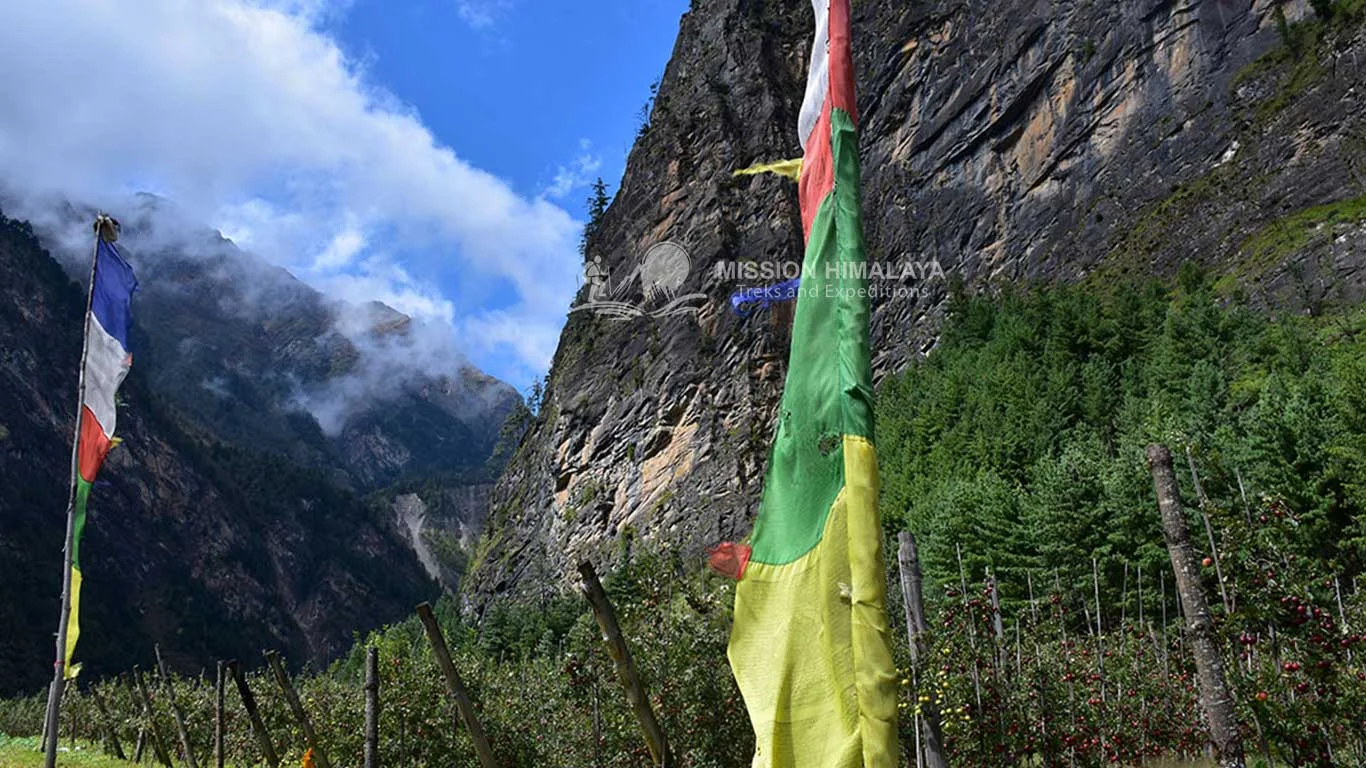

Today, we will continue our journey after breakfast and follow a trail with more open views of the mountains. The path goes through forest areas and beside the river with gentle elevation gain throughout the day.
As we walk further, we will pass through sections where the landscape will become wider and more scenic. You will begin to have more clear views of the surrounding peaks as we ascend higher. The trail is steady so we are able to keep up a good pace.
During the Annapurna Circuit Trek, this section provides a balance between effort and scenery, making it an enjoyable day of walking. We will cross the bridges and follow the trail towards Pisang.
In the afternoon we will arrive at Pisang and check into our teahouse. This village is a good place to rest before one moves higher, and has beautiful views of the mountains.
Day 7: Trek from Pisang to Ngawal
Walking Hours: 4 To 5 Hours Trekking
Meals Included: Breakfast, Lunch, And Dinner
Accommodation: Tea House Or Lodge
Max. Altitude: 3660m/12008ft
Distance: 10–11 km


After breakfast, we will take the upper trail towards Ngawal that offers wider views of surrounding mountains. This route is a bit more difficult than the lower path but has better scenery and is a quiet place to walk.
The trail is gradually climbing and crosses open landscapes with fewer trees. As we advance, we will have good views of the Annapurna range and the peaks. The path is steady but with a good pace and frequent breaks.
This section of the journey helps with acclimatization and is an important part of adjusting to altitude during the annapurna circuit trek itinerary. We will go at a slow pace and drink plenty of water throughout the day.
By afternoon, we will arrive in Ngawal, a tranquil village above the main trail. Once you reach the teahouse, you are free to relax and take in the views around you.
Day 8: Trek from Ngawal to Manang
Walking Hours: 4 To 5 Hours Trek
Meals Included: Breakfast, Lunch, And Dinner
Accommodation: Tea House Or Lodge
Max. Altitude: 3540M/ 11615FT
Distance: 9–10 km


After breakfast today, we will resume our walk towards Manang. The trail is relatively gradual and we are able to walk at a comfortable pace. We will do a pass through open landscapes with good views from the valleys as we approach Manang.
The terrain gets drier and less forested, indicating that we are in higher altitude areas. The path is steady and does not involve steep climbing which makes it a manageable day of walking.
As part of the 17 days annapurna circuit trek, reaching Manang is an important milestone because it is a key acclimatization point. We will move slowly and ensure that everybody is comfortable throughout the trek.
During the afternoon we will get to Manang and stay at a teahouse. You will be able to rest and enjoy the village and be ready to the coming day of acclimatization.
Day 9: Acclimatization Day and Explorations around Manang
Walking Hours: 3 To 4 Hours Hiking
Meals Included: Breakfast, Lunch, And Dinner
Accommodation: Tea House Or Lodge
Max. Altitude: 3540m/ 11615ft
Distance: Short hike


Today is an important day of rest and acclimatization. After breakfast, we will not proceed to the higher sleeping altitude, but we will remain active by exploring the surrounding areas. This assists your body to acclimate better to the elevation as it rises.
We can make a little hike to some viewpoints nearby or pay a visit to some local places like monasteries, little villages. These walks are optional and will be at a slow, comfortable pace. The goal is to keep an active lifestyle without exerting too much pressure on the body.
During the Annapurna Circuit Trek, acclimatization days are very important to reduce the risk of altitude sickness. We will also spend time to rest, hydrate and prepare for the higher parts of the journey.
By the afternoon, we will get back to the teahouse and relax. This day helps you to regain your energy and helps to prepare for the forthcoming days of trek at higher altitude.
Day 10: Trek from Manang to Yak Kharka
Walking Hours: 4 Hours Trekking
Meals Included: Breakfast, Lunch, And Dinner
Accommodation: Tea House Or Lodge
Max. Altitude: 4110m/ 13484ft
Distance: 9–10 km


After breakfast we will leave Manang and proceed towards Yak Kharka. The trail gradually does a climb and the landscape becomes more open and dry as we move higher.
We will walk at a slow and steady pace, as the altitude gain becomes more notable from this point onwards. The trail is not that steep but one needs careful pacing and regular breaks. You will see fewer trees and more rocky terrain on the way.
This section of the annapurna circuit trekking route takes us into higher alpine areas where the air becomes thinner. We will focus on keeping a steady rhythm and staying well hydrated throughout the walk.
By the afternoon, we will come to Yak Kharka and check in a teahouse. This is a small settlement where we will rest and get ready for the next stage of trek.
Day 11: Trek from Yak Kharka to Thorong Phedi
Walking Hours: 3 To 4 Hours Trekking
Meals Included: Breakfast, Lunch, And Dinner
Accommodation: Tea House Or Lodge
Max. Altitude: 4600m/15092ft
Distance: 5–6 km


Today, we will resume our journey towards Thorong Phedi after we have breakfast. The trail is shorter and gentler climbing through rocky and opened land.
We will walk carefully because of the increasing altitude, and there will be frequent breaks to conserve energy. The journey is smooth and easy to follow but you should not hurry during this phase.
It is an important day in the annapurna circuit trek itinerary because we are about to go over the highest point of the trek the next day. You should be able to take a break and prepare accordingly.
On our arrival at Thorong Phedi we will enter our teahouse, and the remainder of the day we will take rest. The next morning we will ready ourselves to make an early morning start.
Day 12: Trek from Thorong Phedi to Muktinath via Thorong La Pass
Walking Hours: 7 To 9 Hours Trek
Meals Included: Breakfast, Lunch, And Dinner
Accommodation: Tea House Or Lodge
Max. Altitude: 3800m/ 12467ft
Distance: 15–18 km


Today is one of the most important and difficult days of the trek. We will start early in the morning before sunrise in order to cross Thorong La Pass.
The climb is slow but long and we will take the climb slowly and with frequent breaks. As we increase in altitude the air is thinner so we will practice constant breathing and maintaining our pace.
To reach the top of Thorong La Pass at 5,416 meters is a major achievement. From here, we will have wide views of the surrounding mountains and landscapes. We will take a little bit of time in the top and start our descent.
After crossing the pass we will descend towards Muktinath. The downhill part is long and easier as we drop in altitude. As part of the 17 days annapurna circuit trek, this day marks a key highlight of the journey.
By the late afternoon we will arrive at Muktinath and check into a teahouse. After dinner we will rest well after a long and rewarding day.
Day 13: Drive from Muktinath to Tatopani
Walking Hours: 6 To 7 Hours Driving
Meals Included: Breakfast, Lunch, And Dinner
Accommodation: Tea House Or Lodge
Max. Altitude: 1200m/ 3937ft
Distance: Approx. 90–100 km


After the breakfast, we will begin our journey from the Muktinath and drive towards the Tatopani. The road passes through different landscapes, dry mountain areas and river valleys as we drop down in altitude. This section follows the Kali Gandaki valley, one of the deepest river valleys in the world.
The drive can be long and bumpy in some parts, so we will be driving at a steady pace, taking stops along the way. As we descend further, you will see the gradual change in climate and surroundings with more greenery coming up again.
This section of the Annapurna Circuit Trek allows us to cover distance efficiently while giving your body time to recover after crossing Thorong La Pass. The journey also offers some scenic views of hills, rivers and local villages.
By the afternoon or evening, we will arrive at a place called Tatopani, which is known to have natural hot springs. After checking-in at the teahouse you can sit back and enjoy your warm bath to relax your muscles after the long trekking days.
Day 14: Trek from Tatopani to Ghorepani
Walking Hours: 7 To 8 Hours Trek
Meals Included: Breakfast, Lunch, And Dinner
Accommodation: Tea House Or Lodge
Max. Altitude: 2850m/9350ft
Distance: 15–17 km

Info
Ghorepani Village During Annapurna Circuit Trek

Info
Barashikhar and Annapurna South when golden
After having breakfast, we will start our trek towards Ghorepani. The trail begins with a gentle ascent through villages and cultivated land before entering forest areas.
As we ascend the ascent becomes steeper and goes through thick rhododendron forests. We will climb at a constant pace and rest to handle the continuous uphill climb.
This is the part of the annapurna circuit trek route where we again reach the forested area after the high altitude. The change in the environment makes the walk refreshing.
We will arrive at Ghorepani in the afternoon where we will stay at our teahouse. This place is in the middle of a forest and offers a peaceful place to relax after the climb.
Day 15: Trek to Nayapul and Drive to Pokhara
Walking Hours: 6 To 7 Hours Trek And 2 Hours Drive
Meals Included: Breakfast, Lunch, And Dinner
Accommodation: 3 Star Standard Hotel
Max. Altitude: 820M
Distance: 12–14 km trek + drive


We will leave in the early morning and go down to Nayapul. It is largely a downward path through the forests, villages and the fields.
We will also traverse small villages and pass through rivers as we reduce our altitude. This path is not as difficult as the initial part of the walk, but the decline could be tiring. This final trekking section of the annapurna circuit trekking route marks the completion of the walking part of the journey. We will keep a nice pace and take breaks when necessary.
After reaching Nayapul we will take a drive to Pokhara. Upon arrival, you have the opportunity to relax and enjoy the comfort of the city after a few days in the mountains.
Day 16: Drive or Flight back to Kathmandu
Walking Hours: 7 Hours |Driving/30 Minutes Flight
Meals Included: Breakfast
Accommodation: 3 Star Standard Hotel
Max. Altitude: 1350M
Distance: Approx. 200 km (drive)


After breakfast, we will travel back to Kathmandu either by road or by flight, depending upon your preference. The drive takes you through views of rivers, hills and rural landscape, the flight is a faster and a more comfortable way to travel.
As part of the 17 days annapurna circuit trek, this day marks your return to the capital after completing the main journey. You will have time to relax after you arrive in Kathmandu.
Once we arrive we will drive you to your hotel. You can spend the rest of the day resting or exploring the local area at your own pace.
Day 17: Shopping, Departure or Extend Your Holiday
Walking Hours: 30 Minutes Drive
Meals Included: Breakfast
Accommodation: None
Max. Altitude: 1350M
Distance: Short transfer


Today is your last day in Nepal. After having breakfast we will help you with your transfer to the airport depending on your flight schedule.
If you have additional time, you can explore Kathmandu, do some shopping or visit nearby places. This is a good time to unwind and reflect upon your trekking experience.
The Annapurna Circuit Trek comes to an end today, and we hope you leave with good memories of the journey. If you want to extend your holiday we can help you plan further activities or trips.
Our team will make sure you have a smooth and comfortable departure.
Annapurna Circuit Trek Cost
Quotation Can be Different According to Number of Days in Trekking, Your Country of Residence, Number of days in City, Guide quality, Equipments, Flights From Jomsom to Pokhara and Pokhara to Kathmandu, Hotels quality in City, Transportation Type, Number of Trekkers in your Groups, Teahouses quality of Trekking, Meals what include in Trekking, Other Numerous included Items. For the exact Cost, Please Message us on WhatsApp. +977-9841965533
-
Airport Transfers
All private transportation from TIA Airport to Hotel located in Thamel and Hotel to TIA Airport.
-
Kathmandu Hotel
Kathmandu city accommodation in 3-star standard hotel with free breakfast as per itinerary.
-
Pokhara Hotel
Pokhara lake city accommodation in a 3-star category hotel with free breakfast as per itinerary.
-
Meals in Trekking
3 main course meals during the trekking(breakfast, lunch, and Dinner) with fresh fruit as a dessert as per the availability.
-
Trek Leader
Very experienced and knowledgable trekking guide from Government well trained with his salary, transportation, accommodation and insurance and food.
-
Sherpas
Strong porter to carry your pack as per itinerary with his insurance, food, transportation, and salary.
-
Taxes
All government and local taxes with company service charges.
-
TIMS Permits And ACAP Permits
Trekkers Information Management System permits(TIMS) and Annapurna Conservation Area Project(ACAP) permits.
-
Certificate
Trekking registration certificate after completing the trek signed by your guide and company owner.
-
Trek Transport
Kathmandu to Besishahar by Public Microbus and Pokhara to Kathmandu by deluxe tourist bus as per itinerary.
-
Medicine
First aid medication with your guide.
-
Map
Free Trekking Map for Annapurna circuit trek.
-
Happy Meal
Welcome or Farewell dinner in a typical Nepali Restaurant with cultural dance and live music show.
-
Trek End Transport
Nayapul to Pokhara transportation by Private deluxe AC vehicle.
-
Internation Flight
International airport taxes, flight tickets, and trekking equipment on the trek or in the city.
-
Personal Nature
All expenses of personal nature & travel insurance & Nepal visa cost.
-
Extra cost in Trekking
Any kinds of electrical items charge while on the trek and hot shower charge.
-
Personal Drinks and Snacks
Personal drinks and Mineral water, sweets, candy, bar bills (Hard & soft drinks), Body Massages, and laundry costs.
-
Tipping
Tips for Guide and Porters after finishing your trip.
-
City Meals
Lunch & dinner in Kathmandu & Pokhara except for welcome or farewell dinner.
-
Others
All things that isn’t mentioned in includes section.
Trip Gear


Annapurna Circuit Trek Map
 Download Map
Annapurna Circuit Trek Related Information
Annapurna Circuit Trek Difficulty & Daily Physical Demands
The Annapurna Circuit Trek is considered a moderate to challenging journey because of its long duration and changing terrain. You will be walking several hours every day, usually between five and seven hours depending upon which section of the trail you are on.
We will travel through various forms of terrain including stone steps, forest paths and rocky high altitude trails. Some parts have slow ascents, and some have long descents which can be tiresome for the thighs. As we gain altitude the natural tendency is for your walking speed to decrease as there is less oxygen.
If you are planning on making this journey it is important that you are in good physical fitness and have stamina. Regular walking, hiking or simple training prior to the trip can make a big difference. We will maintain a good pace and take breaks to help you comfortably deal with the daily effort.
With the proper preparation and attitude, you can succeed in getting through this trek and reaping the whole experience.
Weather and Best Season
Weather is an important factor in your trekking experience and the season you decide to trek can be an important factor in whether your trek is a comfortable experience or not. The Annapurna Circuit Trek is best done during spring (March to May) and autumn (September to November).
During the spring season, the weather is usually stable with moderate temperatures and the lower parts of the country are full of greenery and blooming rhododendrons forests. Autumn has clear skies with good visibility which is ideal to enjoy the views of the mountains.
In the winter the temperature could be significantly lower, and it could snow, especially in higher areas. During the monsoon season the rain can make paths slippery and low on visibility, especially in lower areas.
If you are following an annapurna circuit trek itinerary, planning your trek during the main seasons will help you avoid weather-related difficulties. Stable weather conditions also reduce the chances of delays and make the journey more enjoyable in general.
Altitude, Acclimatization & AMS
Altitude is one of the most important things to consider on this trek. As we climb your body requires time to adapt to the lower air pressure. In the annapurna circuit trekking route, we will be above the elevation of 5,000 meters where proper acclimatization is required.
We will take our time and make an acclimatization day in Manang that will allow your body to become accustomed to the altitude. The mild headache, fatigue, and loss of appetite are some of the typical symptoms of altitude sickness.
We will walk at a slow pace to ensure that we are well hydrated and have ample rests to minimize the risk of altitude sickness. Our guide will follow you and help when needed.
In case these symptoms start getting severe then you should go down to a lower elevation. Being aware of your body and reporting of any form of discomfort at the initial stages will make the trek very safe and enjoyable.
Training and Fitness
Training before the trek will ensure a smooth and pleasant journey. The Annapurna Circuit Trek is physically challenging because you will walk several days consecutively.
We recommend focusing on things such as walking, hiking, running or cycling before the trip. Exercises such as squats, lunges and step-ups will help you to strengthen your legs for the uphill and downhill sections.
Mental preparation is also important especially in the longer trekking days. There might be moments at when you feel tired but keeping your calm and at a constant pace will help you to keep going comfortably.
If you are planning a 17 days annapurna circuit trek, building your stamina in advance will help you manage the altitude and terrain more effectively. A combination of physical training and mental preparation will accompany you on the journey.
Meals on Annapurna Circuit Trek
During the Annapurna Circuit Trek, we will have meals at local teahouses along the route. The food is basic, fresh and prepared to give sufficient energy to walk everyday.
You will find choices such as rice, lentils, vegetables, noodles, soups, egg and bread. Common meal is Dal bhat, and is often preferred since it is filling and good nutrition for trekking.
Breakfast and dinner will be eaten generally at the teahouse where we will stay and have lunch along the trail. As we go higher the variety of food may lean more, but it is still adequate for the journey.
It is suggested to take warm and freshly prepared meals. Drinking tea or soup can also help to warm your body and give your body hydration. If you have any dietary preferences you should inform us beforehand and we will try and plan your meals accordingly.
Accommodation during the Trek
Accommodation during the Annapurna Circuit Trek includes hotel stays in Kathmandu and teahouses during the trekking days. Before and after the trek we will stay in a comfortable hotel in the city.
Along the trail, we will stay in simple teahouses, ordinarily providing a bed, blanket and a common dining area. Rooms are largely in twin sharing and the facilities gradually become more basic as we go to the higher altitude areas.
Hot showers and charging services are available in many places but might require additional fee. It is important to understand that there is not much comfort in remote regions.
Even though the facilities are simple, the teahouses are good to have a warm and comfortable place to rest after a long day of walking.
Visa, Trekking Permits & Local Entry Requirements
For the Annapurna Circuit Trek, we will arrange all the necessary permits required for the region. These are Annapurna Conservation Area Permit (ACAP) and TIMS card.
Our team will complete all the paperwork so you do not have to worry about the process. Your guide will have the permits and present these at the different check-points in the trail.
If you are following an annapurna circuit trek itinerary, having the correct permits is essential, as they are checked regularly during the trek.
Before the trip, you will need to give your passport details and photos. Once all is done, you can go out and have your trek without any hassles.
Health, Hygiene and Safety Measures
Health and safety are highly valued in the Annapurna Circuit Trek and we will take basic precautions to have a safe trip. Hygiene such as hand washing and sanitizer will assist in the prevention of sickness during the trek.
Our guide trained in first aid and will take basic medical supplies. We will also monitor your condition on a day by day basis, especially as we gain altitude. If you are feeling unwell it is important to tell your guide immediately.
We will walk at a comfortable pace, with proper rest and hydration to minimize the risks. Following these simple practices will help you finish the trek in a safe and comfortable way.
Hydration Tips & How to Avoid Dehydration at High Altitude
Staying hydrated is very important during the annapurna circuit trekking route, especially as we reach higher elevations. We will drink water on a regular basis throughout the day even when we do not feel very thirsty.
It is recommended that you carry around a water bottle that you can refill and drink small amounts frequently. Warm drinks like tea or soup can also help to keep your body hydrated and comfortable in cold weather.
Avoiding alcohol during the trek is important as it causes more dehydration and has an effect at a high altitude on your body.
We will use clean drinking water either boiled or treated. Proper hydration is important to keeping energy levels and avoiding altitude-related problems.
Risk Factors on 17 days Annapurna Circuit Trek
The Annapurna Circuit Trek involves certain risks due to altitude, terrain, and changing weather conditions. As we move up to higher altitudes, your body tends to react differently because of the lower oxygen levels.
The trail consists of rocky terrain and uneven steps and the hiking days can be long and physically demanding. Weather conditions may also change rapidly and this may be especially true in high lands.
Planning an 17days annapurna circuit trek, you should be careful enough to walk and keep your guide instructions at any cost.
We will make short breaks frequently, keep the pace and control your condition to minimize any risks. It will help to make the experience of the trekking safe with the appropriate preparation and awareness.
Transportation
Transportation is well arranged for the Annapurna Circuit Trek to make your journey smooth from start to finish. In Kathmandu, we will take care of your airport transfer service as per your arrival and departure time schedule in a private vehicle.
The journey begins with a long drive from Kathmandu to Jagat which is the starting point of the trek. After completing the trek, we will return from Nayapul to Pokhara via a vehicle. From Pokhara you either make a scenic drive or short flight back to Kathmandu.
If you are following an annapurna circuit trek itinerary, it is important to understand that road conditions in some sections can be rough, and travel times may vary. We will plan accordingly, and take breaks to make the journey comfortable.
All transportation will be arranged in advance, so you can focus on your trekking experience.
Travel Insurance
Travel insurance is very important for the Annapurna Circuit Trek because the journey takes place in remote and high-altitude areas. We would strongly advise you to take out some insurance for trekking, medical and evacuation in the event of an emergency.
In case of altitude sickness or some kind of injury, helicopter evacuation is possible. Having proper insurance can assure that these situations can be dealt with without financial stress. It is important to make sure that your policy covers trek above 5,000 meters.
If you are planning a 17 days annapurna circuit trek, make sure your insurance clearly includes high-altitude trekking and emergency rescue services.
We also recommend a copy of your insurance details to you and share them with your guide prior to you starting the trek. This helps to ensure it quick response in case of any emergency situation.
Extra Expenses
During the Annapurna Circuit Trek, most major costs are included in the package, but there are still some personal expenses to consider. These could be snacks, drinks, Wi-Fi and charging, hot showers and other personal equipment along the route.
Meals in Kathmandu except special included dinners are not usually included in the package. You will also need to account for expenses on travel insurance, visa fees and international flights on a separate basis.
If you are following the annapurna circuit trekking route, it is important to carry enough cash in Nepali currency, as card payment is not widely available in remote areas.
Planning your own personal budget in advance will make sure that you are able to cope with your expenses comfortably throughout your journey.
Language and Communication
The Annapurna Circuit Trek takes place in regions where people follow local traditions and speak Nepali as the main language. In many trekking areas people can understand English, especially in the teahouses and shops.
Our guide will assist you along the way with the communication so you can more easily interact with the locals and make arrangements along the way. This support helps to make your experience more comfortable and stress free.
If you are following an annapurna circuit trek itinerary, learning a few simple words such as “Namaste” can make your interactions more friendly and meaningful.
Communication networks may be present in some areas, but may be limited going up higher. It is good to inform your family and friends about any communication gaps that might happen during the trek.
Practical Advice for Annapurna Circuit Trek
Before starting the Annapurna Circuit Trek, it is important to plan properly and stay flexible during the journey. Weather conditions in the mountains can quickly change which can affect travel plans and walking schedules.
We recommend that you arrive in Kathmandu a day or two early to get your gear ready and to make any necessary arrangements. It is also good to have some extra days, after the trek in case there is a delay.
Walking at an even pace, sticking to a hydrated diet and following your guide’s instructions are important in a comfortable completion of the trek. Carrying the right equipment as well as having a positive attitude will also help you to cope with the journey better.
Good preparation and flexibility will make your trek experience more smooth and enjoyable.
Mobile Network and Internet & Charging Facilities
During the Annapurna Circuit Trek, communication services are available in many villages, but they may not always be reliable. In lower areas, you will get better coverage of mobile network and in the higher areas you might not get a signal or a weak signal.
Some teahouses have Wi-Fi services for an additional charge. The connection may be slow, especially in the remote areas, but it is still a useful connection for basic communication purposes. It would be a good idea to inform your family in advance about the lack of connectivity in the trek.
Charging facilities are available in most teahouses, but are often accompanied by an additional charge. Carrying a power bank is very helpful especially on the longer trekking days.
Managing your device usage wisely will help you to stay connected when you need to, but also provide you with the opportunity to enjoy your experience without distractions.
Photography, Drone Use & Filming Regulations
The Annapurna Circuit Trek offers many opportunities for photography, including mountain views, landscapes, and village life. You are welcome to take pictures in most of the outdoor areas along the trail.
However, it is necessary to ask permission to take photos of local people or inside monasteries. Respecting local culture is an important part of ensuring a better and more meaningful experience of travel.
However, when you are on the annapurna circuit trekking route, you must know that you cannot use the drones without the proper permission. You need an approval from the concerned authorities to fly drone in this region.
Following the local rules and guidelines will help you to ensure that your journey is smooth and without any issues along the trek.
Festivals, Monasteries & Cultural Encounters during Annapurna Circuit Trek
The Annapurna Circuit Trek is not only about mountain landscapes but also about cultural experience. As we travel through different villages, you will see that the local traditions have been affected by the Tibetan culture.
On the trail you will find prayer flags, mani walls and monasteries. By visiting them, you get a chance to know how the locals live and what they believe.
When following an annapurna circuit trek itinerary, you can also witness local festivals depending on the time of your visit. These events, the further one travels, provide a greater cultural connection.
Respecting traditions, dressing modestly and asking permission to take photos will help you to interact with local communities in a positive way and will make your more meaningful.
Trip Extensions After the 17 days Annapurna Circuit Trek
After completing the Annapurna Circuit Trek, many travelers choose to extend their journey and explore more places in Nepal. There are a number of choices depending on your interest and time availability.
However, you can spend more days at Kathmandu to visit cultural and historical sites or go to Pokhara for relaxing near lakeside. Pokhara is a quiet environment after the experience of trekking.
If you are planning a 17 days annapurna circuit trek, you may also consider adding short trips such as wildlife tours or other trekking routes nearby.
We can help you plan your extension of the trip as per your schedule and preferences in order to make the most out of your trip to Nepal.
Annapurna Circuit Trek FAQ'S
A
It can take 8-9 hours of walking on the longest days of our trek, such as pass day, depending on your walking speed and weather conditions. We will take an early start and rest often to allow us to finish the trek.
A
ATMs are not commonly available but are found in larger villages like Manang and Jomsom. We recommend you to carry enough cash with you from Kathmandu.
A
We recommend carrying a small day pack for your personal items, water, food and clothes. You will have porters to help you with your backpack.
A
You can easily find vegetarian food including rice, veggies and pasta. You may be able to find vegan food, but it may be harder to find at high altitudes.
A
You can trek alone and we can provide you with a guide and porters. You can trek in a group if you prefer a social experience and want to save money.
A
Well-fitted trekking boots with ankle support are recommended for the stony terrain. Make sure your shoes are well broken in.
A
Some villages have health posts, but there are few health facilities in remote areas. You may need to be evacuated in an emergency.
A
Laundry is uncommon and generally found at lower altitudes. Generally, at higher altitudes, it’s best to carry clothes and wash them if needed.
A
In this instance, your guide will determine the best course of action, which could include you descending or being evacuated. Your safety will be ensured.
A
This is optional but can be offered as a sign of appreciation of good service. This will be based on the service that you get in the trek.
A
You can be assured of simple rooms that have two single beds, mattress, pillow, and blanket. You might also have to share rooms when they are not available, especially during high season.
A
It has no age restriction, you should physically fit and comfortable to walk long distances. Children and old people may go, provided they are in good condition to the trek.
A
Most of the lodges have camera and other electronic charging services. You may also bring more batteries or a power bank.
A
You can also pack snacks such as energy bars, nuts or chocolates for some quick energy. You can buy these items on the trail but it may be more expensive.
A
The porters can only carry a maximum of 20-25 kg per person (to be shared between two people). It is best to travel as lightly as possible.
A
Alcohol is best avoided, especially at altitude, as it could affect acclimatisation. Alcohol can cause dehydration and altitude sickness.
A
Charging is usually available in the evening. You might want to charge earlier to avoid waiting in line.
A
The lodge normally has hot water supplied at no charge or a small fee. You can use it with water, to fill up water bottles, or make tea.
A
The teahouses normally have hot water to make tea and to fill the bottles. To avoid hygiene issues, it is ideal to ensure that the water is either boiled adequately or the process of purification is done before consumption.
A
In lower altitudes there are some teahouses offering upgraded rooms with bathrooms. But at higher elevations, there are limited options to upgrade rooms.
A
We usually begin walking after breakfast, at 7:00-8:00 AM, depending on the length of the walk and the weather. It gives us time to walk at a leisurely pace and reach our destination early to rest.
A
You can take a book, diary and entertainment. The evenings are quiet, and some people enjoy reading.
A
In some areas, there is a preference to not use plastic, so please carry water bottles and avoid plastic bags. This avoids damaging the environment.
A
You should wear quality trekking socks to keep your feet warm. It’s a good idea to carry an extra pair to keep your feet dry and avoid blisters.
A
Yes, you can prolong your stay in Pokhara after the trek to relax and explore more. It’s a good place to relax and see the lake before returning to Kathmandu or continuing your trip.
Tripadvisor Reviews
Google Reviews
5.0
317 reviews