English
 Dutch
Dutch Japanese
 Hindi
Hindi Italian
 Spanish
 French
 German
 Chinese
 Korean
 Arabic
 Hebrew
 Russian
 Portuguese
 Danish
 Czech
Czech Polish
 Swedish

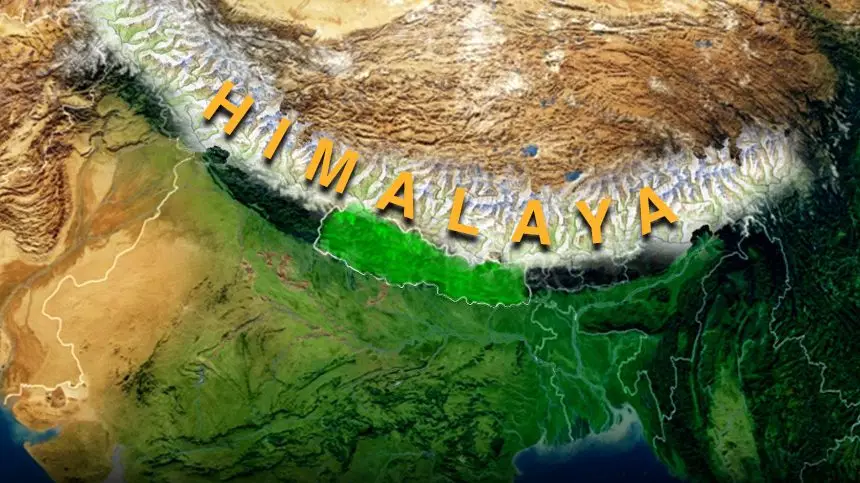
The Himalayas are home to some of the tallest mountains in the world, like Mount Everest. They stretch for over 2,400 kilometers (about 1,500 miles), crossing several countries in South Asia. These mountains are not only amazing to look at but are also important for adventurers, spiritual seekers, and nature lovers. Did you know that the Himalayas have almost 15,000 glaciers, making them the third-largest ice and snow storage in the world after Antarctica and the Arctic?
This blog will guide you through the location of the Himalayas, exploring their geography, cultural importance, and natural impact across different countries in South Asia. We will look at the countries the Himalayas touch, where are the Himalayas Located on the world map, and how they affect the climate and geography. Plus, we’ll talk about their cultural and historical meaning. Get ready to learn all about the magic of the Himalayas!
Where Are the Himalayas?
The Amazing Himalayan Mountains
The Himalayas are one of the most incredible natural wonders on Earth. They stretch across several South Asian countries, covering about 2,400 kilometers (1,500 miles) from northern Pakistan to northeastern Myanmar. The range includes 14 peaks that rise above 8,000 meters (26,000 feet), with Mount Everest being the highest point on the planet. The Himalayas were formed over 50 million years ago when the Indian and Eurasian tectonic plates collided, and this process continues to shape the mountains today.
Countries the Himalayas Touch: India, Nepal, China, Bhutan, Pakistan, Afghanistan, Myanmar
The Himalayas form a natural border for seven countries: India, Nepal, China, Bhutan, Pakistan, Afghanistan, and Myanmar. India and Nepal have the largest share of these mountains. Nepal is sometimes called “the rooftop of the world” because it has so many tall peaks. Tibet, which is part of China, is on the northern side of the Himalayas. Bhutan, although smaller, has beautiful, untouched Himalayan areas. The Himalayas also extend into Pakistan, Afghanistan, and Myanmar.
- India: The Himalayas pass through northern Indian states like Jammu and Kashmir, Himachal Pradesh, Uttarakhand, Sikkim, and Arunachal Pradesh.
- Nepal: This country is home to the central Himalayas and eight of the world’s ten highest peaks.
- China (Tibet): The northern side of the Himalayas goes through Tibet, a region known for its rich culture and spiritual history.
- Bhutan: This small kingdom is located entirely within the eastern Himalayas and is famous for its natural beauty and culture.
- Pakistan: The Karakoram Range, part of the Himalayas, runs through northern Pakistan.
- Afghanistan and Myanmar: These countries touch the far edges of the western and eastern Himalayas.
- Main Himalayan Mountain Ranges: Karakoram, Hindu Kush, Himalayas, Trans-Himalayas
The Himalayas are made up of several connected mountain ranges. Each one has its own features, even though they share a common origin.
- Karakoram Range: Located in Pakistan, India, and China, this range is home to K2, the second-highest mountain in the world.
- Hindu Kush: This range stretches from Afghanistan to northern Pakistan, forming the western end of the Himalayas.
- Himalayas Proper: This is the central part of the range where the highest peaks, like Mount Everest, are found. It runs through Nepal, Bhutan, and northern India.
- Trans-Himalayas: Located mainly in Tibet, this range is known for its high plateaus and glaciers.
These mountain ranges play a key role in shaping the geography, weather, and culture of the regions they cross.
The Himalayas, Located on a World Map
Where Are the Himalayas on the World Map?

The Himalayas stretch across several countries in South Asia. They are located between latitudes 26°N and 35°N, and longitudes 74°E and 95°E. This means they cover a large area in the northern half of the Earth. The center of the Himalayas, where Mount Everest is, can be found at around 27.9881° N latitude and 86.9250° E longitude. If you look at a world map, you’ll see that the Himalayas run along the Tropic of Cancer, which plays a part in the climate of the region.
How the Himalayas Compare to Other Mountain Ranges
Compared to other big mountain ranges like the Alps in Europe and the Andes in South America, the Himalayas stand out. The Alps are found between latitudes 44°N and 47°N, and the Andes run along the west side of South America between 10°N and 56°S. The Himalayas are much closer to the equator, and they are in the northern half of the Earth.
The Alps’ highest peak, Mont Blanc, is 4,808 meters tall, and Aconcagua, the tallest mountain in the Andes, reaches 6,961 meters. But these don’t match up to the Himalayas, where Mount Everest is the tallest at 8,848.86 meters (29,031 feet).
The Himalayas are also close to many large cities in Asia, while the Andes stretch along South America’s west coast, and the Alps are in the middle of Europe.
How Close Are the Himalayas to Oceans and Seas?
Even though the Himalayas are mountains, they are pretty close to some important oceans and seas. This helps create the area’s unique weather.
- Indian Ocean: The Himalayas are about 1,000 to 1,500 kilometers north of the Indian Ocean. This warm ocean plays a big role in the region’s weather. During summer, moist air from the Indian Ocean moves up to the Himalayas, bringing lots of rain.
- Bay of Bengal: The eastern Himalayas, like in Nepal and Bhutan, are around 600 kilometers from the Bay of Bengal. This bay also affects the weather, especially during the rainy monsoon season.
- Arabian Sea: The Arabian Sea is about 1,800 kilometers away from the Himalayas and influences the western side of the mountains. Its warm waters help create dry conditions in northern India and the western Himalayas.
The Himalayas act as a huge natural wall, separating the plains of India from the high deserts of the Tibetan Plateau. This special position affects weather, farming, and life in the region.
How the Himalayas Shape the Land and Weather
Monsoon Patterns and Rainfall
The Himalayas have a big impact on the weather in South Asia, especially on the monsoon rains. These mountains act like a huge wall that stops warm, wet air from the Indian Ocean from moving further north. When this air hits the Himalayas, it rises, cools down, and causes heavy rain on the southern side of the mountains, especially in the summer months (June to September).
- Southwest Monsoon: The Himalayas trap the monsoon winds, bringing lots of rain to the northern plains of India, Nepal, Bhutan, and Bangladesh. This rain is important for farming and helps millions of people who rely on crops.
- Rain Shadow Effect: While the southern side of the Himalayas gets a lot of rain, the northern side (on the Tibetan Plateau) stays dry. This happens because the Himalayas block the rain-filled winds, leaving the north in a “rain shadow,” creating a desert-like climate in Tibet.
Without the Himalayas, the Indian subcontinent would probably be much drier, and the regions north of the mountains would face even harsher weather.
Glaciers and Rivers
The Himalayas are sometimes called the “Third Pole” because they have so much ice and snow, second only to the Arctic and Antarctic. Thousands of glaciers in the Himalayas are the source of many of the world’s most important rivers.
- Glaciers: Some of the most famous glaciers in the Himalayas are the Gangotri Glacier, Siachen Glacier, and Zemu Glacier. These glaciers store fresh water and feed rivers that millions of people depend on.
- Rivers: The Himalayas are the starting point for many large rivers in Asia, like the Ganges, Indus, Brahmaputra, and Yamuna rivers. These rivers are used for farming, drinking water, and making electricity in countries like India, Nepal, China, and Pakistan. In the summer, melting glaciers keep the rivers flowing, even during dry times.
These rivers are important for both the economy and culture of the region. For example, the Ganges River is not only important for farming but also has deep religious and spiritual meaning in India.
Biodiversity and Ecosystems
The Himalayas have a wide range of climates and heights, which creates many different ecosystems, from warm forests in the low areas to cold deserts and snowy peaks at higher altitudes. This allows for a variety of plants and animals to live here.
- Lower Elevations: In the lower slopes, tropical and subtropical forests grow thick. These forests are home to animals like elephants, Bengal tigers, and rhinoceroses, especially in Nepal’s Terai region and the Indian states of Assam and West Bengal.
- Mid-Range Elevations: As you go higher, the forests change to oak, pine, and rhododendron trees. These forests are home to many birds, deer, and smaller mammals. Rare animals like the red panda and clouded leopard also live here.
- Higher Elevations: The weather gets much colder and harsher at the highest points. Animals like the snow leopard, Himalayan blue sheep (bharal), and Tibetan wolf can survive in these tough conditions. Special plants, like hardy grasses and shrubs, are also adapted to the cold.
- Cold Deserts: On the dry side of the Himalayas, like in Ladakh and the Tibetan Plateau, cold deserts are found. Animals like the Tibetan antelope and Himalayan marmot live in these extreme environments.
The Himalayas are a “biodiversity hotspot,” which means they are home to many endangered species. The ecosystems not only support wildlife but also give local communities things like medicinal plants, wood, and other important resources. Protecting this region is key to keeping its rich biodiversity, especially with the threats of climate change and deforestation.
Cultural and Historical Importance of the Himalayas
Ancient Civilizations and Myths
For a long time, people have lived in the Himalayas, and these mountains have played a big role in shaping their lives, stories, and history.
- Early People: The Indus Valley Civilization, one of the oldest in the world, grew near the Himalayas. Its rivers provided water for farming and connected the civilization to other places for trade. Ancient societies in Tibet, Nepal, and Bhutan also developed in the high mountains, relying on trade, herding, and farming to survive.
- Myths and Legends: The Himalayas are very important in the myths of the people who lived near them. In Hinduism, they are seen as the home of gods. Mount Kailash is believed to be the home of Lord Shiva, a major god in Hinduism. Ancient stories like the Mahabharata and Ramayana talk about the Himalayas as a place of power where gods and heroes went to seek wisdom. In Tibetan and Buddhist stories, the mountains are considered sacred. The great Buddhist master, Padmasambhava, is said to have meditated in the caves of the Himalayas.
Religious and Spiritual Importance
The Himalayas are not just beautiful mountains—they are holy places for many people, especially for Hindus and Buddhists. These peaks are often places where people go for pilgrimage, meditation, and spiritual reflection.
- Hinduism: In Hinduism, the Himalayas are called “Devbhumi,” which means “Land of the Gods.” Many important pilgrimage sites like Kedarnath, Badrinath, and Gangotri are in the Himalayas. The Ganges River, the holiest river in Hinduism, starts high in the Himalayas. Hindus believe that meditating in the Himalayas helps them get closer to Moksha, or spiritual freedom.
- Buddhism: The Himalayas are also special in Buddhism. Many important monasteries are found in the region, especially in Tibet, Nepal, Bhutan, and Ladakh. Mount Everest, known as Chomolungma in Tibetan, means “Mother Goddess of the World” and is spiritually important to the Tibetan people. Lumbini, the birthplace of Buddha, is at the foothills of the Himalayas in Nepal.
- Mount Kailash: This mountain is sacred to followers of Hinduism, Buddhism, Jainism, and the Bon religion of Tibet. It is seen as the spiritual center of the world. Pilgrims from these religions travel long distances to walk around Mount Kailash, believing it will cleanse their sins and bring them closer to spiritual enlightenment.
Cultural Practices Today
Today, the Himalayas are still full of diverse cultures, languages, and traditions. Because the mountains are so isolated, many unique cultural practices have been kept alive over the centuries.
- Ethnic Diversity: The Himalayas are home to many ethnic groups like the Sherpas, Tibetans, Bhutias, Ladakhis, Gurungs, and Tamangs. Each group has its own language, food, clothing, and customs. In Nepal, for example, over 120 different languages are spoken. Traditional festivals like Tihar, Holi, and Losar (Tibetan New Year) are still widely celebrated.
- Festivals and Traditions: Religious festivals are a big part of life in the Himalayas. The Saga Dawa festival in Tibet celebrates Buddha’s birth, enlightenment, and death. It draws pilgrims from all over the world. In Bhutan, the colorful Tshechu festival celebrates Buddhism with mask dances and rituals.
- Monasteries and Temples: The monasteries and temples of the Himalayas show how deeply spiritual the people are. Famous monasteries like the Tiger’s Nest Monastery in Bhutan, Tengboche Monastery in Nepal, and Thiksey Monastery in Ladakh sit on high mountain cliffs, offering peaceful places for meditation and worship. These buildings are often decorated with bright colors and detailed carvings, reflecting the people’s devotion to their faith.
Even as the world changes, the people of the Himalayas keep a close connection to their environment. Yak herding, farming, and traditional crafts are still important for their daily life, even though tourism has become a big part of the economy.
The mix of ancient traditions with modern life makes the culture of the Himalayas special and full of life. With their deep connection to nature and spirituality, the Himalayas continue to inspire people from different cultures and religions.
Conclusion
The Himalayas are an amazing natural wonder, stretching across several countries and holding great cultural, historical, and spiritual importance. These mountains are not just huge and beautiful—they also play a big role in shaping the climate, the plants and animals that live there, and the lives of the people around them. The Himalayas aren’t just a physical barrier; they are a symbol of wonder, adventure, and deep meaning. We’ve learned about where they are, how they affect the weather and nature, and their special place in different cultures and religions.
As you’ve seen, the Himalayas offer more than just stunning views. They show us how deeply nature and humans are connected. Whether you’re attracted to their beauty, their spiritual significance, or just the excitement of exploring, the Himalayas provide an unforgettable experience for anyone who visits.
Ready to Start Your Journey
Has this journey through the wonders of the Himalayas inspired you? Why not explore their rich culture, visit their sacred mountains, or even plan a trip to see these incredible peaks in person? The Himalayas have so much more to share—start your adventure today!

I have had the privilege of leading countless trekkers through some of the world’s most iconic routes, including the Everest Base Camp Trek and Annapurna Base Camp Trek. Every trek is not just a physical journey; it’s an opportunity to connect with nature, immerse ourselves in rich cultures, and create lasting memories.
I believe that trekking is about more than just reaching a destination; it’s about the stories we share along the way. My fluency in Spanish, English, Hindi, and even some Japanese and Korean allows me to connect with trekkers from all walks of life, ensuring that every journey is tailored to your unique desires and needs.