English
 Dutch
Dutch Japanese
 Hindi
Hindi Italian
 Spanish
 French
 German
 Chinese
 Korean
 Arabic
 Hebrew
 Russian
 Portuguese
 Danish
 Czech
Czech Polish
 Swedish

Who Was Green Boots?
If you have ever read about Mount Everest, you might have heard about “Green Boots.” He is one of the many climbers who never made it back down from the mountain. His real name is believed to be Tsewang Paljor. He was an Indian climber who joined an expedition in 1996 to reach the top of Everest. Sadly, he did not survive, and his body remained on the mountain.
Tsewang Paljor was born in India and was part of the Indo-Tibetan Border Police. In May 1996, he and his team tried to climb Everest from the north side, which is in Tibet. The weather was not good, but they still went ahead. As they got closer to the top, a strong snowstorm hit. Most of the team turned back, but Paljor and two others kept going. They never made it back.
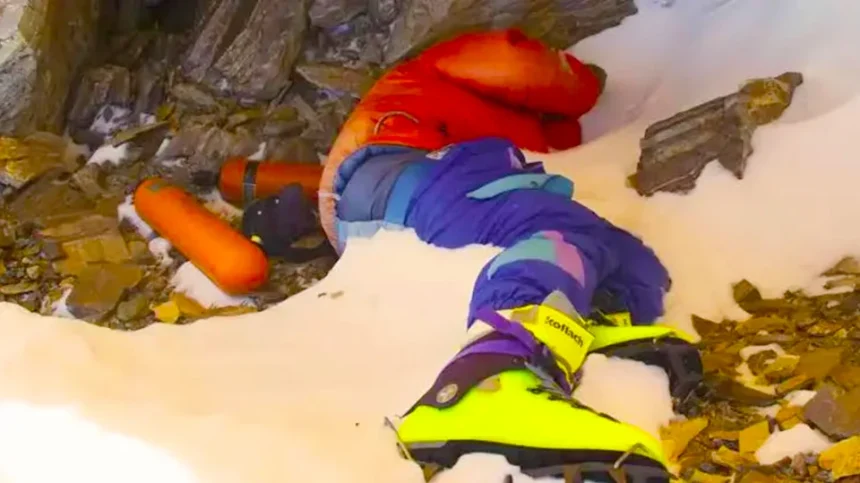
People call him “Green Boots” because of the bright green mountaineering boots he was wearing when he died. His body was found in a small cave along the main route to the top. Over the years, thousands of climbers have passed by his body. His legs were stretched out, and it looked like he was resting. The sight of Green Boots became a sad but familiar part of Everest.
Many people have wondered, “How Did Green Boots Die?” It is believed that he froze to death due to extreme cold and lack of oxygen. At such high altitudes, the air is very thin, and it becomes difficult to breathe. The storm made things worse, and without enough oxygen, he could not survive.
Everest is known as the highest mountain in the world, but it is also very dangerous. More than 300 climbers have died on its slopes. The cold is so strong that bodies do not decay like they do in other places. This is why Green Boots’ body remained there for many years. For a long time, climbers had to pass by him on their way to the top. Some even used his body as a landmark to know they were on the right path.
In recent years, Green Boots’ body was either removed or covered by snow and rocks. Some people think it was taken down out of respect, while others believe nature simply hid it. Even though his body may not be visible now, his story remains a big part of Everest’s history.
People still ask, “How Did Green Boots Die?” to understand what happened to him. His story is a reminder of how dangerous Everest can be. Climbing such a high mountain requires careful planning, the right equipment, and a lot of experience. Even then, the risk is always there.
Many climbers who go to Everest hear about Green Boots. His story makes them think about their own journey and the dangers ahead. Some even stop for a moment of silence as they pass the spot where he was last seen. His memory lives on as part of Everest’s long and tragic history.
Even today, when people talk about Everest tragedies, they ask, “How Did Green Boots Die?” His story is one of courage, but also of the harsh reality of climbing the world’s tallest mountain.
The 1996 Everest Disaster: What Happened?
The 1996 Everest disaster was one of the deadliest events in the history of Mount Everest. Many climbers lost their lives due to terrible weather and poor decisions. One of them was a man known as “Green Boots,” believed to be Tsewang Paljor. His story is a reminder of how dangerous Everest can be.
Tsewang Paljor was part of an Indian team trying to reach the top of Everest from the north side, which is in Tibet. On May 10, 1996, he and his team were climbing toward the summit. The weather was not good, but they decided to continue. The wind was strong, and the air was freezing. The higher they went, the harder it became to breathe.
As they got closer to the top, a terrible snowstorm hit. Visibility became poor, and the wind was so strong that it was difficult to move forward. Most of the team members decided to turn back, but Paljor and two others kept going. They wanted to reach the summit no matter what.
This was a big mistake. The snowstorm grew worse, and the three climbers got stuck in the deadly cold. They had little oxygen left, and their bodies became weaker with every step. At that high altitude, the lack of oxygen can make climbers dizzy and confused. They can also suffer from frostbite, where their fingers and toes freeze.
No one knows exactly what happened in those last moments, but none of the three climbers made it back. Later, other climbers found Paljor’s body lying in a small cave along the route. He was wearing bright green boots, which is how he got the name “Green Boots.” For many years, his body remained there, becoming part of the mountain.
People often ask, “How Did Green Boots Die?” The answer is simple but sad. He likely froze to death because of the extreme cold and lack of oxygen. Once a climber stops moving in those conditions, it becomes almost impossible to survive. His teammates also died somewhere nearby, but their bodies were never found.
Everest is one of the most dangerous places in the world. The temperature can drop far below freezing, and the thin air makes it hard to breathe. Many climbers face exhaustion, frostbite, and altitude sickness. Even the strongest climbers can struggle. Paljor and his team faced all these challenges, but the storm made things even worse.
For years, climbers passing through the same route would see Green Boots lying in the cave. His body became a landmark on the mountain. Some used it to check if they were on the right path. Others stopped for a moment, thinking about his tragic fate.
Many still ask, “How Did Green Boots Die?” His story is a warning for those who dream of climbing Everest. It shows how unpredictable the mountain can be. Even with the best preparation, nature is always stronger.
Today, Green Boots’ body may no longer be visible. Some believe it was removed out of respect, while others think snow and rocks have covered it. But his story lives on. Every year, new climbers read about him and wonder, “How Did Green Boots Die?” His name remains part of Everest’s history, reminding everyone of the risks that come with climbing the world’s tallest mountain.
Why Was His Body Never Removed?
Green Boots is one of the many climbers who lost their lives on Mount Everest. His body remained on the mountain for many years, and thousands of climbers passed by him on their way to the summit. Many people have asked why his body was never removed. The answer is not simple. Everest is one of the most dangerous places in the world, and bringing bodies down from such heights is extremely difficult.
Many people wonder, “How Did Green Boots Die?” He was part of an Indian team trying to climb Everest in 1996. A powerful snowstorm hit, and he got stuck in the freezing cold with little oxygen. He likely froze to death. His body remained in a small cave along the route, becoming a landmark for climbers. But why didn’t anyone bring him down?
One of the biggest reasons is the extreme conditions. Green Boots was at a height of about 8,500 meters, near the summit of Everest. At that altitude, the air is very thin, and it becomes hard to breathe. The temperature can drop far below freezing, and strong winds make it even more dangerous. Carrying a body down from such a high place is almost impossible. It takes a lot of strength just to walk, and carrying extra weight makes it even harder.
Another reason is the cost. Recovering a body from Everest can cost tens of thousands of dollars. It requires a special team of Sherpas, extra oxygen tanks, and safety equipment. Even then, it is not always successful. Many bodies are left behind because it is too expensive and dangerous to bring them down.
There are also ethical debates about whether bodies should be removed or left where they are. Some believe that every climber deserves a proper burial, even if it means risking another person’s life to bring them down. Others think it is too risky and that the mountain should be left as it is. Some families request to leave their loved ones on Everest because that was their final resting place.
Many climbers pass by Green Boots’ location and think about his story. Some stop for a moment of silence. Others use his body as a landmark to guide their way. For years, his bright green boots stood out against the snow, reminding everyone of the risks of Everest.
Over time, Green Boots’ body may have been covered by snow and rocks, or it may have been moved to a less visible place. Still, many people ask, “How Did Green Boots Die?” His story continues to be a part of Everest’s history.
Even today, climbers wonder what should be done about the bodies on Everest. Some believe they should be removed, while others think they should stay as a reminder of the dangers. No matter what, people will always ask, “How Did Green Boots Die?” and remember his tragic journey on the world’s tallest mountain.
Green Boots and Other Famous Bodies on Everest
Green Boots is one of the most well-known fallen climbers on Mount Everest, but he is not the only one. Many other climbers have lost their lives on this mountain, and their bodies remain there for years. The extreme cold and thin air on Everest help preserve these bodies, making them look almost the same as the day they died. Climbers passing by these frozen bodies are reminded of the dangers of Everest.
People often ask, “How Did Green Boots Die?” He was part of an Indian team trying to climb Everest in 1996. A strong snowstorm hit, and he got trapped in the freezing cold with very little oxygen. He likely froze to death inside a small cave near the summit. Because it is so difficult to remove bodies from Everest, his body stayed in the same place for many years.
Another famous fallen climber is Francys Arsentiev, also known as “Sleeping Beauty.” In 1998, she tried to climb Everest without using extra oxygen. She reached the summit but had trouble coming down. Her husband and other climbers tried to save her, but she was too weak to move. She was left behind and later died from the cold. For years, her body lay on the mountain, covered in frost. In 2007, climbers moved her body to a less visible place out of respect.
David Sharp is another climber whose story is well known. He climbed Everest alone in 2006 and got stuck in the same cave where Green Boots was. More than 40 climbers passed him while he was still alive, but most thought he was already dead. By the time people realized he was in trouble, it was too late. His death made people question whether climbers should focus more on helping others rather than just reaching the top.
Because Everest is so cold and dry, bodies do not decay like they do in normal conditions. The freezing temperatures keep them well-preserved, sometimes for decades. Some climbers are still dressed in their colorful climbing gear, and their faces are frozen in time. Even after many years, they look almost the same. Some bodies get covered by snow and ice, but when the wind blows, they reappear.
Seeing fallen climbers on the way to the top makes some people nervous, while others see them as a warning. Climbers understand that Everest is not just an adventure but a life-threatening challenge. Some families of fallen climbers want the bodies removed, but because of the danger and high cost, most of them remain on the mountain.
Even today, many ask, “How Did Green Boots Die?” and wonder if his body is still visible. Over the years, he has become a symbol of Everest’s risks. Future climbers know his story and think carefully before making their own journey.
Many also ask, “How Did Green Boots Die?” when they hear about Everest’s history. His story, along with those of Sleeping Beauty and David Sharp, shows how powerful nature is. Everest does not forgive mistakes, and every climber must respect its dangers.
The Legacy of Green Boots
Green Boots is one of the most well-known climbers who never made it back from Mount Everest. His story has been told many times, and people still ask, “How Did Green Boots Die?” even after so many years. His final moments on the mountain have become a lesson for climbers and a reminder of how dangerous Everest can be.
Green Boots was part of an Indian team that tried to reach the top of Everest in 1996. A terrible snowstorm hit, and he got stuck near the summit, unable to move. He was in a small cave, trying to survive in the freezing cold with very little oxygen. Sadly, he did not make it. His bright green boots became a famous sight for climbers, and many passed by his body for years.
Because of stories like his, climbing safety has changed a lot since 1996. Back then, weather reports were not as advanced, and climbers did not always have the right gear. Today, climbers get better training, carry better equipment, and have access to more accurate weather forecasts. Oxygen tanks and extra supplies are also more common, making it easier to survive in extreme conditions. Even with these improvements, Everest is still dangerous, and climbers must be very careful.
Many climbers think about Green Boots when they prepare for their journey. They remember how quickly the weather can change and how important it is to have a strong team. His story also makes climbers ask hard questions about whether they should stop to help someone or keep going to reach the top. In 2006, a climber named David Sharp was in the same cave as Green Boots, still alive but too weak to move. Many climbers passed by him, just like they had with Green Boots. This made people wonder if climbers were too focused on their own goals instead of helping others.
Even today, people still ask, “How Did Green Boots Die?” because his story is both sad and fascinating. He is not just a nameless climber—he has become part of Everest’s history. His body was once a famous landmark on the trail, showing climbers how close they were to the top. Some say his body has been moved or covered by snow, but his story has not disappeared.
Many families of fallen climbers hope their loved ones will be remembered, just like Green Boots. Some ask to have the bodies removed, while others accept that Everest is their final resting place. Whether visible or hidden under the snow, Green Boots remains a symbol of the risks of mountaineering.
People will always wonder, “How Did Green Boots Die?” and what lessons can be learned from his fate. His story reminds climbers to respect the mountain, be prepared, and never underestimate the power of nature. Even after so many years, Green Boots continues to teach us about the thin line between adventure and survival.
Conclusion
The story of Green Boots is one of mystery, tragedy, and lessons for all who dream of climbing Everest. Many people still ask, “How Did Green Boots Die?” because his final moments remain a powerful reminder of the dangers of the mountain. He was just one of many climbers who lost their lives in the extreme cold, struggling against exhaustion and lack of oxygen. His body became a landmark for years, silently warning others about the risks of Everest.
Over time, mountaineering safety has improved. Better weather predictions, advanced gear, and rescue efforts have helped save lives. However, Everest is still unforgiving, and climbers must make life-or-death decisions. Stories like Green Boots and other fallen climbers make people think about the ethics of mountaineering—should climbers focus on reaching the top, or should they stop to help others?
Even today, people continue to ask, “How Did Green Boots Die?” because his story is more than just about one climber. It is about the struggle between human ambition and the forces of nature. His legacy will always be part of Everest’s history, reminding future climbers that the mountain demands respect and that survival is never guaranteed.

I have had the privilege of leading countless trekkers through some of the world’s most iconic routes, including the Everest Base Camp Trek and Annapurna Base Camp Trek. Every trek is not just a physical journey; it’s an opportunity to connect with nature, immerse ourselves in rich cultures, and create lasting memories.
I believe that trekking is about more than just reaching a destination; it’s about the stories we share along the way. My fluency in Spanish, English, Hindi, and even some Japanese and Korean allows me to connect with trekkers from all walks of life, ensuring that every journey is tailored to your unique desires and needs.