 English
 Dutch
Dutch Japanese
 Hindi
Hindi Italian
 Spanish
 French
 German
 Chinese
 Korean
 Arabic
 Hebrew
 Russian
 Portuguese
 Danish
 Czech
Czech Polish
 Swedish

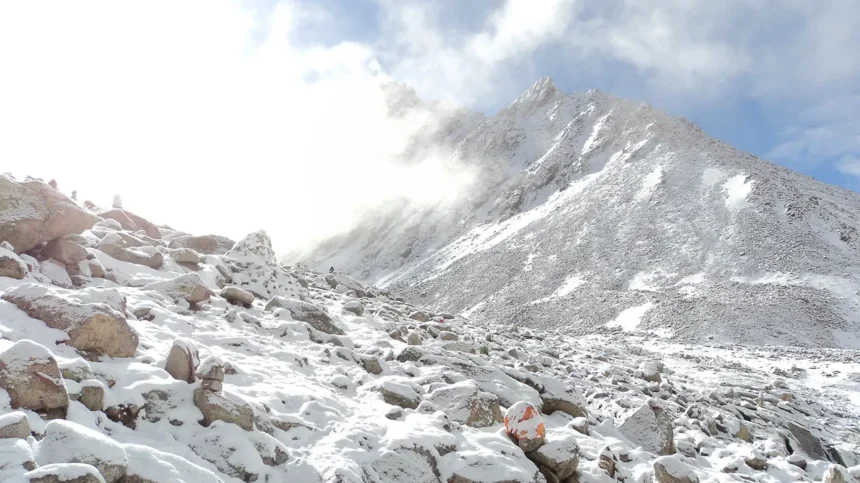
The Mount Kailash Kora is one of the most sacred and demanding pilgrimage treks in the world, and Dolma La Pass is its hardest and most important stage. The entire Outer Kora normally takes three days, but the Dolma La Pass is unique in the sense that it is high altitude, steep ascending, tough descending, cold weather, and heavy spiritual connotation. It is the day that physically, mentally, and emotionally challenges many trekkers and pilgrims.
Proper informationabout Dolma La day is essential to people who want to do the Kailash Kora. It is not just a walk around mountains; it is a serious high-altitude adventure that should be prepared, acclimatized, paced appropriately, and the local culture respected. It is a very profound element of the pilgrimage as well, with its sacred sites and strong symbolism.
This article provides a reason as to why Dolma La Pass is termed the most demanding day of the Mount Kailash Kora.
Why is Dolma La the Most Challenging Day?
The Dolma La pass day is highly recognized as the most challenging day of the Mount Kailash Kora. Though the distance of the Outer Kora is approximately 50-54 km in three days, the second day is the one where the greatest amount of physical and environmental difficulties is concentrated.
The standard trekking route includes Darchen on Day 1, Dirapuk to Dolma La and Zutulpuk on Day 2, and Dolma La back to Darchen on Day 3. One of these stops is the Dolma La Pass, which is regarded as the climax of the trek.
On this day, trekkers walk between 22km and take about 8-14 hours to finish the path, depending on the weather, trail conditions, and individual speed.
Physical difficulty breakdown: distance, elevation, and altitude profile
The Dolma La day is a physical challenge because of the combination of a long distance and exceptionally high altitude. The trekkers usually cover a distance of 18-24 km between Dirapuk and Zutulpuk through Dolma La.
The trek begins at Dirapuk (5,080 m) and ascends to the summit of Dolma La Pass (5,630 m), and then descends to Zutulpuk (4,790 m). The oxygen level at this altitude is minimal, making walking slow and tiresome.
Trekkers have a gradual climb up the mountain to the pass, after which there is a long and steep descent. This results in a physically demanding day for most people since the day follows the pattern of high, higher, and then a steep downward trend.
Terrain and why it feels harder than the numbers
The difficulty is also contributed to by the topography around Dolma La. Slopes made of rocks and gravel usually increase as the trail leads to the pass and become steeper. Some places are soft and unsteady, hence taking care is very important.
The trail leading down Dolma La Pass could be more difficult since the roads are steep, slippery, and sometimes snowy or ice-covered.
Together with the cold weather, which may reach as low as 0 °C even during the summer, these conditions make Dolma La the hardest day of the Kailash Kora.
Altitude Sickness Risk and Acclimatization Strategies
Dolma La day in the Mount Kailash Kora is not only a difficult trekking stage; it is mainly a challenge of managing high altitude.It starts at Darchen, the starting and finishing point of the kora, which is approximately 4,640m above sea level. At such an elevation, many people who are not adequately acclimatized can become the subject of early signs of altitude sickness even before they begin to climb towards Dolma La Pass.
Trekker is already sleeping at a very high level; hence, the body is forced to adapt rapidly to thin air and low oxygen levels. The awareness of altitude and preparation is therefore very crucial during the Kailash Kora.
What medical primary guidance says (and how it applies here)
Medical travel advice states that altitude illness normally arises when one travels at excessive levels too quickly without allowing their bodies sufficient time to acclimatize. After 3,000 m, one should raise sleeping altitude in slow steps, preferably not more than approximately 500 m per night, and a rest day should be added every 1,000 m.
In the Dolma La trek, there is also a simple safety rule that the trekkers need to observe. It is not worth the trekker proceeding to climb the mountain when there are any signs of acute mountain sickness (AMS). When the symptoms do not improve with rest, then the only thing that will be safe is to come down to a lower place.
Symptoms can be easily alleviated even by descending approximately 300 m. Severe breathlessness, confusion, and difficulty walking are serious warning signs that need an immediate descent and medical help.
Practical acclimatization strategy for a Kailash itinerary
Due to the high altitudes in the western parts of Tibet, the only way out is to spend some time in the middle altitudes and then proceed to Darchen.
Numerous Kailash itineraries visit a destination such as Lhasa, Shigatse, or Saga, located at altitudes of 3,500 m-4,000 m to provide gradual acclimatization. It is the reason whytravelers who come from Nepal usually pause at Gyirong (Kyirong).
Slow and gradual Kailash Kora, taking rest when necessary, and keeping hydrated are ways of minimizing the risk of altitude sickness.
Medication and oxygen: useful tools, not permission slips
Medicines like acetazolamide are taken to aid the body in adapting to high altitude, but this should be done after a physician has been consulted.
On the Dolma La Pass trek, the organized trekking teams will usually have oxygen cylinders and equipment used to monitor oxygen level such as oximeters. Oxygen may be used to alleviate the symptoms in the short term, but it is not an alternative to the process of acclimatization.
The surest methods of a safe completion of the Mount Kailash Kora include careful pacing and listening to the body.
Decision flow: when to continue vs turn back
On Dolma La day, trekkers and guides have to continuously assess the situation regarding safety. Weather, conditions of the trails, and individual health conditions are some of the factors that will determine continuation.
In case of bad weather or serious signs of altitude, it is safer to wait until the weather is safe, or rather, come back to Dirapuk and not strain to go to the pass.
Trekkers tend to begin early in the morning, proceed slowly with plenty of short pauses, and do not take lengthy breaks at the summit of Dolma La Pass, as it is very high and cold.
The important thing is to take care of the descent after the pass towards Zutulpuk since the effects of fatigue and the altitude may even manifest after reaching the peak.
Weather, Seasons, and Technical Challenges on Dolma La
The Dolma La Pass is highly dependent on weather patterns, time of the year, and terrain character. The pass may undergo unexpected cold weather, fierce winds, and uncertain weather variations, even in the best months of the trekking season.
Knowledge of these factors will enable trekkers to be well equipped for the technical and environmental Dolma La day challenges.
Best seasons (and what “best” really means)
The best time to cross Dolma La Pass during the Mount Kailash Kora is from mid-May to early October, when the roads are open, and the trekking route is easier to access.
May-June and September to early October are also said to be the best months, as the skies are usually clear and the weather on these days is more predictable.
Nonetheless, the best season does not imply favorable conditions. The climate at high altitude may still be very severe and unpredictable even in summer.
Indicatively, it can even fall below -20 °C even in July in Dolma La, and when it rains at night, the rain can occasionally turn into snow before the day of the pass. This indicates that trekkers should be able to be ready at all the time to cold and unpredictable weather in case they are in the Kailash Kora.
Wind, cold, and rapid shifts
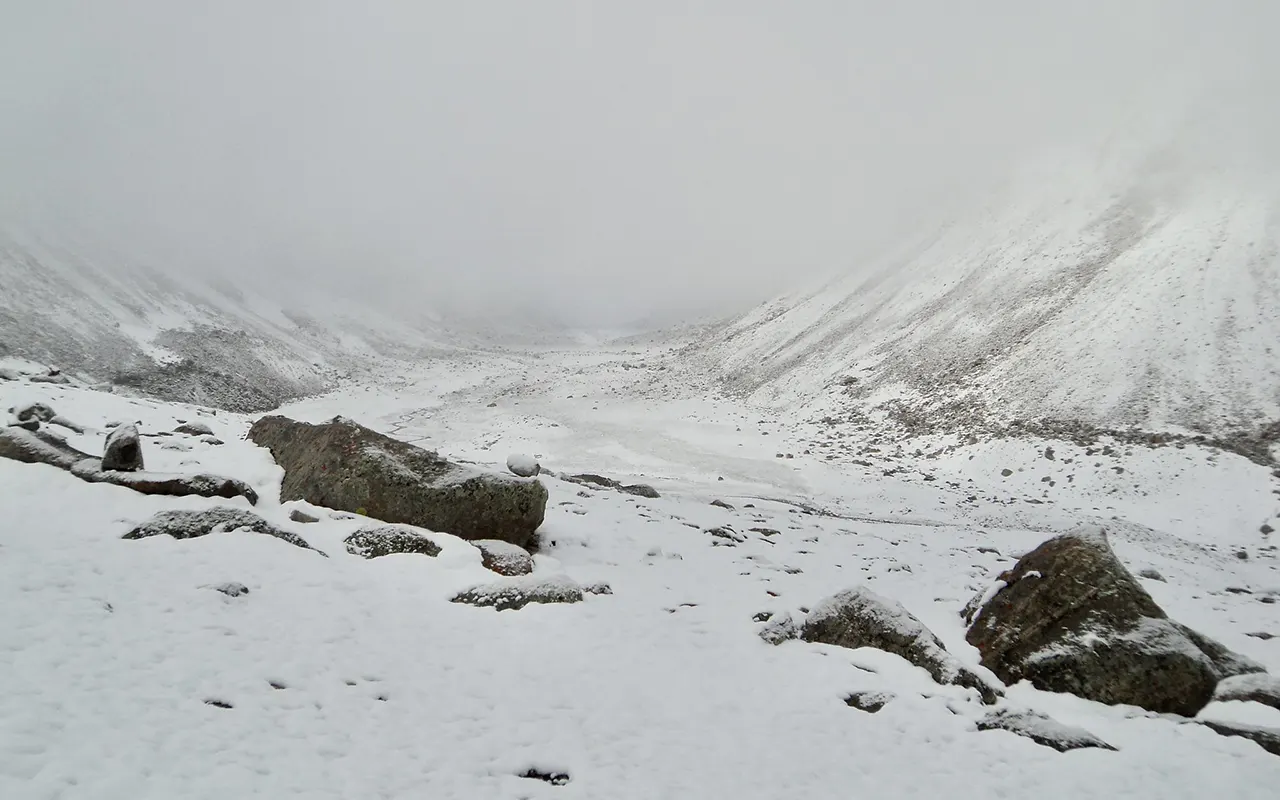
The weather conditions in Dolma La Pass may alter very rapidly. Strong winds are quite frequent at the pass due to the extreme altitude of the pass above 5,600 m. Even on the day that is clear day, trekkers can encounter the wind chill, dusty wind, or even snow pellets. Thin fog may also come suddenly and decrease sight, making navigation difficult.
Due to such quick changes, trekkers require warm clothes, a shield against the wind, and a flexible trekking speed on Dolma La day.
The technical “gotchas” (snow, scree, steepness)
Even though Dolma La is not a technical mountaineering climb, the terrain may be difficult. There are areas of loose gravel and scree slopes on the trail that can be hazardous when reaching steep grades.
The fall down the pass is usually the worst, as ice can result in falls, more so when people are already exhausted.
Long downhill also alters the burden on knees and ankles, and small rocky places have to be moved with care. Trekkers riding horses may sometimes need to get off and walk on steep or dangerous sections of the trail where riding is unsafe.
Photography tips and best viewpoints (without compromising your safety)
Mount Kailash Kora has some amazing photography opportunities regardless of the challenges. Dirapuk is renowned for the good views of the north face of Mount Kailash and has been regarded as one of the best places to view sunsets.
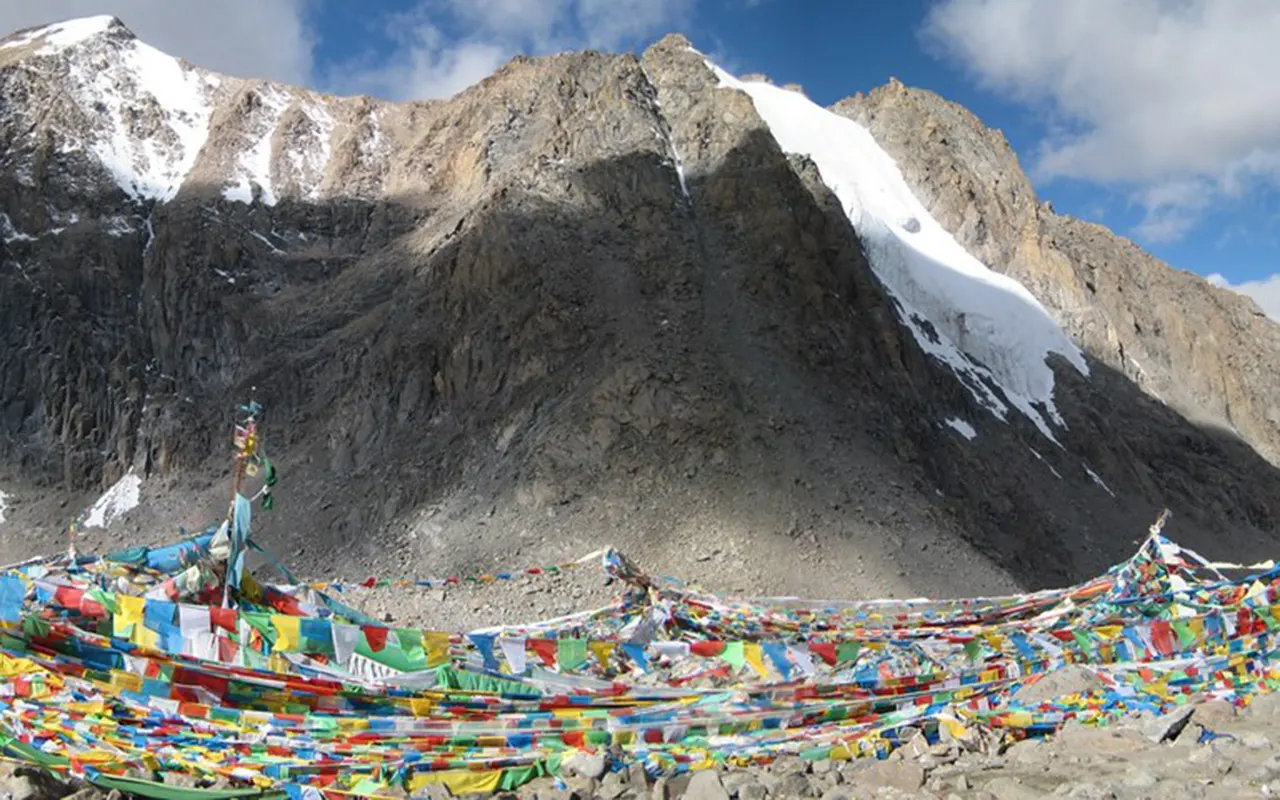
As one descends to Dolma La, the trekkers can observe some dramatic mountain light and colorful prayer flags in the pass.
But the photographer must not go too far because he or she may end up standing in the wrong place and may lose body heat in the process.
Cold weather has the ability to drain batteries of the camera, thus it is useful to carry spare batteries in warm pockets.
Some regions do not allow photography, as well as the interiors of some temples. It is always polite to ask the guides or monks before taking photographs.
Route Options, Logistics, and Support Choices
Taking the Mount Kailash Kora is an exercise that needs planning due to the fact that travel in Tibet is done with permission, logistics, and support arrangements.
The circumnavigation around Mount Kailash and Dolma La, in particular, may be physically challenging and isolated, and therefore, trekkers normally use organized tours and local support systems.
Knowing route considerations, accommodation, and other support, the trekkers can makerealistic preparations for Kailash Kora.
Permits and who can travel independently
For the majority of foreign travelers who intend to visit Tibet and complete the Kailash Kora, this is not a feat that can be accomplished as an independent undertaking. The traveler is required to get a Tibet Travel Permit that is normally organized by anauthorized travel agency.
Foreigners must also have an organized tour guide, and even the rules may be modified at short notice. It is due to this that the traveler must be flexible in terms of time and finances in their itinerary.
Accommodation: tea tents and monastery guesthouses, not comfort hotels
During the Mount Kailash Kora, accommodation is bare minimal. The amenities around the kora route are basic, whereas Darchen, the base of the trek, has normal hotels and guesthouses.
Trekkers normally spend the night in guesthouse-type rooms or in monasteries in Dirapuk and Zutulpuk. There is frequently more than one bed in the rooms, no or inadequate heating, and a common toilet.
The weather during the nights at the high altitudes can be quite cold, and therefore the use of a warm sleeping bag is highly advisable.
Porters, yaks, horses: how support actually works
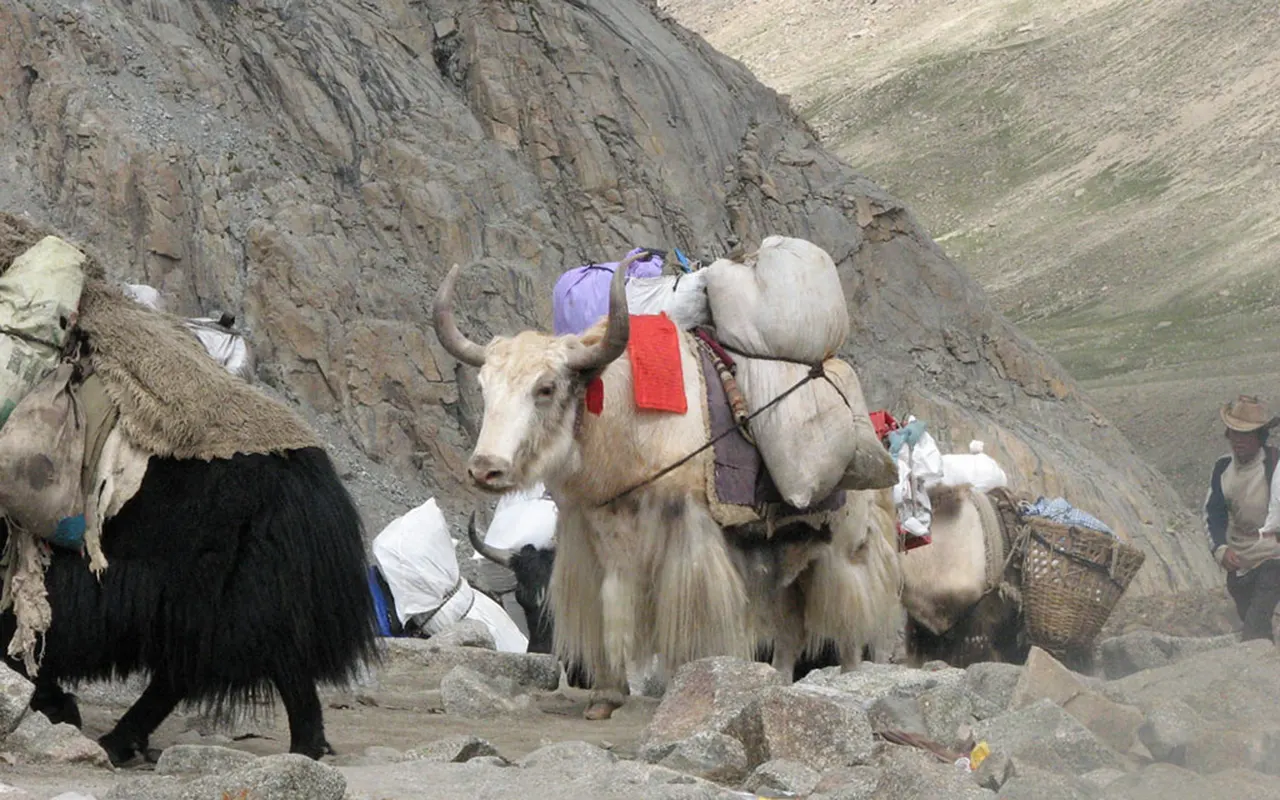
Numerous trekkers employ the services of porters, yaks, or horses to assist in the transportation of their luggage during Kailash Kora. These services are normally organized in Darchen, which is the key logistics centerwhere the trekkers are able to purchase food, supplies, and, occasionally, oxygen canisters.
Animals used as support can ensure that the journey will be more bearable, particularly to people with heavy bags.
Nevertheless, despite the horse, trekkers might still be required to walk some steep or dangerous areas, especially on the way down to Dolma La Pass.
Comparing route/support options for the Dolma La day
| Option for Dolma La day | Typical time & effort | Difficulty driver | Risk profile | Best for |
| Standard clockwise Outer Kora (3-day) on foot | 8–14 hrs; 18–24 km | Long day, high altitude, steep descent | Moderate–high: AMS and slips | Fit trekkers with proper acclimatization |
| Same route with porter/yak luggage support | Similar hours, less fatigue | Altitude remains the main challenge | Lower fatigue risk, AMS unchanged | First-time trekkers or older hikers |
| Horse-assisted trekking | Faster on flat sections | Mounting, balance, steep areas | Fall risk possible; still walk steep parts | People with knee issues |
| Extra acclimatization day | Same route but more recovery | Better altitude adjustment | Lower AMS risk | Trekkers with limited altitude experience |
| Fast kora (2-day or 1-day) | Very long and intense | Rapid altitude exposure | High AMS and fatigue risk | Highly experienced trekkers only |
Practical Pacing, Itineraries, and Contingency Plans
The bottom line is that it is important to pace across Dolma La Pass, have realistic itineraries, and possess clear back-ups to avoid failure during the Mount Kailash Kora.
The most difficult stage of the trek is Dolma La day, which is caused by the high altitude, the long distance, and the unpredictable weather.
Slow-moving with a wise itinerary and adaptable to the conditions are bound to have a better and safer time.
Recommended pacing principles for Dolma La day
Oxygen levels may decrease to approximately 50-60 percent at altitudes of 5,000 m to 5,600 m, making each step even more exhausting. Due to this fact, the most effective approach on Dolma La day is to walk and have a smooth pace.
Take short standing breaks that allow the body to rest without getting too cold in the wind. Small snacks should be taken by trekkers and adequate water consumed so that energy is not lost. One should also be able to listen to the body.
When the signs of altitude sickness get more severe, it may be quite risky to continue and even require going down the mountain.
Day-by-day itinerary around the Dolma La stage
Most Kailash Kora tours include a period of acclimatization before the trek begins.Two or three days in the altitude of 3,500-4,000 m helps to adapt before reaching Darchen.
During Kora Day 1, the trekkers normally pass through Darchen to Dirapuk, which is approximately 20 km with a comparatively moderate terrain, although still at high altitude.
The hardest part of the trip is the second one, Dirapuk to Dolma La Pass and to Zutulpuk, and it normally consumes an entire day of walking.
The third day between Zutulpuk and Darchen is shorter and less difficult. Most of the travelers also have an extra buffering day in their itinerary so as to cope with weather, allowance, delays, or altitude issues.
Sample Dolma La day schedule (hour-by-hour)
A normal Dolma La day starts very early, which sometimes is 4:00-5:00 a.m. when there is calm weather. In the morning, trekkers work their way steadily up to the pass and are hoping to arrive at Dolma La Pass by late morning.
The extremely high altitude and the cold wind at the summit make most groups halt for only a short time, after which they start on the descent.
The first portion of the descent may be steep and icy, hence taking care is significant. Beyond holy places such as Gauri Kund, a long valley is followed until we arrive at Zutulpuk in the afternoon or early evening.
Contingency plans for weather or health issues
A proper itinerary of the Mount Kailash Kora will always have some contingency plans. In case of unsafe weather conditions like snow, wind, or poor visibility at Dolma La Pass, the safest option can be to postpone the crossing with the help of a buffer day.
When trekkers experience slight symptoms of altitude or excessive exhaustion, they have an opportunity to decrease the load by employing the assistance of porters or moving more slowly.
But in the case of severe signs of acute mountain sickness, the most appropriate reaction is to reduce the altitude to a lower level and seek medical assistance. The pass should never be completed without first having to consider safety.
Spiritual and Cultural Context of Dolma La
The trek over Dolma La Pass within the Mount Kailash Kora is both a physical adventure and a highly religious pilgrimage. The mountain Kailash is holy to several religions, such as Hinduism, Buddhism, Jainism, and the Bon tradition. The kora or parikrama, which means to walk around a holy mountain, is done by pilgrims who come from various distances across the world to perform the act of devotion.
The entire Kailash Kora is approximately 52km and is often finished in three days. Another cultural event is the direction of the circuit: Hindus and Buddhist Walk clockwise, and Jains and Bon people used to walk in the opposite direction around the mountain.
Ritual landmarks: Shiva Tsal, prayer flags, and Gauri Kund
Several religious places are along the way, which are of spiritual significance on Dolma La day. Among the places that are important is the Shiva Tsal, where pilgrims offer clothing parts or other small personal offerings. The ritual is a representation of the release of what is weighing one down before crossing the pass.
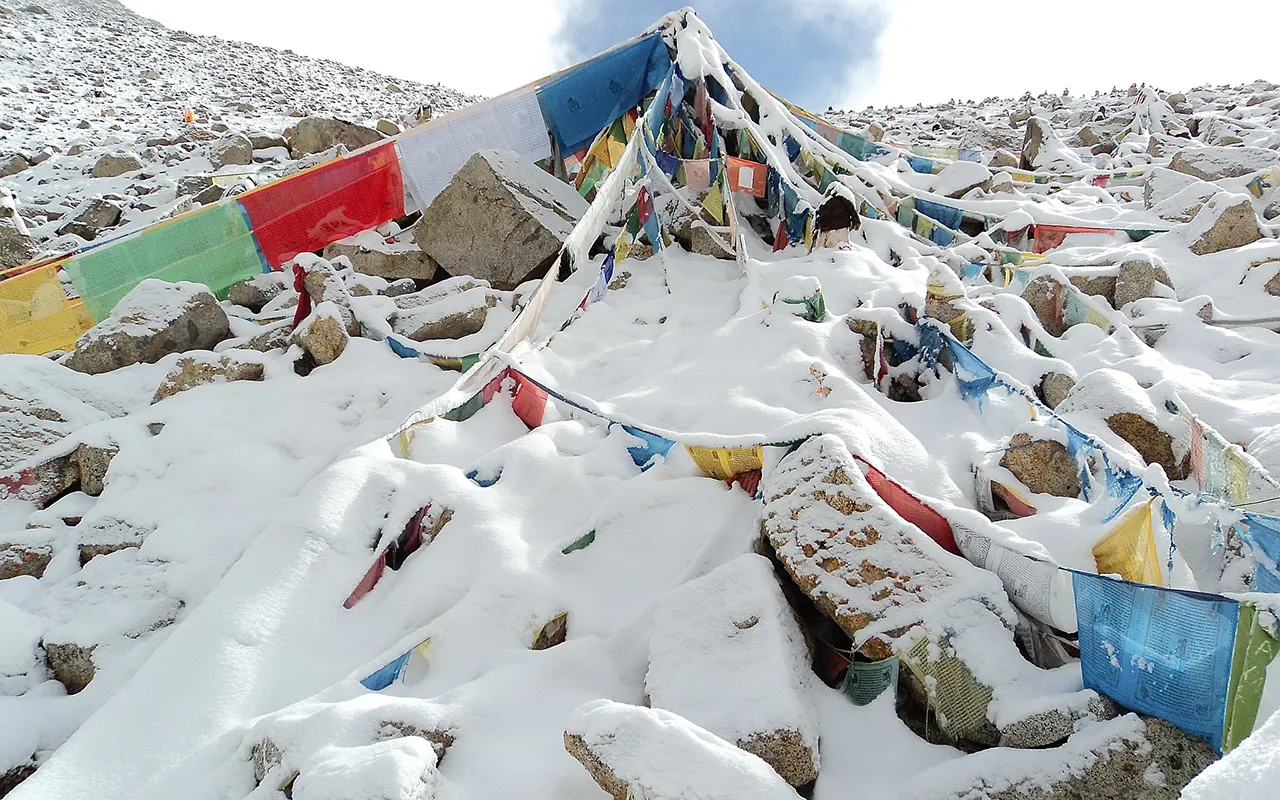
Dolma La Pass also features prayer flags that are painted on the rock and the slope at the summit, generating a strong spiritual mood on the trail as the wind carries the prayers and blessings.
Trekking down, the trekkers might observe a holy high-altitude lake known as Gauri Kund that has an attachment to Hindu culture and the deity of Parvati.
Etiquette on the trail
Due to the fact that Kailash Kora is a holy pilgrimage, one needs to observe local norms and practices. The trekkers are expected to walk with the flow of the pilgrimage, not to obstruct the small parts of the path, and request permission to take pictures of rituals and pilgrims.
Mutual respect is one of the ways to keep the spiritual mood of Dolma La Pass alive for all the visitors.
Packing checklist for a safer Dolma La crossing
Appropriate equipment is needed to make a crossing of Dolma La Pass in the Kora around Mount Kailash safe. As Dolma La day is cold, with high winds, long hours of walking, and some altitude symptoms may occur, trekkers must have strong and efficient gear.
It has a good dressing code that is needed to deal with shifting mountain environments. This typically involves a warm bottom, a protective mid-layer, a windbreak jacket, gloves, a warm hat, and a rest stop down jacket. Temperatures at Dolma La, even in the summer, can reach below freezing.
Footwear and stability aids are as well essential. Trekker shoes must be comfortable and well broken in, and you should be equipped with trekking poles to ensure stability, particularly when descending up the highly steep Dolma La Pass. Some trekkers carry micro spikes in case of any icy conditions.
It is also important to hydrate and have energy throughout the Kailash Kora. Bring an insulated bottle, electrolyte beverages, and portable snacks such as biscuits or energy bars.
A headlamp, extra batteries, a power bank, simple medicines, and a warm sleeping bag can be helpful since the facilities on the way are extremely low-end.
Conclusion
Dolma La Pass crossing is the most difficult and significant phase of the Kora of Mount Kailash. This day is all about long distance, high altitude, hilly terrain, and unforeseen weather, and is physically challenging for most of the trekkers.
The key to this part of the journey is proper acclimatization, pacing, and good preparation in order to complete the journey safely. The risks of altitude sickness, the wise planning of the itinerary, and the appropriate equipment can help to significantly enhance the safety and comfort of the Dolma La day.
It is not only a tough trek. Dolma La has profound religious significance to most pilgrims who perceive the crossing as a process of purification and renewal when they go around the Kailash Kora.
Showing respect to the cultural traditions, walking slowly on the trail, and not losing sight of the changing conditions in the mountain will contribute to maintaining the safety and the sacred mood of the route.
When the travellers are well prepared and show respect to the mountain, there is a chance that the Dolma La Pass will be completed, and the pilgrimage around Mount Kailash will be an unforgettable experience.
