English
 Dutch
Dutch Japanese
 Hindi
Hindi Italian
 Spanish
 French
 German
 Chinese
 Korean
 Arabic
 Hebrew
 Russian
 Portuguese
 Danish
 Czech
Czech Polish
 Swedish



Need Help? Let's Talk
+977 9841965533
Trip Facts
|
Trip Duration
14 Days |
|
|
Region
Annapurna Treks |
|
|
Country
Nepal |
|
|
Group Size
2 to 25 Person |
|
|
Arrival On
Kathmandu |
|
|
Departure From
Kathmandu |
|
|
Best Season
March To May / Sept To Nov |
|
|
Max Altitude
4130M |
|
 Moderate level treks usually above 7 days. Altitude can reach 5000 meters with 5-6 hrs of hike per day. Moderate refers to neither easy walk nor tough. High altitude may matter on walking speed and distance. Acclimatization may be required.
| Trip Grade Moderate |
|
Activities
Nepal Trekking
|
Annapurna Base Camp Trek Overview
Mission Himalaya Treks offers you a warm invitation to join our Annapurna Base Camp trek, an exceptional journey where your aspirations will meet with the majestic peaks of the Himalayas of Nepal, with an experience of stepping into another world.
If you are very eager to uncover the beauty of the gigantic mountains in a very special manner, then our Annapurna Base Camp trek is what you are looking for.
It will guide you to the Annapurna Sanctuary, also known as Annapurna Base Camp, situated at an altitude of 4130 m within the Annapurna Conservation Area in north-central Nepal.
As for our Annapurna Base Camp trek itinerary, it is beautifully designed with moderate difficulty and manageable altitudes, thus making it suitable for your first mountain adventure.
We promise, with every step you take on this trek, you will feel nature has been talking to you. And, once you are at Annapurna Base Camp, the snow-capped peaks of Gangapurna (7455 m), Hiunchuli (6441 m), Tarke Kang (7202 m), VarahaShikhara (7647 m), Fishtail/Machhapuchhare (6993 m), Khangsha Kang (7485 m), SinguChuli (6501 m), along with Annapurna South (7219 m) and III (7555 m), will remind you of their indescribable power standing there to tell their stories.
Throughout our Annapurna Base Camp trek, you will hike through the traditional villages of the Gurung and Magar communities, where you will be enchanted by their unique Buddhist traditions, chortens, and rich culture.
You will also traverse rich old forests, rhododendron and bamboo jungles, and cross the enraging river of ModiKhola. Additionally, you will find yourself standing at the base camp of the hypnotizing peak of Machhapuchhare/Fishtail at an altitude of 3700 m.
You will also be reaching the 3210 m tall remarkable Poon Hill point, which is one of the premium locations in Nepal to watch the majestic sun rising over the Annapurna and Dhaulagiri massifs.
Thus, our Annapurna Base Camp trek is not just a mountain adventure, but it is also a heartfelt journey, a reconnection with yourself and nature in its most authentic form.

5.0
317 reviews
Trip Highlights:
- A classic of the classic mountain trek suitable for all levels
- A beautiful hike to Poon Hill for a stunning and hypnotizing sunrise
- A diverse landmark of the Annapurna Conservation Area with dense thickets, rivers, alpine meadows, and glaciers
- An immersion in the Himalayan spectacle at Annapurna Base Camp
- A majestic appearance of Fishtail at its base camp
- A soothing relaxation in JhinuDanda springs
- A traditional and cultural encounter with the Buddhist communities of the Magar and Gurung people
- Traditional Nepalese dishes that are both simple and flavorful
- Relaxation in Pokhara with a boat ride on Phewa Lake, and exploration of local temples
- Main attractions in Kathmandu: Swayambhunath, Pashupatinath, and Boudhanath
A little about Annapurna Base Camp
Annapurna Base Camp lies at the foot of Annapurna Mountain I, named after the goddess of abundant food and harvests. It is the 10th highest peak in the world at 8091 m and was also the first 8000 m peak ever climbed in mountaineering history.
Maurice Herzog and Louis Lachenal, on June 3, 1950, reached the summit and created a heroic record in the mountaineering expedition. They attempted the north-west route to the summit, which is why it is referred to as the north base camp.
However, we will not be taking you to the north Annapurna Base Camp, which is very remote and particularly difficult. Instead, we will guide you to the Annapurna Base Camp located under the south face of Annapurna I.
This camp was used in 1970 by Don Whillans, Chris Bonnington, and DougalHaston to successfully ascend Annapurna I from its southern edge. This route is particularly more diverse, easier, and rich in natural and cultural experiences.
Route followed in our Annapurna Base Camp Trek Itinerary
Our Annapurna Base Camp trek itinerary will take you towards Pokhara from where you will ascend the 3300 stone steps of Ulleri to ultimately make your way to Poon Hill through Ghorepani, a beautiful community of Magar people.
Then, you will pass through numerous traditional villages like Chhomrong, Dovan, Bamboo, and Deurali, which offer you an introduction into the local Gurung culture and lifestyle.
They are the courageous British Gorkha soldiers, known for their remarkable honesty and valor on the battlefield. Then, your trail will guide you through the Machhapuchhre base camp to Annapurna Base Camp.
As your Annapurna Base Camp trek comes to an end, you will follow a new trail to JhinuDanda, where a collection of hot springs awaits you by the banks of the ModiKhola.
Kathmandu To Pokhara Highway
During the transportation from Kathmandu to Pokhara and return time, there are many unusual traffic jams and maintenance of the road, so the timing can be 7 to 10 hours for 200 kilometers for your safety and the unusual bumpy road.
Mission Himalaya Treks suggests you take 25-30 minute flights that cost US$...
Read MoreAnnapurna Base Camp Trek Itinerary
Day 1: Arrival in Kathmandu and hotel transfer, 1,350 M/4,430 FT
Walking Hours: 30 Minutes Drive
Meals Included: Welcome Dinner
Accommodation: 3 Star Standard Hotel
Max. Altitude: 1,350M/4,430FT
Distance: 5.5 Km
Difficulty Level: Easy
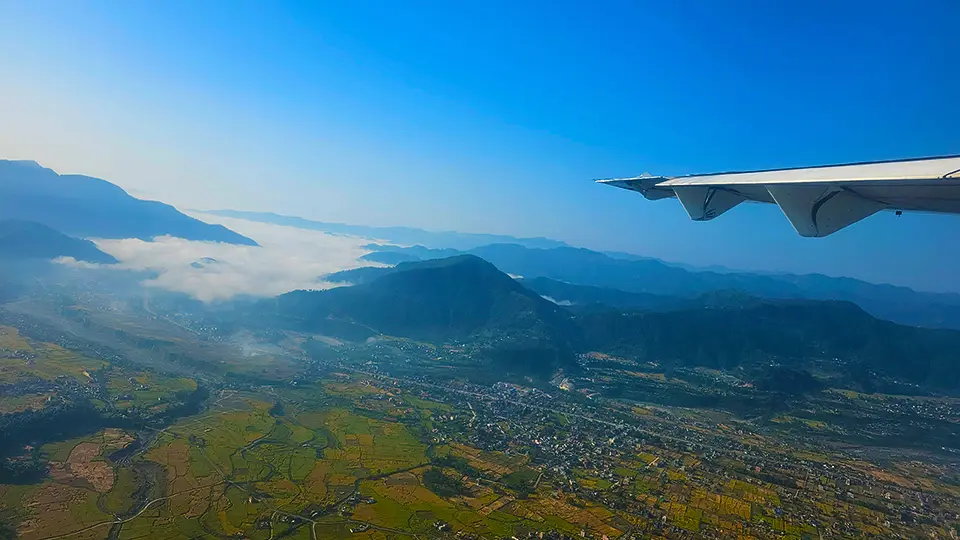
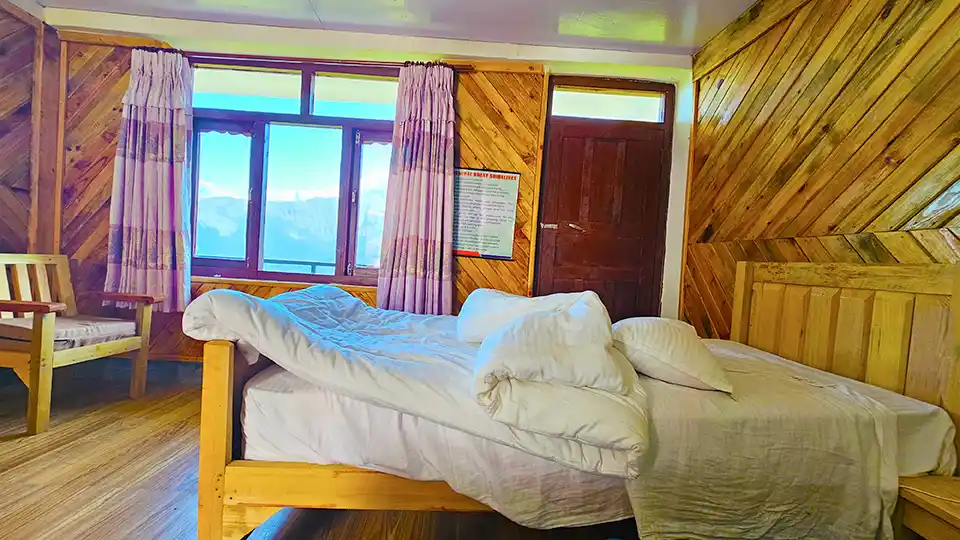
We welcome you to Kathmandu today, a mesmerizing city full of lights, color, vitality, and spirituality. We will meet you at the TIA terminal to assist you with your transfer to your chosen hotel.
Once you check in, please take some time to rest after your exhausting flight. Toward the evening, our guide will meet you and give you an introductory briefing about our Annapurna Base Camp trek itinerary.
Then, he will take you to a very nice cultural restaurant in Kathmandu for a warm welcome Nepali dinner.
Day 2: Sightseeing in Kathmandu and preparation for the trek
Walking Hours: 6 Hours Sightseeing through drive
Meals Included: Breakfast
Accommodation: 3 Star Standard Hotel
Max. Altitude: 1350m/4,430ft
Distance: Around 20km
Difficulty Level: Easy
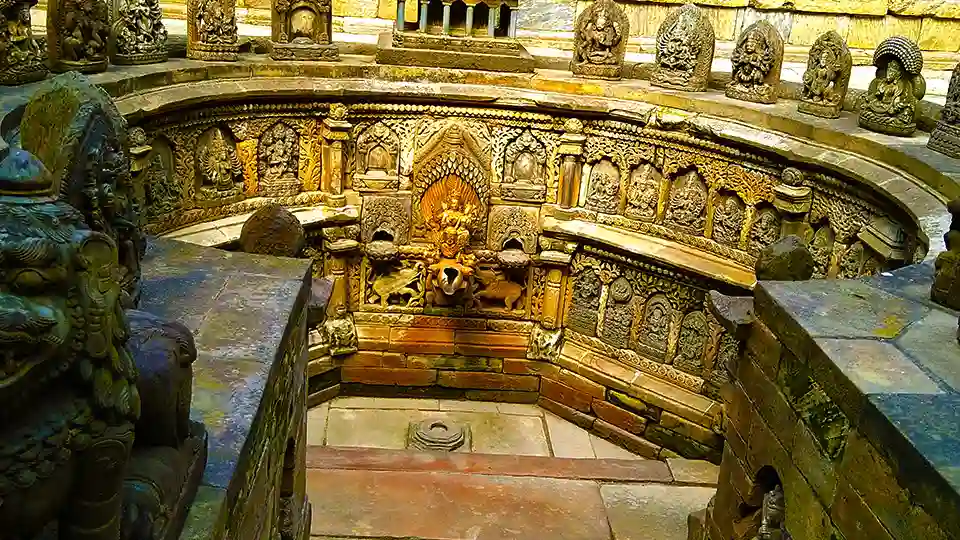
Info
Sundari Chowk Patan During Kathmandu Sightseeing
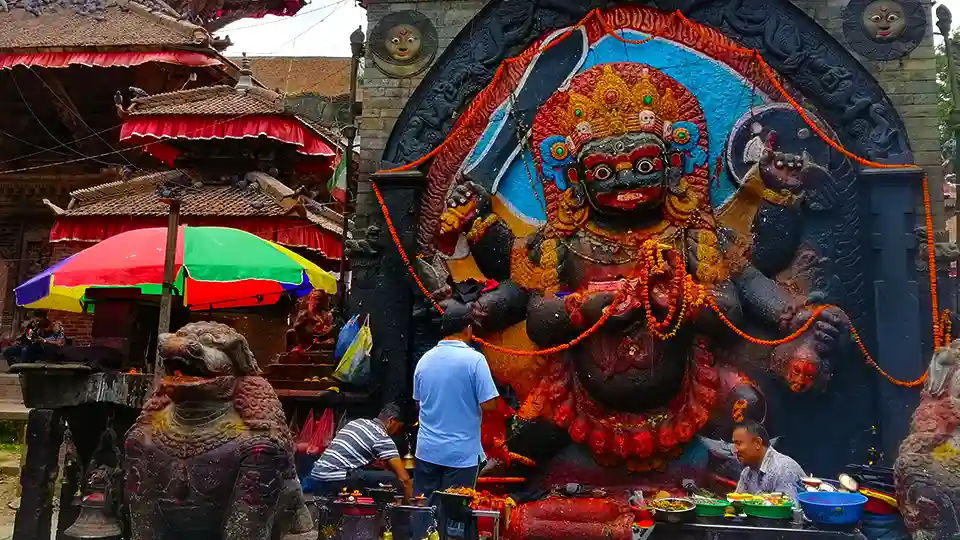
Info
Laughing Kal Bhairav in Kathmandu Durbar Square Tour
Today is all about a guided Kathmandu tour, along with a review of the equipment needed for the Annapurna Base Camp trek.
Setting the mood for our trekking adventure, our guide, after you have your breakfast, will take you to SwayambhunathStupa, BoudhanathStupa, and Pashupatinath Temple.
We will also accommodate your shopping later in the afternoon. Meanwhile, our team will be busy organizing the permits essential for our Annapurna Base Camp trek.
Since we have a long road journey starting bright and early tomorrow morning, we advise you to get a very early sleep tonight.
Day 3: Drive to Pokhara, 823 m, 200 km, 7 to 8 hours, Fly on Add on Cost
Walking Hours: 7 To 8 Hours Driving
Meals Included: Breakfast
Accommodation: 3 Star Standard Hotel
Max. Altitude: 823m
Distance: 200km
Difficulty Level: Easy
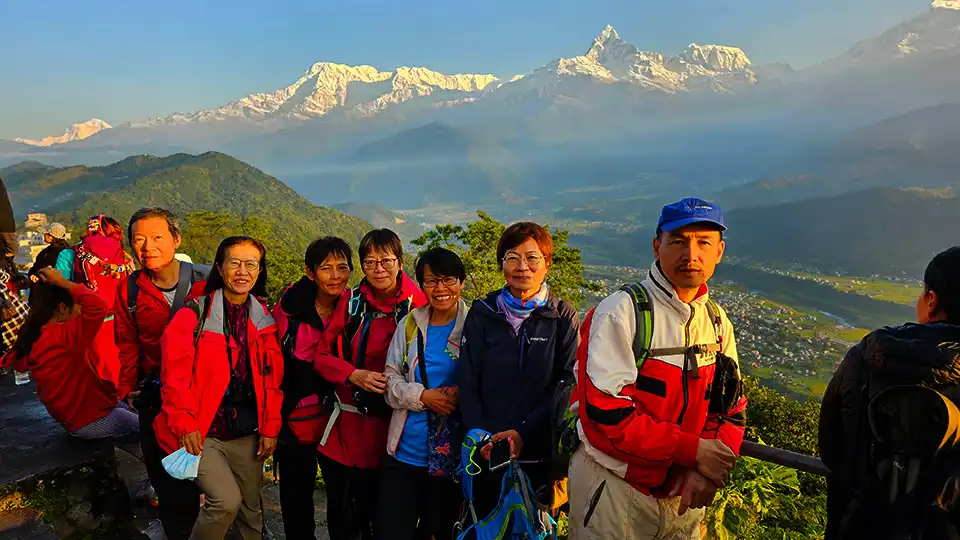
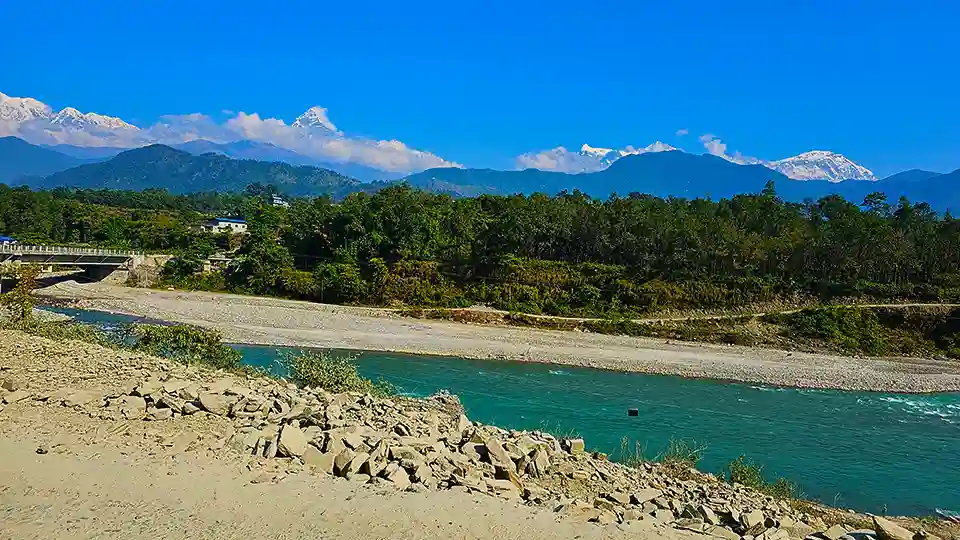
In the morning, we will start our long but beautiful transfer to Pokhara. As soon as we are out of Kathmandu through Thankot Pass (2250 m), we will begin to see a beautiful rural landscape of Nepal.
Prithvi Highway will transfer us comfortably towards Trishuli Valley, and soon enough, we will be having lunch at the stunning setting of Malekhu and Ghasikuwa.
We will now be transferred by the broad Mugling-Narayanghat Highway, and en route, we will be able to glance at Bandipur, an old-time stopped Newari town.
Above us, Manakamana Temple will be watching us as we gently proceed to the Lake City of Pokhara. In the evening, we will walk along the Phewa lakeshore and relax in a cafe or enjoy a boat ride.
If you wish to spend less time on the road and more time in Pokhara, then you can also consider taking a 30-minute flight to Pokhara at minimal additional cost.
Day 4: Drive to Nayapul, 1.5 hours, and trek to Ulleri, 2050 m/6725 ft, 13 km, 5 to 6 hours
Walking Hours: 1 And Half Hours Driving & 6 Hours Trekking
Meals Included: Breakfast, Lunch, And Dinner
Accommodation: Tea House Or Lodge
Max. Altitude: 2050m/6725ft
Distance: 13KM
Difficulty Level: Moderate
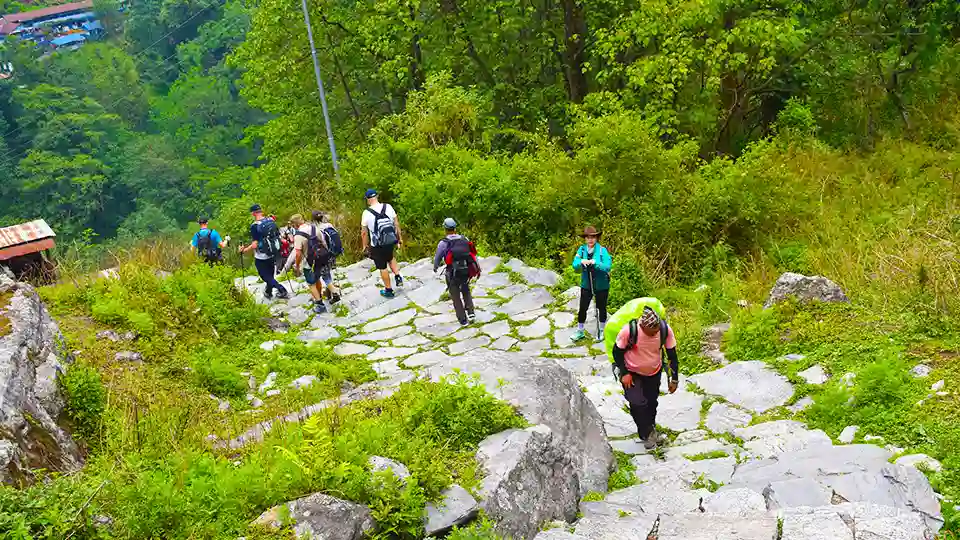
In the morning, we will take a jeep towards Nayapul/New Bridge. After a 1.5-hour drive through Naudanda, we will reach Nayapul, the starting point for our Annapurna Base Camp trek.
We will begin our soft trek through stunning scenery. The road ahead is pleasant, which passes through a rare forest that will lead us to a long steel bridge over the juncture of the Modi and Bhurungdi Rivers.
We will soon reach Birethanti, where our permits for the Annapurna Base Camp trek will be checked. Continuing through, we will walk through several pleasing settlements of Matathanti, Ramgai, and Sudame.
The north bank of the BhurungdiKhola will ascend us gently to Hile (1495 m) and then Tikhedhunga (1570 m). We will now have to tackle the overwhelmingly long 3300 steep stone steps before we reach Ulleri, a peaceful Magar locality with Annapurna and Himchuli at its backdrop.
Day 5: Trek from Ulleri to Ghorepani, 2,750 m/9,020 ft, 10.3 km, 4 to 5 hours
Walking Hours: 4 To 5 Hours Trekking
Meals Included: Breakfast, Lunch, And Dinner
Accommodation: 3 Star Standard Hotel
Max. Altitude: 2,750m/9,020ft
Distance: 10.3km
Difficulty Level: Easy
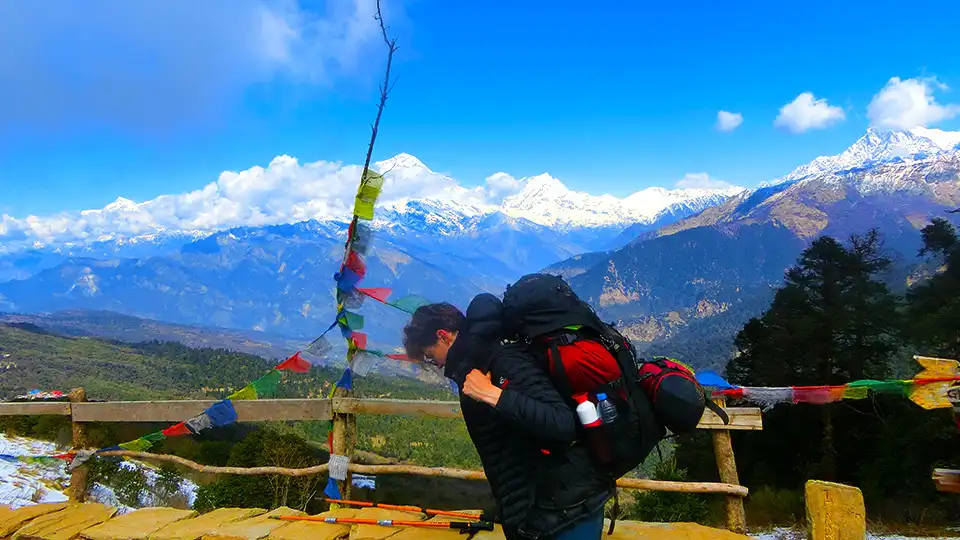
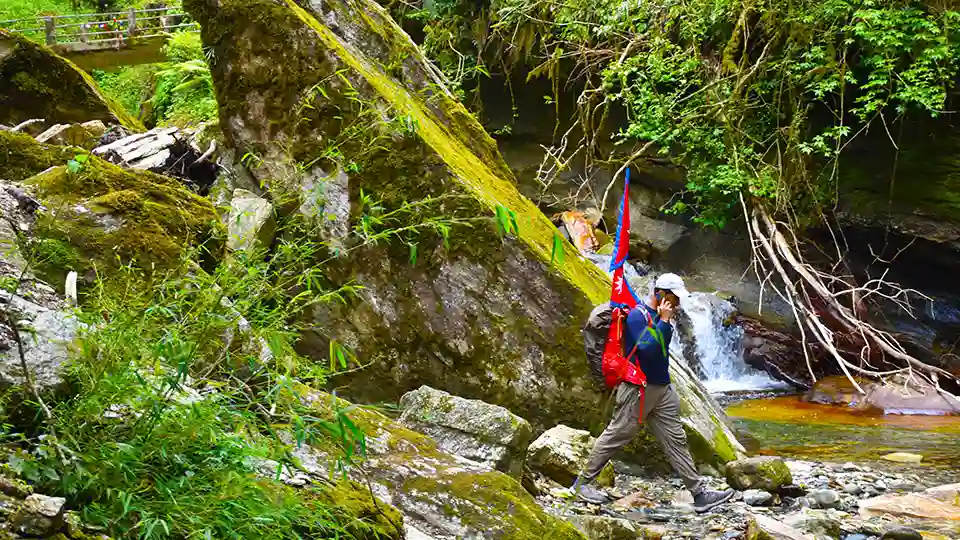
From Ulleri, our path will gently climb through the old rhododendron forest towards Banthanti (2250 m). The forest will become thicker and richer as we climb for two hours more through Nangethanti (2460 m) to reach Ghorepani, a beautiful settlement inhabited by Magar and Gurung tribes.
Annapurna South and Nilgiri outshine their horizon while we engage in quiet, short walks in the village.
Day 6: Morning hike to Poon Hill, 3210 m / 10529 ft, and trek from Ghorepani to Tadapani, 2,700 m/8,860 ft, 14 km, 6 to 7 hours
Walking Hours: 6 To 7 Hours Trekking
Meals Included: Breakfast, Lunch, And Dinner
Accommodation: Tea House Or Lodge
Max. Altitude: 2,700m/8,860ft
Distance: 14 km include Punhill
Difficulty Level: Moderate
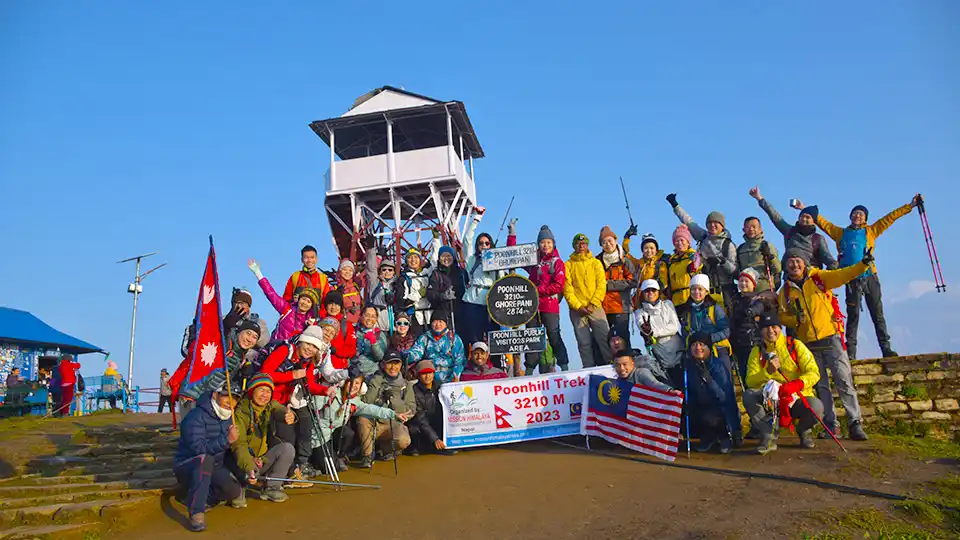
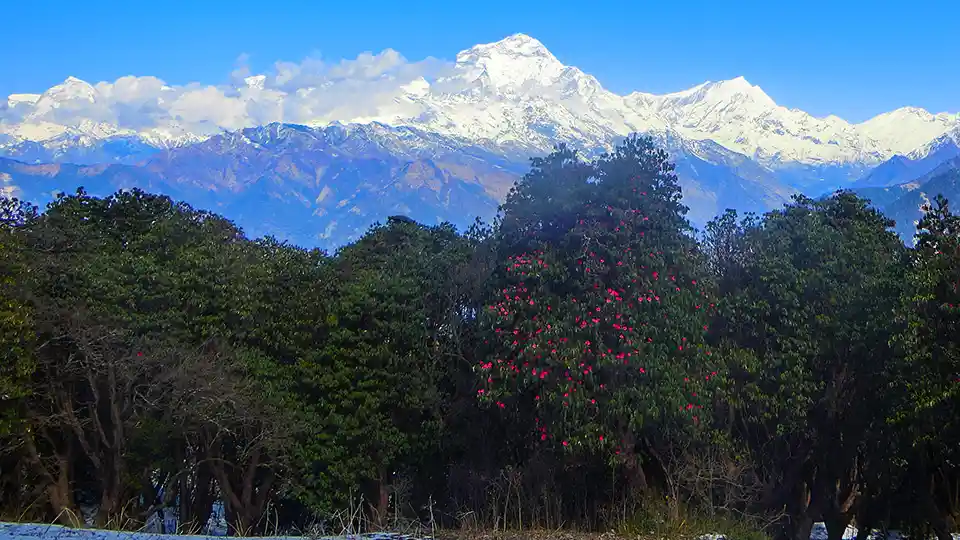
Bright and early, probably one to two hours before sunrise, we will ascend to Poon Hill. It is one of the premium locations to see the sunrise glowing over the icy fluted edges of Nilgiri, Tukuche, Machhapuchre, Hiunchuli, Annapurna IV, III, and II, VarahaShikhar, LamjungHimal, and Manaslu.
We will now head down to Ghorpani lodge for breakfast, after which we will continue our hike to Tadapani. On our way, we will ascend the rocky wall of the 3090 m tall Deurali ridge.
Then, a well-made stone path will lead us with ease to Tadapani, where Fishtail and Annapurna are just a heartbeat away.
Day 7: Trek from Tadapani to Chhomrong, 2170 m/7120 ft, 9 km, 6 to 7 hours
Walking Hours: 6 Hours Trekking
Meals Included: Breakfast, Lunch, And Dinner
Accommodation: Tea House Or Lodge
Max. Altitude: 2170m/7120ft
Distance: 9km
Difficulty Level: Moderate
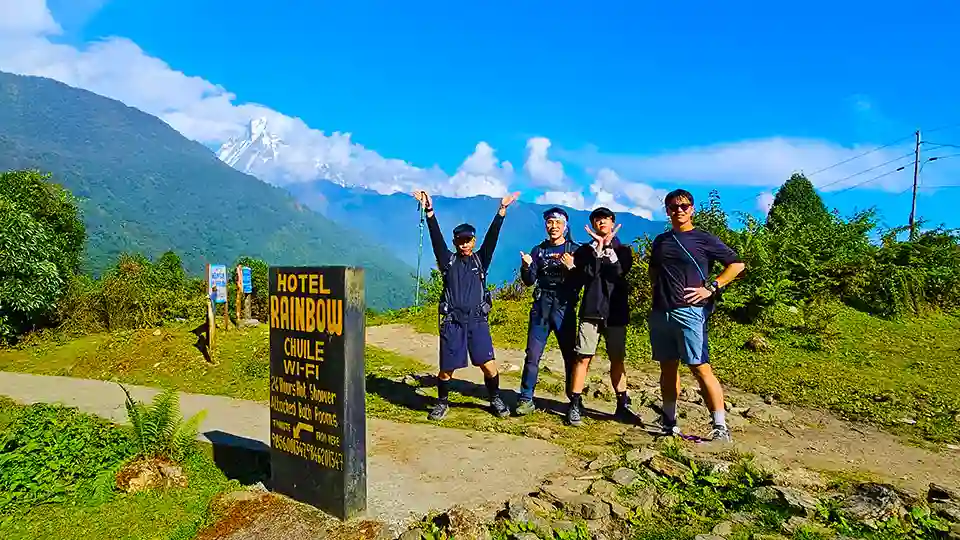
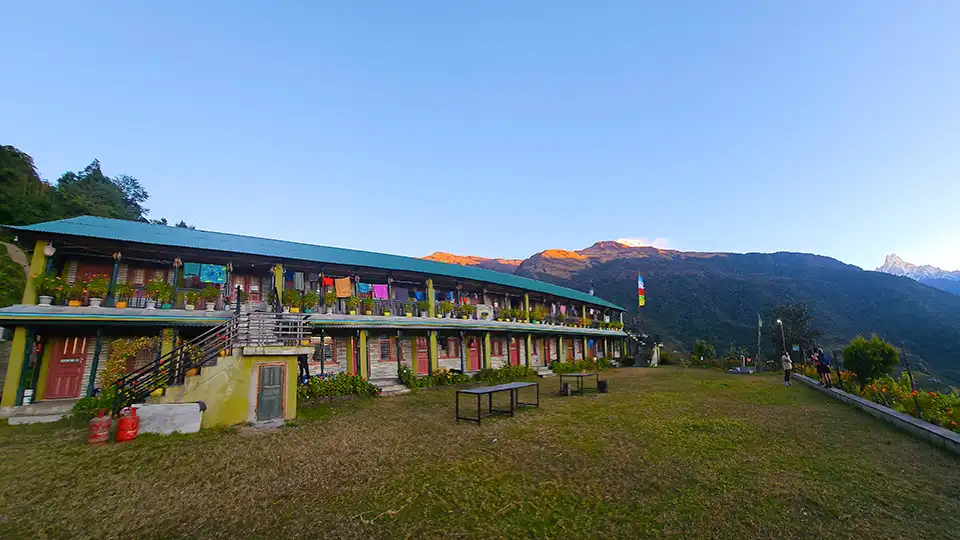
We will continue our Annapurna Base Camp trek along a scenic trail that flows through Chuile Village. Our route will now descend towards the KimrongKhola, where we will cross one more steel bridge.
The path across will now climb for a while till we reach Chhomrong Village. It is the last major village on the way to the Annapurna Base Camp, decorated by the enormous presence of Fishtail and Annapurna.
Day 8: Trek from Chhomrong to Bamboo, 2310 m/7578 ft, 4 hours
Walking Hours: 4 Hours Trekking
Meals Included: Breakfast, Lunch, And Dinner
Accommodation: Tea House Or Lodge
Max. Altitude: 2310m/7578ft
Difficulty Level: Moderate
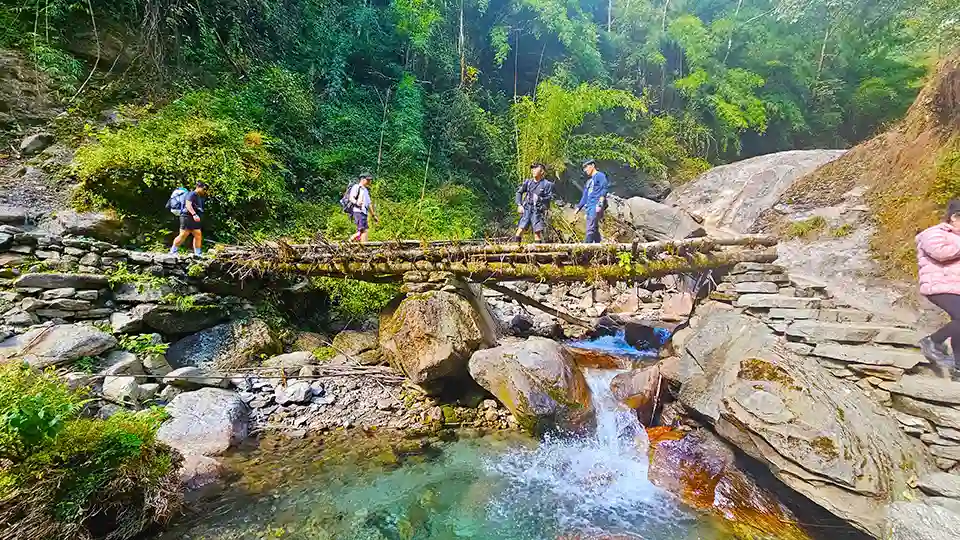
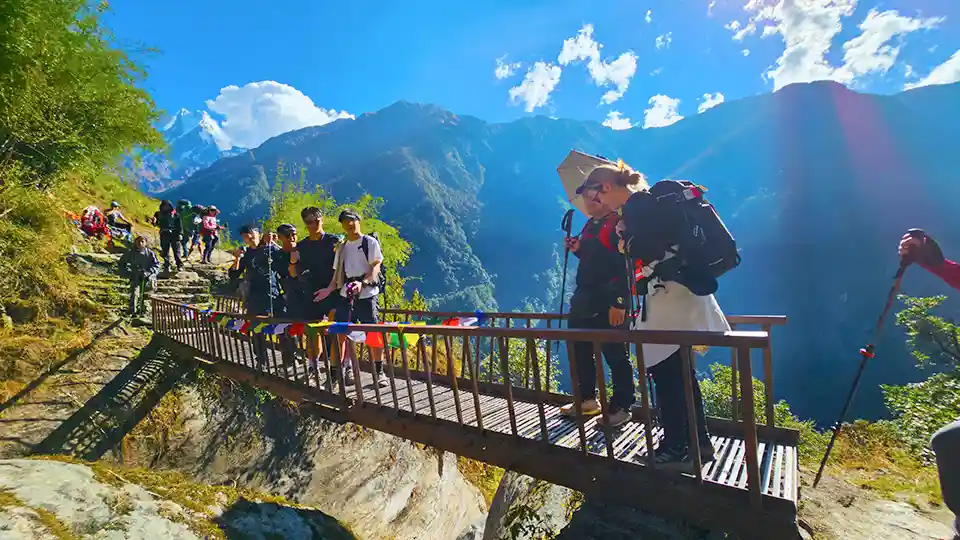
From Chomrong, our trail will guide us down along some stone steps toward ChhomrongKhola. After crossing yet another long suspension bridge, we will ascend through the charming locales of Bhanuwa and Sinuwa (2300 m).
Our journey will continue through Khuldighar towards Bamboo Village, encircled by the rich jungle of flourishing bamboo trees.
Day 9: Trek from Bamboo to Deurali 3230 m/10,595 ft, 4 to 5 hours
Walking Hours: 4 To 5 Hours Trekking
Meals Included: Breakfast, Lunch, And Dinner
Accommodation: Tea House Or Lodge
Max. Altitude: 3230m/10,595ft
Difficulty Level: Moderate
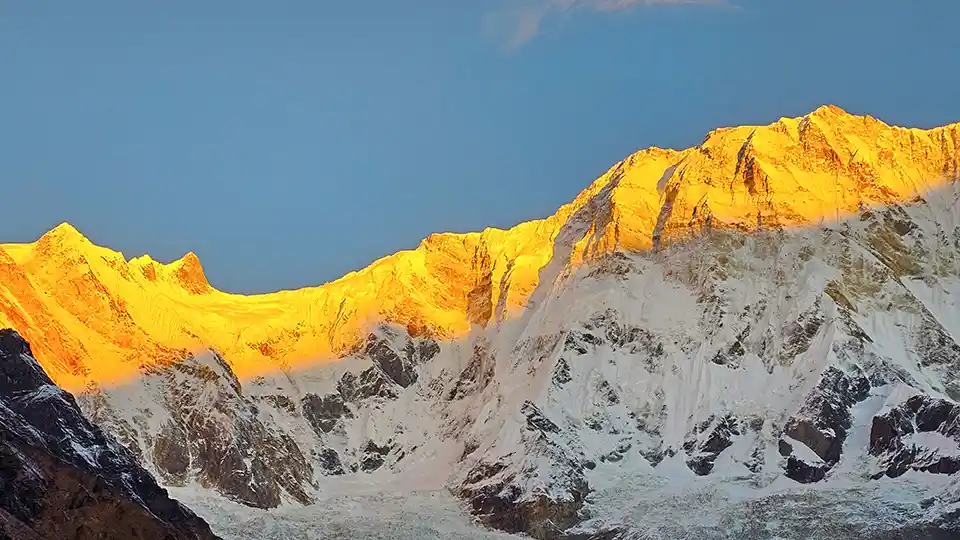
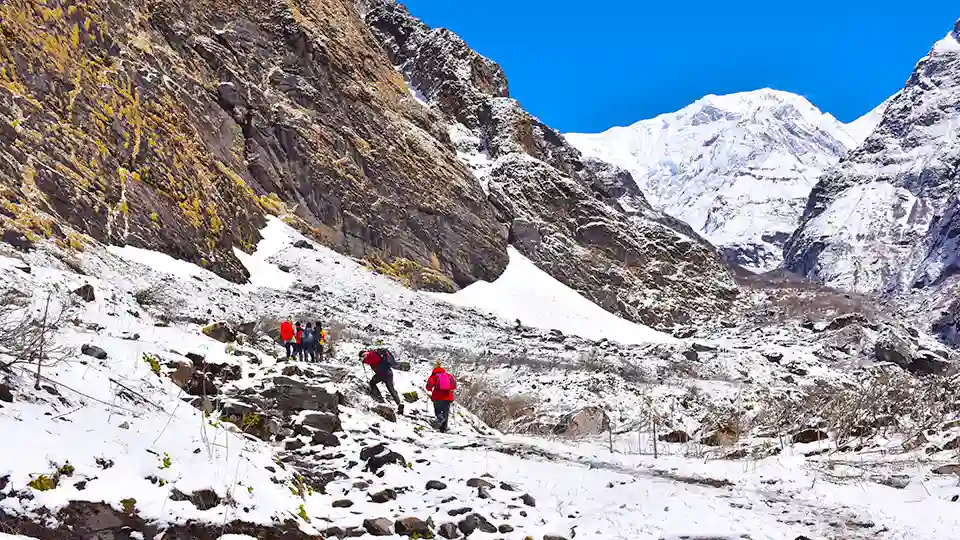
From Bamboo, we will ascend sharply towards Dovan (2600 m). We will pass by a small sacred temple in the jungle, and then we will begin on a gentle climb through the enchanting rhododendron jungle to the Himalaya Hotel (2840 m).
The trail will continue to ascend, guiding us further into the Hinku Cave (3170 m) and onward to Deurali, where we can see a very fascinating sight of the valley below.
Day 10: Trek from Deurali to Annapurna Base Camp (ABC, 4130 m/13,545 ft) via Machhapuchhre base camp (MBC) (3700 m / 12135 ft), 5 to 6 hours
Walking Hours: 4 To 5 Hours Trekking
Meals Included: Breakfast, Lunch, And Dinner
Accommodation: Tea House Or Lodge
Max. Altitude: 4,130m/13,545ft
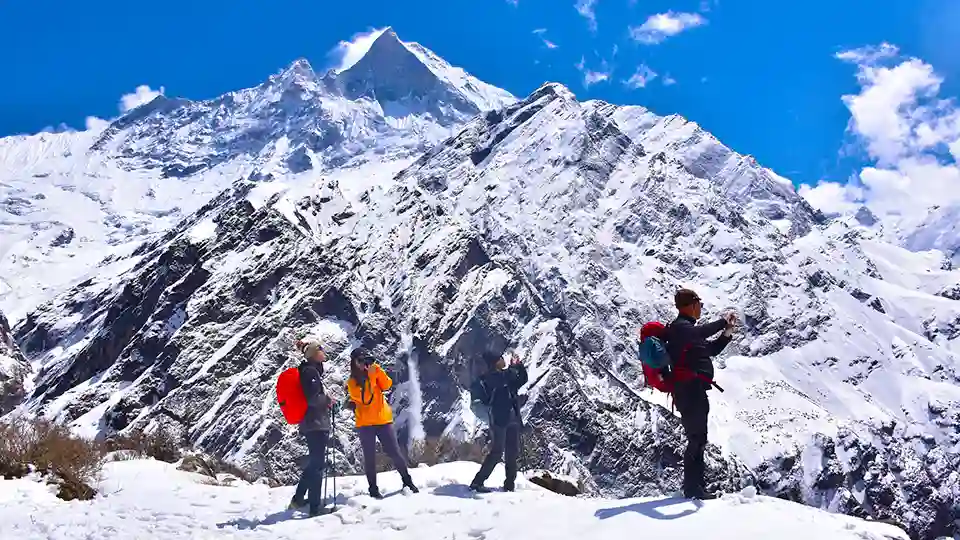
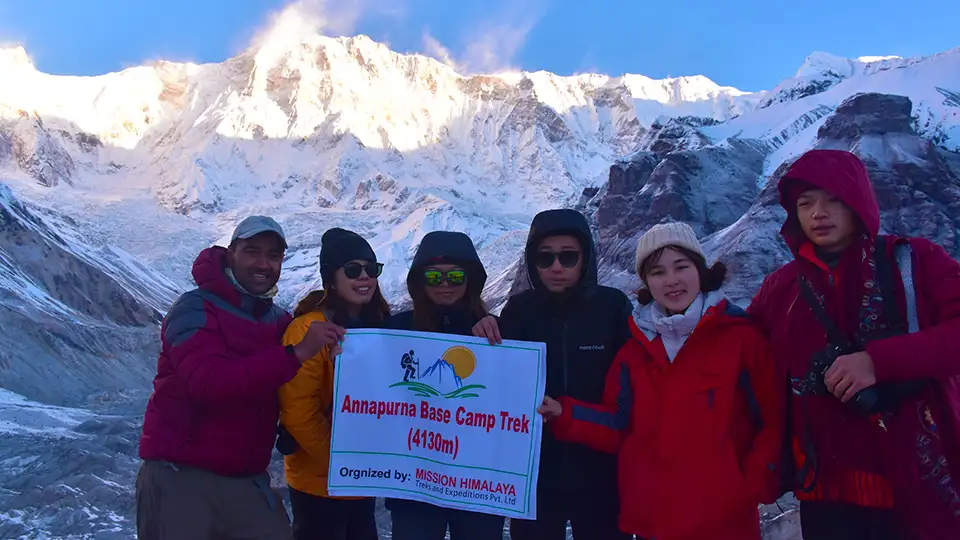
Moving on from Deurali, we begin to notice the increasing change in the terrain of the Annapurna region. Once a green forested trail, it now turns into a rugged landscape that guides us into the alpine meadow of Bagar Village.
The path ahead will be more rugged and ascend slowly to the Machhapuchhre base camp. Spending a short moment here will allow us to look at the gigantic features of Gangapurna, Gandharvachuli, Annapurna, Hiunchuli, and above all, the Machhapuchhre/Fishtail Peak.
Resuming our climb, we will ascend gently for another three hours to reach the Annapurna Base Camp. Along with Annapurna I, Annapurna South, Annapurna III and II, Tarke Gang, Fishtail, Gangapurna, Dhaulagiri, SinguChuli, VarahaShikhar, Khangshar Kang, and Hiunchuli primarily dominate the landscape and the sky of the ABC.
Nearby, we will also see numerous stone chortens erected in memory of those who never returned from the high Himalayas. Our night will be beautiful at a comfortable lodge at Annapurna Base Camp.
Day 11: Trek from ABC to Bamboo, 2310 m/7578 ft, 6 to 7 hours
Walking Hours: 6 To 7 Hours Trekking
Meals Included: Breakfast, Lunch, And Dinner
Accommodation: Tea House Or Lodge
Max. Altitude: 2310m/7578ft
Difficulty Level: Difficult
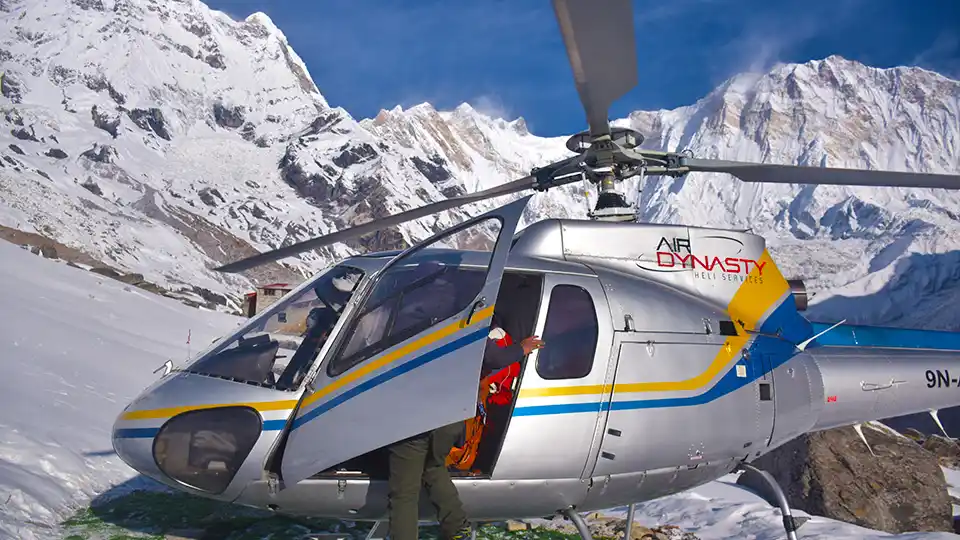
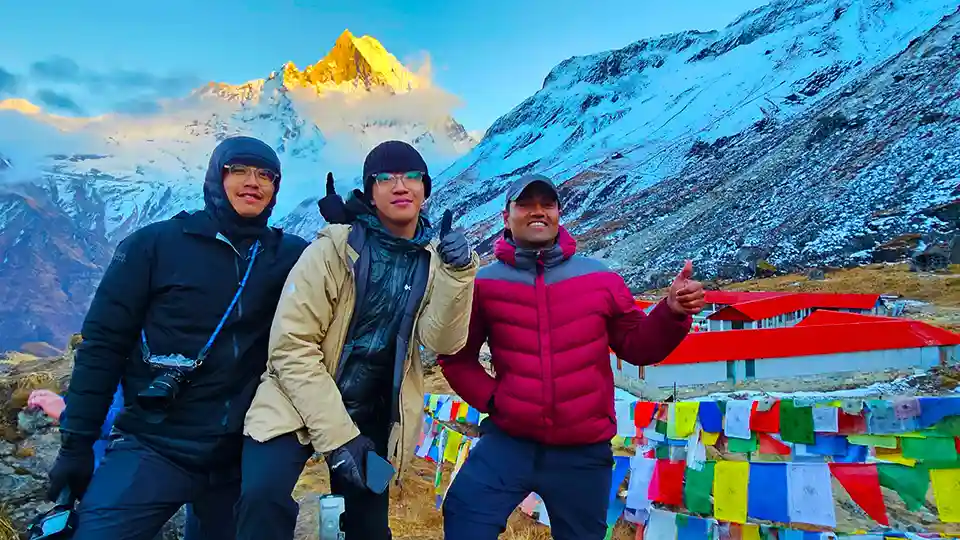
We will get up very early before the sun does, so we can enjoy the magical emergence of the sun over the Annapurna Massif. Then, after breakfast, we will start our journey back home, following the same route through MBC, Deurali, Himalaya Hotel, and Dovan to reach Bamboo.
Day 12: Trek from Bamboo to JhinuDanda, 1760 m/5770 ft, 5 to 6 hours
Walking Hours: 5 To 6 Hours Trekking
Meals Included: Breakfast, Lunch, And Dinner
Accommodation: Tea House Or Lodge
Max. Altitude: 1760M/5770FT
Difficulty Level: Moderate
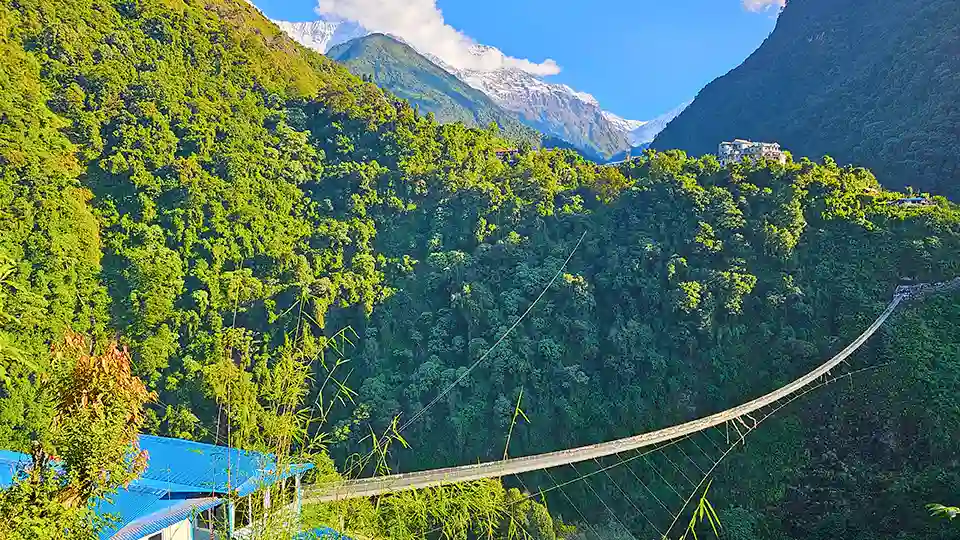
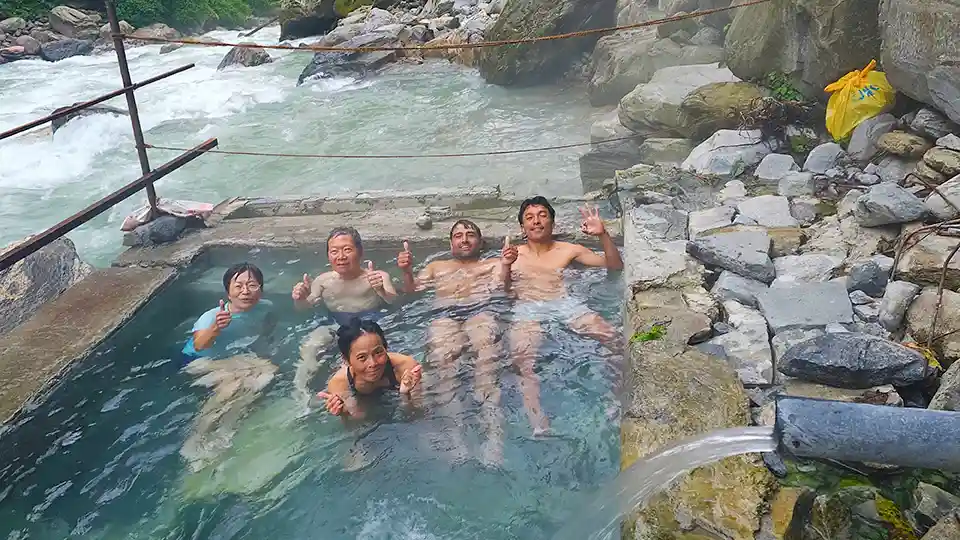
After a delicious breakfast in Bamboo, we will make our way down through Khuldighar and Sinuwa to reach Chhomrong. From here, we will take a new trail towards the southeast and climb down steeply to reach Jhinu Danda.
Not far from the village, there arehot springs by the Modi Khola River, where we can have a very relaxing experience along with stunning views of the landscape.
Day 13: Trek from JhinuDanda to Nayapul, 5 hours, and drive to Pokhara, 823 m, 2 hours
Walking Hours: 5 Hours Trek And 2 Hours Driving
Meals Included: Breakfast And Lunch
Accommodation: 3 Star Standard Hotel
Max. Altitude: 823m
Difficulty Level: Easy
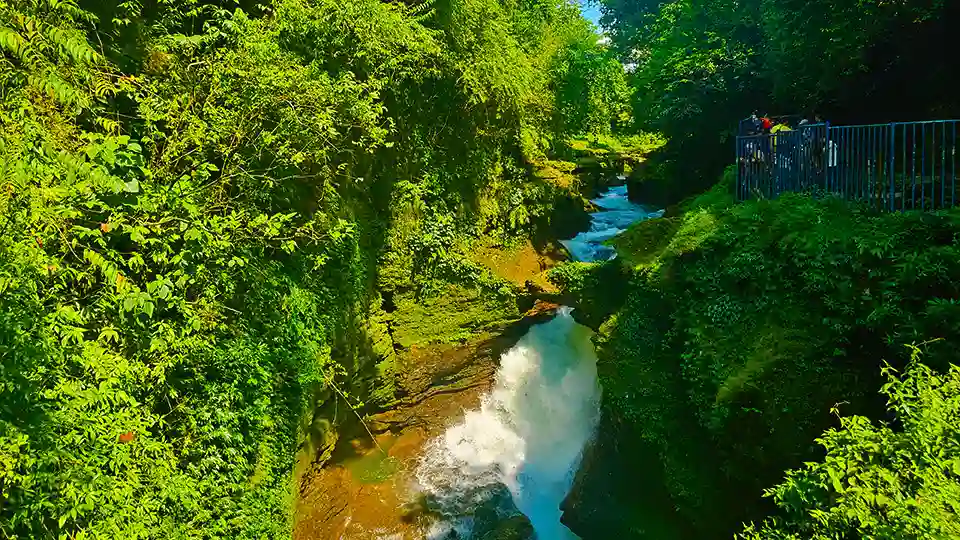
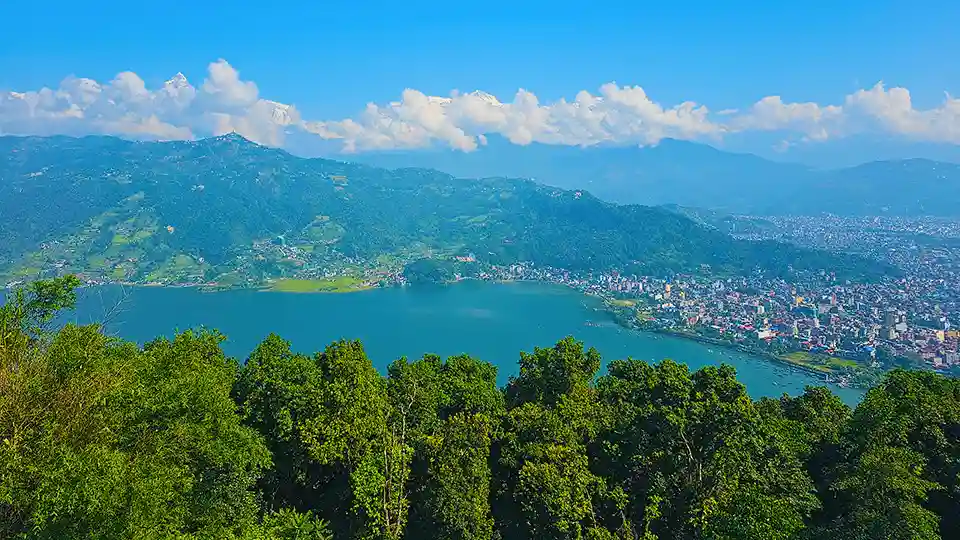
After breakfast, we will continue the final leg of our Annapurna Base Camp trek. We will cross the Kadoorie suspension bridge over ModiKhola and then climb down through Kyumi Village and Syauli Bazaar.
We will soon arrive at Birethanti, where we will exit the Annapurna landmark and reach Nayapul within an hour. We will now continue our journey in a shared or private jeep to Pokhara.
Enjoy the rest of your day with shopping, a boat ride on Phewa Lake, or simply relax by the pool.
Day 14: Drive/fly back to Kathmandu from Pokhara
Walking Hours: 7 Hours Driving
Meals Included: Breakfast
Accommodation: 3 Star Standard Hotel
Max. Altitude: 1350M
Distance: 200 KM
Difficulty Level: Easy
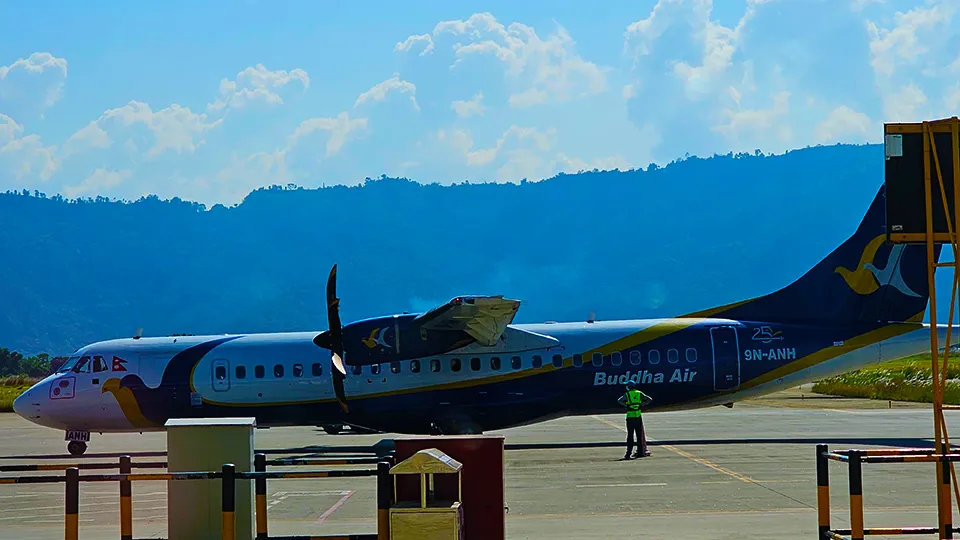
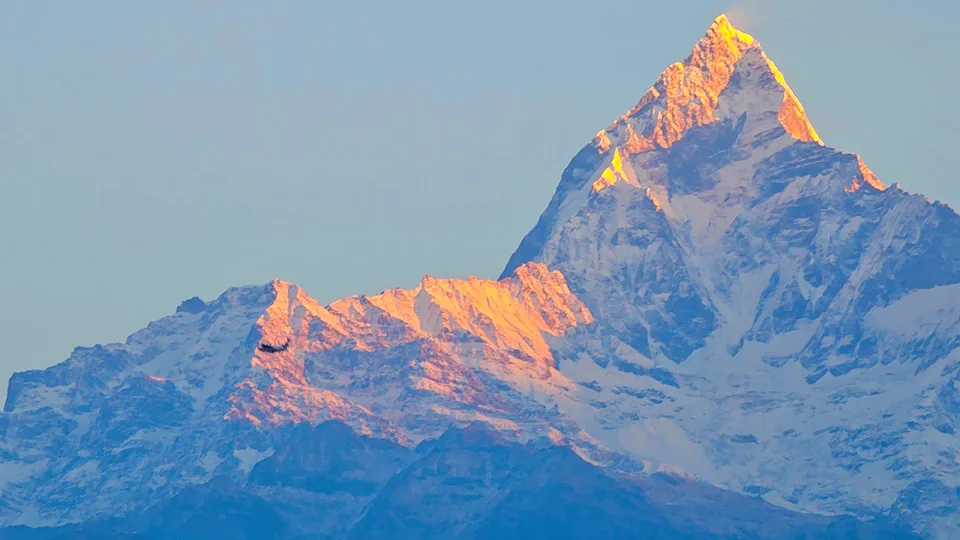
To return to Kathmandu, you can either choose to drive along the Prithvi Highway or to fly to reach the capital (additional cost). In the free time in Kathmandu, you can shop or explore Thamel, and in the evening, we will give a beautiful conclusion to our Annapurna Base Camp trek with a tasty Nepali dinner organized by Mission Himalaya.
Day 15: Departure
Walking Hours: 30 Minutes Drive
Meals Included: Breakfast
Accommodation: None
Max. Altitude: 1350m
Distance: 5.5 KM
Difficulty Level: Easy
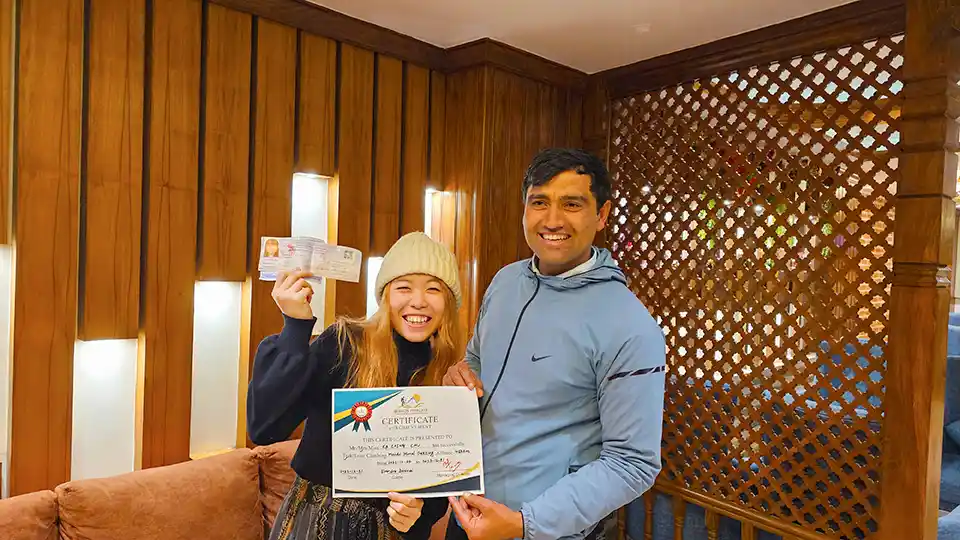
Info
Certificate Distribution after the Complition of the trip
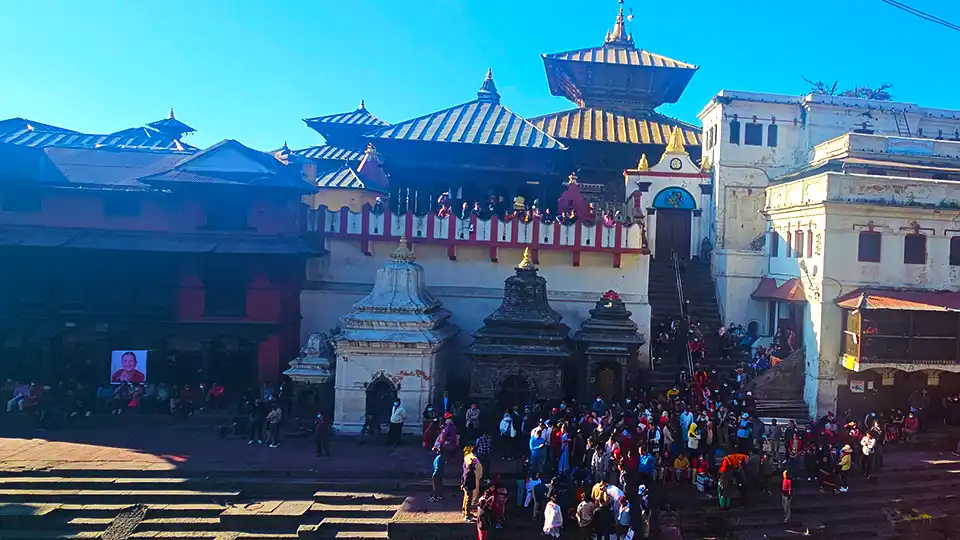
Info
Open Cremation in Aryaghat Kathmandu
You will have a short morning to enjoy your coffee and breakfast in Kathmandu. Then, we will transfer you to Kathmandu Airport for your international flight home.
Annapurna Base Camp Trek Cost
Cost Can Varies due to Category of Kathmandu, Pokhara Hotels, Number of Days in trekking, Number of days in city, Inclution items in trekking, Accommodations Type in trekking(inside toilet or outside toilet rooms, Guide how many years Experienced, Number of porters, Kathmandu to Pokhara and pokhara to kathmandu flight or private car or tourist luxury bus or local bus.
-
Guide
An experienced trekking guide who is government-registered, knowledgeable, and courteous.
-
Hotels in City
Reserved Luxurious accommodation at Kathmandu and Pokhara on a bed and breakfast basis.
-
Transportation
Private Transport from Kathmandu airport to hotel and hotel to Kathmandu airport.
-
Accommodations
Overnight in lovely clean guest houses or lodges.
-
Meals in Trek
Full board meals (breakfast, lunch, and dinner with a cup of hot beverages) throughout the trek.
-
Tax
All fees and expenses incurred by the government.
-
Porter
1 strong porter which will be shared by 2 people.
-
Free Equipments
Duffel bag, down jacket and sleeping bag (please return it after your trek completion).
-
Permits
Annapurna conservation area permit (ACAP), TIMS card fees and Hot spring local fees.
-
City to city transfer
Two way bus trip from Pokhara to Kathmandu and Kathmandu to Pokhara.
-
Medicine
First aid medical kits, with oximeter.
-
Store Luggage?
Free Storeroom facility in Pokhara and Kathmandu for extra luggage.
-
Trek Staff Welfare
Insurance of Trekking Guide and porters or all trekking crews.
-
Happy Meal
Trekking Map, Welcome dinner.
Addons
- Paragliding US$ 125
- Rafting US$ 50
- Everest Mountain Flight US$ 235
- Chitwan Jungle safari US$ 150
- Helicopter Tour US$ 1250
- Kathmandu Sightseeing US$ 110
- Cablecar Tour with Sunrise US$ 45
-
International flight
International flight charges from your country to Nepal and Nepal to Your country.
-
Tipping
Tips and gratitude to the drivers, porters, and guides.
-
Visa
Nepal Entry Visa Fees.
-
Extras
Cost arising from mishaps and natural calamities.
-
City Accommodation
Extra accommodation in Kathmandu rather than the itinerary.
-
Insurance
Your private trekking insurance
-
Personal item
Your personal expenses (Alcoholic drinks, personal food, telephone, laundry, internet, battery charging, hot water, mineral water).
-
City meals
Other meals and drinks which is not included in the itinerary.
Trip Gear


Annapurna Base Camp Trek Related Information
Best Season for the Annapurna Base Camp Trek
The best times to experience the Annapurna Base Camp trek are in spring (March to May) and autumn (September to November) in Nepal. During spring, you can enjoy a pleasant climate with a small crowd of tourists.
Snow melts, and nature in Annapurna revives with rhododendron flowers covering the hills of the region.
Autumn, on the other hand, brings mostly clear skies without the sweltering heat, and festivals also begin to be celebrated. Winter (December to February) is the quietest time to trek with fewer crowds on the trail.
The summer/monsoon months (June to August) can make hiking a bit challenging due to high temperatures and heavy rainfall.
Level of Difficulty of 15 days Annapurna Base Camp Trek
The 15 days Annapurna Base Camp trek is a moderate trekking itinerary classified as a level II journey with manageable altitude. If you have an average mountain hiking background, then our Annapurna Base Camp trek will be the perfect adventure for you.
And, if this is your first mountain hiking at altitudes over 4000 m, then also the Annapurna Base Camp trek is suitable for you, but it is important to have a good physical fitness level.
It is a complete lodge hiking journey with no technical challenge. However, you should be prepared for frequent altitude variations, steep ascents and descents, 3,300 stone steps toUlleri, and the Deurali cliff at 3,090 meters.
Altitude Sickness/AMS/Acute Mountain Sickness and Acclimatization
The Annapurna Base Camp trek itinerary will lead you to the highest elevation of 4130 m. Over 15 days of this adventure, you will be between 2500 m and 3500 m for several days, which means there is a moderate chance of experiencing Acute Mountain Sickness (AMS).
The most common symptoms of altitude sickness are headache, nausea, dizziness, appetite loss, sleep loss, and fatigue. However, the symptoms will disappear if you engage in rest, drink plenty of water, and slow down your pace.
To address the issue of altitude sickness in our Annapurna Base Camp trek, we have ensured enough acclimatization opportunities with a gradual-paced itinerary that allows everyone to adapt to the new high-altitude environment.
If you start feeling any symptoms, please let your accompanying guide know. Kindly follow his guidance, whether it is to rest at the same altitude or descend back.
For the symptomatic treatment of altitude sickness, you can take aspirin or Ibuprofen. You can also take Diamox from Kathmandu or Pokhara onwards to help in quick acclimatization, but be aware of its diuretic properties.
Is any training necessary for the Annapurna Base Camp Trek?
The Annapurna Base Camp trek is a non-technical route; thus, no special technical training is essential for the adventure. It, however, still demands a decent physical shape, fitness, and endurance to be able to meet the need for long walking each day.
So, if you are inactive, do not train regularly, and are not used to the multiple-day hikes, then you should definitely train to increase the strength of your legs, lungs, heart, and overall body muscles.
The normal exercises, such as walking, swimming, jogging, running, and playing any kind of sports, will help you achieve this goal. Additionally, planks, Pilates, squats, weight lifting, pull-ups, and push-ups with stair climbing will also do the trick.
You can also get the real-time hiking experience by trekking to the small hills or a moderate mountain landscape.
Accommodation, Meals, and Transportation
On our 15 days Annapurna Base Camp trek, we offer you overnight stays in Kathmandu and Pokhara at carefully selected three-star hotels. You will be accommodated in a double or twin room that will have its own electrical outlet, hot and cold shower, in-room bath, and free WiFi.
If you are willing to spend a bit more, we can also arrange for you to stay in four or five-star hotels in these cities.
During trekking, your overnight accommodations will be arranged in teahouses along the route. Please be assured that our guide will find the best tea houses for you that can offer you a personal bath with hot water and WiFi (may not be possible in peak season).
In terms of meals, breakfast will be provided during your stay in Kathmandu and Pokhara, along with three meals daily during the trek. Please note that the costs for drinks and beverages are not included in our service fee.
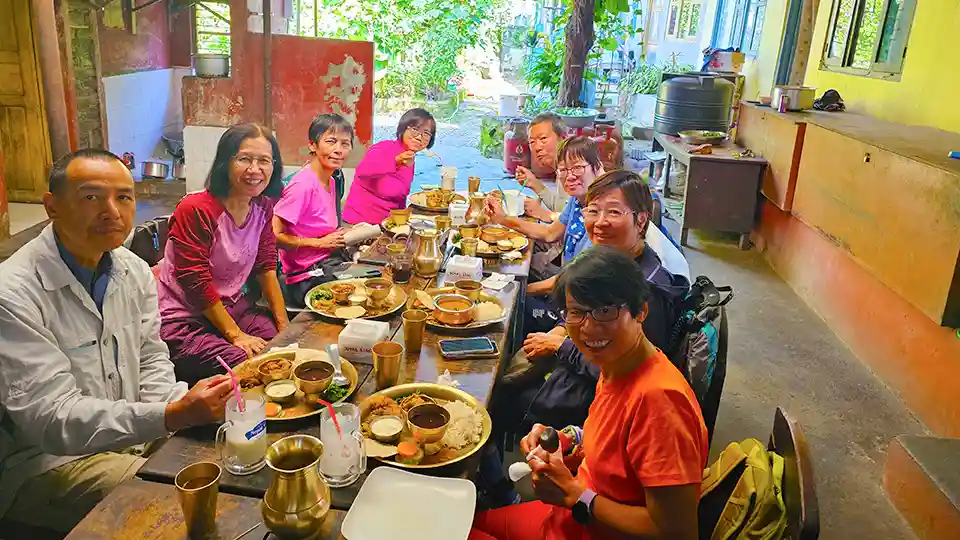
If you have any dietary needs, please let us know when you book our Annapurna Base Camp trek. A typical everyday meal will consist of traditional Nepali dishes like Dal Bhat, momos, noodles, porridge, eggs, and potato dishes, as well as Tibetan cuisine.
For transportation, we provide private pickup and drop-off from Kathmandu International Airport, and we will also cover your tourist bus fare between Kathmandu and Pokhara, along with a shared jeep ride from Pokhara to Nayapul.
Charging, Communication, and Internet
All teahouses along the Annapurna Base Camp trek route have electricity available, coming from both government sources and solar power, so you won’t experience many power outages.
You can therefore charge your electronic devices like your mobile phone, camera, power bank, iPods, etc., for a fee that could be charged by the hour or per device.
Still, we recommend you bring a solar charger because there can be long days of hiking where you won’t be able to charge your devices at the teahouses.
Cell phone service is also better in the Annapurna region with either NCELL or NTC networks. You can find Wi-Fi in the lodges for a fee, but the connection can be slow.
Extra Expenses
Mission Himalaya will cover all your essential expenses in our Annapurna Base Camp trek, so you can set aside a small amount for your personal expenses.
Make sure to include extra cost for your meals in Kathmandu and Pokhara. For buying souvenirs and some nightlife fun in Kathmandu and Pokhara. You should also budget for some small snacks, drinks, and comfort items while trekking.
You will also have to pay on-site for the hot showers, WiFi, and charging utilities on the trail of the Annapurna Base Camp trek. Also, make sure to set aside a small amount to pay a tip to your guide, porter, and the staff. Remember, there are no ATMs on the route, so bring along some extra Nepalese rupees to handle these extra costs.
Permits needed for the Annapurna Base Camp Trek
The following two permits have been mandated for the Annapurna Base Camp trek:
- Annapurna Conservation Area Permit/ACAP: With this permit, you can openly trek through the conserved landmark of the Annapurna area. We will pay for this permit, which costs NPR 3000 per person for foreigners, NPR 1000 per person for SAARC Nationals, and NPR 100 per person for Nepalese individuals.
- Trekkers’ Information Management System Card/TIMS: The TIMS card enables the responsible authorities in Nepal to know your whereabouts so that immediate rescue can be sent if/when needed. The card is authorized by the Nepal Tourism Board or the Trekking Agencies Association of Nepal/TAAN in Pokhara, and is available only through certified government-registered travel agencies like Mission Himalaya. The fee is NPR 2000 per person for foreign nationals, NPR 1000 for SAARC nationals, and NPR 100 per person for Nepali people.
If you have children under 10 years of age, they won’t need these permits.
Travel Insurance
Kindly understand that health, travel, and helicopter evacuation insurance are absolutely necessary to participate in our Annapurna Base Camp trek.
You have to send us or hand-deliver to us your international travel insurance copy in Kathmandu so we can proceed with the permit application process.
Please buy the international travel insurance that includes:
- Helicopter evacuation to 4200 m altitude
- Medical coverage with rehabilitation
- Accidental coverage
- Added coverage for potential extended stays, delays, or interruptions in travel plans, as well as protection against damage, theft, or loss of baggage
Please review the validity date of your insurance and ensure that it remains active throughout your time in Nepal.
Local Language, Culture and Communication Tips
The official language in Nepal is Nepali and in the Annapurna region there are also a high number of locals who have their own ethnic languages including Gurung or Magar dialects. Nepali is widely understood in trekking regions, and most people involved in tourism can communicate in basic English. Even a basic greeting such as Namaste with a smile goes a long way in creating good interactions.
Knowing some simple expressions, like dhanyabad in English which means thank you and ramro cha in English which means it is good or beautiful, is valued by the locals. The Annapurna region is culturally different with Hindu and Buddhist practices. The trail will have Buddhist prayer flags, prayer rings, monasteries, and Hindu shrines. One must never walk counterclockwise around Buddhist chortens and prayer wheels in order to show respect.
In order to enter temples or monasteries, you need to strip off your shoes and wear a modest dress, covering shoulders and knees. It is polite to ask before taking pictures of people and religious sites. Communication in Nepal is generally polite and indirect. Shouting or high temperament is discouraged. Even in the event of a language barrier, locals will be helpful and you should go ahead and greet them with Namaste and the question. Communication will go a long way, with openness and patience, trekking on the Annapurna Base Camp Trek can be a highly rewarding experience.
Safety and Conduct on the Trek
There are some safety rules to be considered when having the Annapurna Base Camp Trek, as well as respecting the local traditions. You should not disregard the signals of your body. In case you are very fatigued or sick or you have any signs of altitude sickness, tell your guide at once. Rising higher with serious symptoms may be risky, and one might need to rest or to come down. Avoid rushing on the trail. The risk of injury and altitude sickness are more likely to occur when the trekking is too fast. A rhythm that enables you to converse is the best.
A useful reminder to hikers is the common phrase bistaribistari, which means slowly slowly. Pollution and littering of the environment should be avoided. Dispose of all non-biodegradable waste like plastic wrappers and bottles in the most appropriate manner. Do not apply soaps or shampoos in rivers or streams to ensure water quality protection. Be mindful of the local culture, wear decent clothes in the villages and do not show affection publicly.
Always seek permission to go to the house of a person, and take off your shoes as necessary. Keep on the indicated path, and with the party or guide, Particularly in thick forest or at night, to prevent accidents or getting lost. Always bargain fairly and kindly in markets or stores. Haggling too much may be interpreted as disrespectful, and a friendly attitude establishes good relations with local sellers. Adhering to these easy guidelines will give you and others a secure and cordial time at the Annapurna Base Camp Trek.
Extending Your Journey
Nepal has a huge number of trekkers who prefer to continue their Nepal stay upon completion of the Annapurna Base Camp Trek. To do further trekking, there are a number of trails in Annapurna region. You may want to visit the Ghorepani Poon Hill trek that offers longer options through Ghandruk or shorten it to five days trek. Another trek worth trying is the Mardi Himal trek which is approximately a week long with dazzling ridges of machhapuchre.
The ABC and Annapurna Circuit can be extended to make the ABC trek a longer trip, but this would take at least three weeks. There is a lot more to Nepal than trekking. You may go to Chitwan or Bardia National Park to go on a jungle safari to observe wildlife such as tigers, rhinos and elephants. It is possible to spend more time in Kathmandu visiting Bhaktapur and Patan, which are full of temples and historic architecture. The birthplace of Buddha, Lumbini, too is available through the southern plains.
Pokhara has paragliding, mountain biking and white water rafting, especially to the adventure lovers. However, a day tour or mountain flight will give you a view of Mount Everest at a distance. Extensions can also be tailored to your interests and schedule to maximize your experience of the Annapurna Base Camp Trek and your visit to Nepal.
Cultural Festivals on the Trail.
Nepal has a lot of cultural festivals and it is always good to schedule your Annapurna Base Camp Trek during their cultural festivals. The biggest festival in Nepal is Dashain, which is celebrated around October and during which family houses, temple visitation, and festive decorations are a part of this festival. The Tihar, also known as festival of lights, is typically held after Dashain, and it involves the use of oil lamps, candles, and the evening singing practices.
Festivals like TamuLhosar, the Gurung New Year, take place in the Annapurna region, around the end of December, Gurung and Magar. Traditional dances, village feasts and ethnic clothing can be observed in Gurung villages, such as Chhomrong or Ghandruk. In January (Magar communities), MagheSankranti is celebrated, the winter solstice, with their special foods and bonfires.
The festival of colors is Holi and is celebrated in March and is celebrated in a joyful manner in towns such as Pokhara and Kathmandu but in the remote trekking areas the celebrations are made milder. Trekking during these festivals gives your Annapurna Base Camp adventure a richer cultural experience.
Health and Safety
Health and safety are priorities on the Annapurna Base Camp Trek. Guides are equipped with first aid kits and aid to acclimatize to high altitudes. Self-measures matter as well.Hygiene of water is necessary; consume only boiled, filtered or purified water. Use a reusable bottle of water and think over water purification pills as add-ons. Consume freshly cooked meals in teahouses and do not use unpeeled uncooked food.
To trek safely, you need to take care of your steps since some routes are steep and thus uneven, particularly when going down. By passing mule or yak caravans, go to the uphill side and allow them to pass. Always have a rain jacket and be ready to face unforeseen weather conditions. Local people are sincere and friendlywith a low risk of crime. Lock your valuables, remain alert to everything around and obey your guide to help you accomplish your Annapurna Base Camp Trek successfully.
Photography and Drone Guidelines
One of the best attractions of the Annapurna Base Camp Trek is photography. It is possible to make beautiful mountain shots and local people, but people should always be asked before shooting them. There might be restrictions in monasteries and temples, which you should confirm with your guide. In Nepal, drones are controlled. The legal use of a drone involves the license of the Civil Aviation Authority of Nepal and the Annapurna Conservation Area Project.
The unlicensed operation of drones may result in fines or seizure. When allowed, fly responsibly, in the air, by avoiding military zones, respecting privacy, and preserving wildlife. Drone use at high altitudes may be limited due to weather and battery constraints. By adhering to these tips, there is a guarantee of good and secure photography on your trek as well as making memorable moments.
Essential Advice for First-Time Nepal Visitors
To be able to enjoy the Annapurna Base Camp Trek as a first-time visitor, there are some preparations that would help to make it a more enjoyable experience. A visa is available on arrival at the airport or land border to most nationalities and requires a valid passport of at least six months of validity, photos, and payment. The currency used in Nepal is Nepali rupee and there are ATMs in Kathmandu and Pokhara.
Get enough money to go trekking since most teahouses and stores do not take cards. Bargaining is usually practiced in local markets where restaurants and fixed price stores do not need it. Wear simple clothes in the city and country, take off shoes to enter temples or houses, and say warm Namaste to everyone. Public displays of affection are uncommon; it is prudent to keep them low-key.
It is significant that there can be flexibility and patience because schedules can shift slightly. When you come to Nepal with an open mind and a friendly attitude, it will be a rewarding as well as a memorable experience as you go through your first Nepal adventure and Annapurna Base Camp Trek.
Annapurna Base Camp Trek FAQ'S
A
The Annapurna base camp trek is approximately a 110 km (70 mile) round-trip journey (depending on the exact route taken).
A
The base camp, which is called Annapurna Base Camp (ABC), is approximately 4,130 meters (13,550 feet) above sea level.
A
No. Everest is too far (east of Annapurna). You cannot see Mount Everest during the Annapurna base camp trek.
A
As of 2023, Nepal requires hiring a guide/porter for the Annapurna base camp trek. Independent trekking alone is no longer permitted.
A
The journey normally commences at Nayapul (in close proximity to Pokhara). It takes 1.5 hours to reach Nayapul where a 15 minute drive (in either a private vehicle or a bus) gets you there in Pokhara.
A
Yes, but expect heavy rain, leeches, and cloudy skies.The ABC trek is not undertaken by many people between June and August.
A
Pack layered clothing (t-shirts, fleece, down jacket), good trekking boots, rain jacket, warm hat, gloves, sunscreen, a water purifier and personal medicine.
A
Yes. Bring a warm sleeping bag (around -10c/14f) as the teahouse blankets are not always sufficient to keep you warm in colder temperatures.
A
No, the majority of teahouses do have hot showers (hot water in a bucket or gas) at a small charge (around NPR 200-500).
A
Yes, the Annapurna base camp trek is generally safe. Every year thousands of them do it. Go with a guide, follow acclimatization guidelines, and you should be fine.
A
Report to your guide. Rest or descend in case of minor illness or injury. In severe situations, you might be required to be transported to the hospital (when insured) by a helicopter.
A
Yes, if they’re healthy and fit. Children (approximately 10 years and above) and older persons have been able to do so successfully, by walking at a lower and manageable speed.
A
Yes. Tipping is customary. Most trekkers pay an approximate of 10 percent of the total trek fee to be shared between the guide and the porters.
A
Trekking generally involves 5–7 hours of walking per day, with some shorter days (around 4 hours) and a few longer days (up to 8 hours).
A
Annapurna Base Camp itself often experiences snow, particularly during winter or early spring. The high mountains around it remain snow-covered all the year round.
A
The Annapurna Base Camp region is also known as the Annapurna Sanctuary a high-altitude alpine valley encircled by a ring of the Himalayan peaks.
A
The leeches may be found on the low forests during the monsoon. Apply insect repellent, and put on long socks, and carry salt to break them off. However, leeches are not as bad as they are inconvenient.
A
Yes. It is possible to rent or purchase gear (jackets, sleeping bags, trekking poles, etc.) in Kathmandu and Pokhara at quite affordable prices.
A
Toilets tend to be basic squat toilets in teahouses (in lower villages, there are also some Western-style toilets). There is shared facilities, and no toilet paper is supplied, so bring your own.
A
The ABC trek is less in length and it is straight to the base camp and back. Annapurna Circuit is a more extended circuit of the Annapurna range, which traverses one tall mountain cross (Thorong La) and travels through other valleys.
A
Yes, there are a lot of vegetarian choices. Dal bhat (rice and lentils and vegetables) is always vegetarian, and teahouses provide other vegetarian foods such as noodle soups, fried rice, potato, etc.
A
Yes, you can walk in winter (Dec -Feb). It will be chilled (the temperature drops to sub-zero at night) and it is possible to have snow on the path, however, the skies are clear and the trails are not as busy.
A
Nepal does not have any compulsory vaccinations. Nonetheless, Hepatitis A, Typhoid, and Tetanus are prescribed to be up-to-date. Always consult your physician before traveling.
A
Yes. You can leave your excess luggage at your Kathmandu or Pokhara hotel (or at our office) during the trek, and collect it on coming back.
A
If you cannot continue, you’ll need to turn around and trek back down to the trailhead.Only in case of emergency, helicopter evacuation can be offered (with proper insurance).
Annapurna Base Camp Trek Fixed Departures
| Trip Start | Trip End | Price | Status | Action |
|---|
Tripadvisor Reviews
Google Reviews
Best Itinerary

5.0
317 reviews